

Burrito bowl, chicken, with rice
Common food
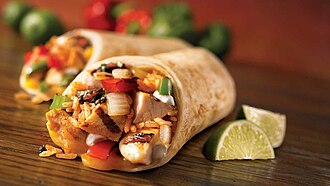
Photo: Wikipedia
A burrito bowl is a deconstructed, customizable Mexican-inspired dish featuring a base of seasoned rice, topped with tender chicken, and often finished with fresh salsas, beans, and greens. The chicken provides a lean, savory protein, while the rice offers a fluffy, comforting carbohydrate base. Nutritionally, it's a balanced, macro-friendly meal with a solid protein-to-calorie ratio.
Calorie split: 33% protein · 37% carbs · 30% fat
↓ Full nutrition💚 Why it's loved
People love it for its vibrant, layered flavors and the fun of building their own perfect bowl with endless topping combinations. It captures the beloved essence of a burrito in a fork-friendly, often lower-carb format.
⚠️ Watch-outs & how to enjoy it better
A standard bowl can be high in sodium from seasoned rice and salsas, and may cause blood-sugar spikes if heavily loaded with white rice and sugary sauces. To counteract this, opt for brown rice or cauliflower rice, load up on non-starchy vegetables like fajita veggies and lettuce, and choose fresh pico de gallo over creamy, salty dressings.
Key benefits
- High-quality lean protein for muscle maintenance.
- Good source of energy from complex carbohydrates.
- Highly customizable for dietary needs (low-carb, high-fiber).
- Supports satiety due to protein and fiber content.
- Can be a balanced single-dish meal.
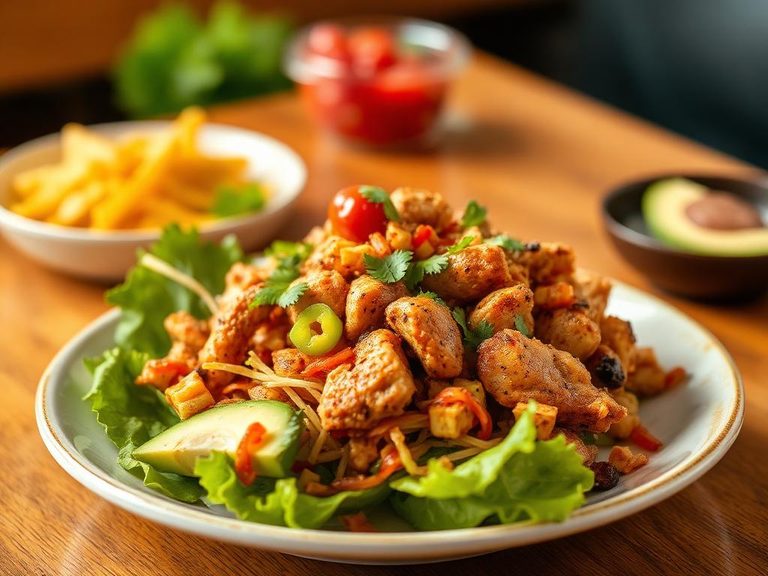
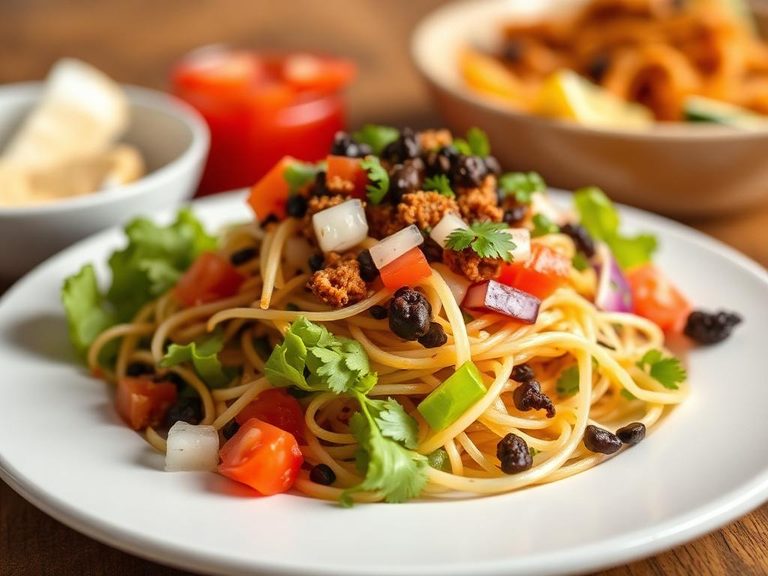
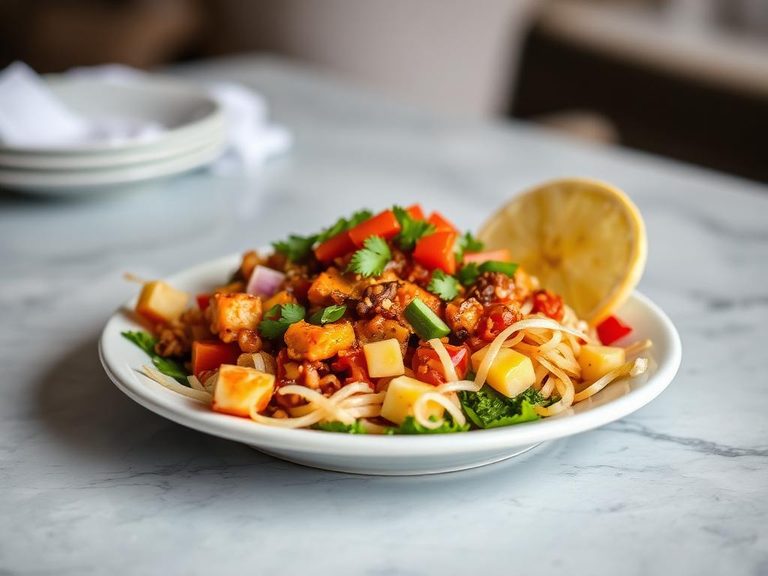
🍽️ Popular dishes
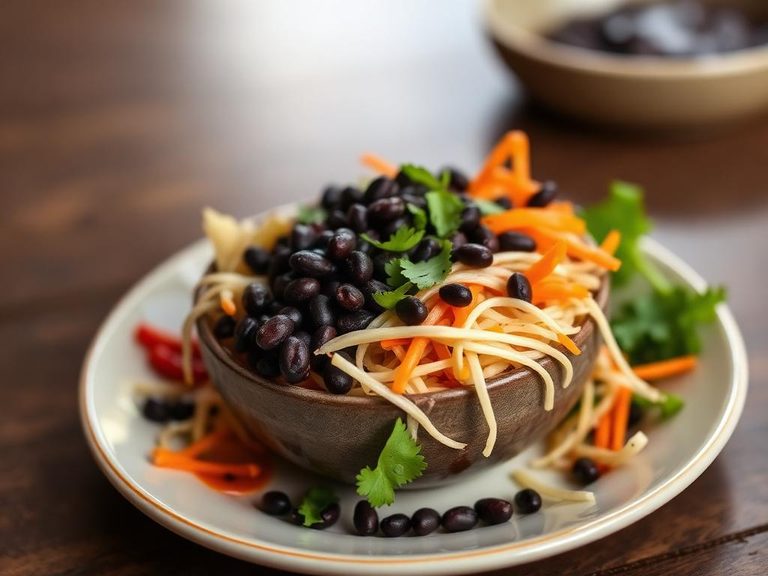
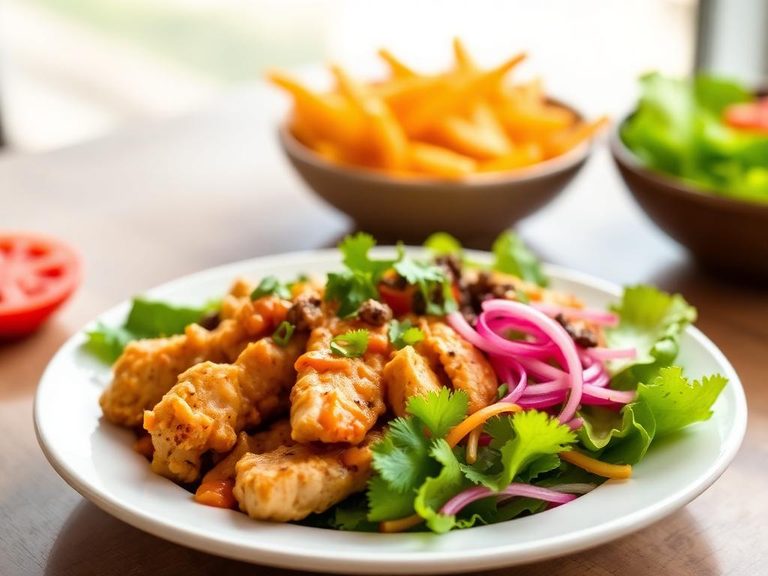
🌍 Where it's eaten
💡 Did you know?
The burrito bowl is a relatively modern, Americanized invention, popularized by fast-casual chains like Chipotle in the early 2000s as a lower-carb alternative to the wrapped burrito.
Full nutrition (USDA data · scales with serving)
| Water | 67.4 g |
| Energy | 155 kcal |
| Protein | 12.5 g |
| Total lipid (fat) | 5.0 g |
| Carbohydrate, by difference | 14.2 g |
| Fiber, total dietary | 0.20 g |
| Total Sugars | 0.09 g |
| Calcium, Ca | 63.0 mg |
| Iron, Fe | 0.87 mg |
| Magnesium, Mg | 17.0 mg |
| Phosphorus, P | 135 mg |
| Potassium, K | 125 mg |
| Sodium, Na | 277 mg |
| Zinc, Zn | 1.0 mg |
| Copper, Cu | 0.05 mg |
| Selenium, Se | 15.0 ug |
| Vitamin C, total ascorbic acid | 0.00 mg |
| Thiamin | 0.12 mg |
| Riboflavin | 0.10 mg |
| Niacin | 3.3 mg |
| Vitamin B-6 | 0.28 mg |
| Folate, total | 31.0 ug |
| Folic acid | 27.0 ug |
| Folate, food | 4.0 ug |
| Folate, DFE | 51.0 ug |
| Choline, total | 33.3 mg |
| Vitamin B-12 | 0.20 ug |
| Vitamin B-12, added | 0.00 ug |
| Vitamin A, RAE | 21.0 ug |
| Retinol | 21.0 ug |
| Carotene, beta | 0.00 ug |
| Carotene, alpha | 0.00 ug |
| Cryptoxanthin, beta | 0.00 ug |
| Lycopene | 0.00 ug |
| Lutein + zeaxanthin | 1.0 ug |
| Vitamin E (alpha-tocopherol) | 0.14 mg |
| Vitamin E, added | 0.00 mg |
| Vitamin D (D2 + D3) | 0.10 ug |
| Vitamin K (phylloquinone) | 1.5 ug |
| Alcohol, ethyl | 0.00 g |
| Caffeine | 0.00 mg |
| Theobromine | 0.00 mg |
Fat & fatty acid profile (per 100g)
| Fatty acids, total saturated | 2.2 g |
| SFA 4:0 | 0.06 g |
| SFA 6:0 | 0.03 g |
| SFA 8:0 | 0.02 g |
| SFA 10:0 | 0.06 g |
| SFA 12:0 | 0.07 g |
| SFA 14:0 | 0.24 g |
| SFA 16:0 | 1.2 g |
| SFA 18:0 | 0.37 g |
| Fatty acids, total monounsaturated | 1.6 g |
| MUFA 16:1 | 0.20 g |
| MUFA 18:1 | 1.5 g |
| MUFA 20:1 | 0.01 g |
| MUFA 22:1 | 0.00 g |
| Fatty acids, total polyunsaturated | 0.64 g |
| PUFA 18:2 | 0.54 g |
| PUFA 18:3 | 0.04 g |
| PUFA 18:4 | 0.00 g |
| PUFA 20:4 | 0.03 g |
| PUFA 20:5 n-3 (EPA) | 0.00 g |
| PUFA 22:5 n-3 (DPA) | 0.00 g |
| PUFA 22:6 n-3 (DHA) | 0.00 g |
| Cholesterol | 49.0 mg |
FAQ
Is a burrito bowl healthier than a burrito?
Often, yes. Skipping the large flour tortilla can save 200-300 calories and significant carbs, allowing you to fill that space with more nutrient-dense vegetables and protein.
How can I make a burrito bowl at home?
Start with a base of rice (white, brown, or cauliflower). Top with seasoned grilled chicken, black beans, corn, fresh salsa, avocado or guacamole, shredded lettuce, and a squeeze of lime.
What's a good low-carb version?
Replace the rice entirely with a base of shredded lettuce or cauliflower rice. Load up on protein (chicken, steak, or tofu), fibrous veggies like peppers and onions, and healthy fats from guacamole or cheese.
Nutrient density (calculated · NRF9.3)
Nutrient Rich Foods index: beneficial nutrients (protein, fiber, vitamins, minerals) minus saturated fat, added sugar & sodium, per 100 kcal.
NRF9.3 index — Fulgoni, Keast & Drewnowski, 2009. Computed from USDA nutrients.
Weight-loss friendliness (composite index)
Energy density 1.55 kcal/g · 32% calories from protein · 0.2 g fiber · 0.1 g sugar per 100 g.
Composite of energy density (Rolls et al., 1999), protein & fiber satiety, minus sugar. A calculated heuristic — ranks satiety-per-calorie, not a clinical measure.
Dietary load (calculated from USDA values)
Potential renal acid load. Positive = acid-forming, negative = alkaline-forming.
Sodium-to-potassium ratio: 2.22 (lower is better — aim for ≤ 1)
Sodium:potassium per WHO potassium guidance. Computed from USDA nutrients.