

Blackberries, wild, raw (Alaska Native)
Whole food · American Indian/Alaska Native Foods

Photo: Wikipedia
Wild Alaskan blackberries are small, intensely flavored berries with a deep purple-black hue and a perfect balance of sweet and tart. Their texture is a delightful mix of juicy drupelets and tiny, edible seeds. Despite their rich taste, they are remarkably low in calories, offering a potent dose of fiber and antioxidants in every bite.
Calorie split: 6% protein · 75% carbs · 18% fat
↓ Full nutrition💚 Why it's loved
People love wild blackberries for their explosive, complex flavor that far surpasses many cultivated varieties, making them a prized summer foraging treat. Their versatility allows them to shine in everything from fresh eating to jams, pies, and sauces.
⚠️ Watch-outs & how to enjoy it better
The high fiber and seed content can cause digestive discomfort (like bloating) for some, especially if consumed in large quantities. To counteract this, start with smaller portions, ensure adequate water intake, or try cooking them to soften the seeds. Their natural sugars, while healthy, can affect blood sugar, so pairing with a source of protein or fat (like yogurt or nuts) can help moderate the glycemic response.
Key benefits
- Excellent source of dietary fiber for digestive health.
- Rich in antioxidants like anthocyanins and vitamin C.
- Very low in calories and naturally fat-free.
- Contains essential minerals like manganese and vitamin K.
- Provides natural sugars for quick energy.
🍽️ Popular dishes
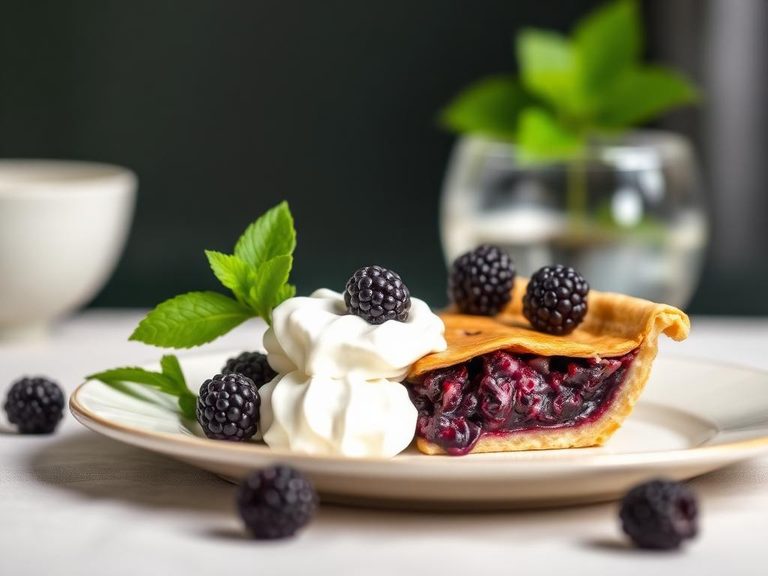
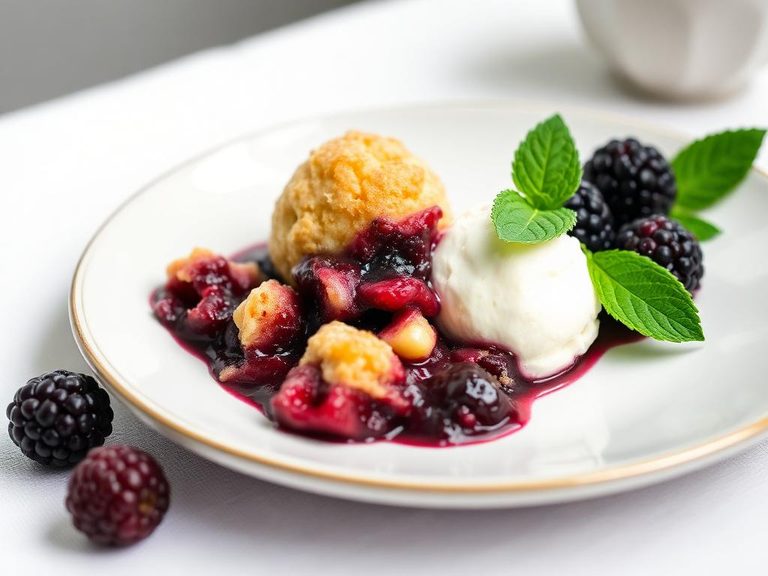
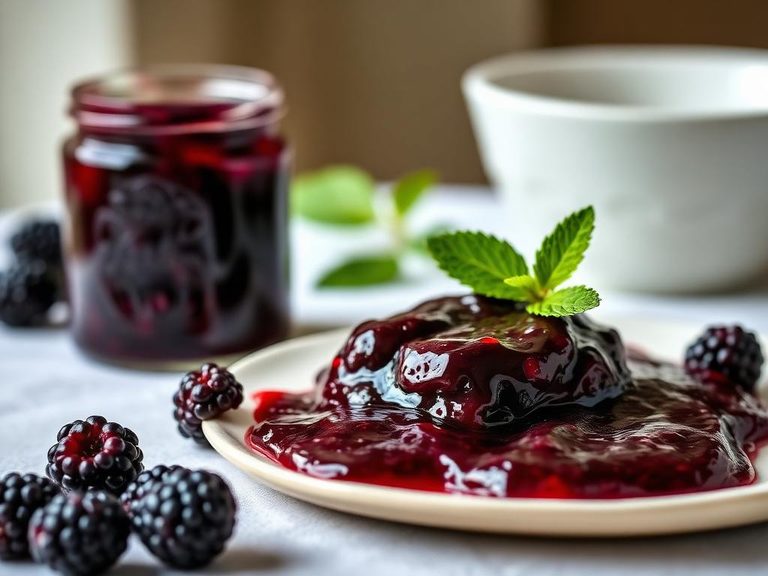
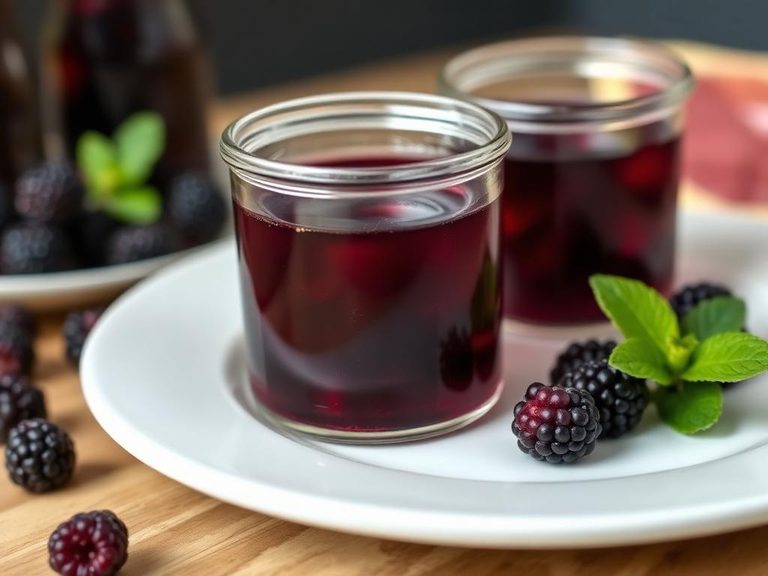
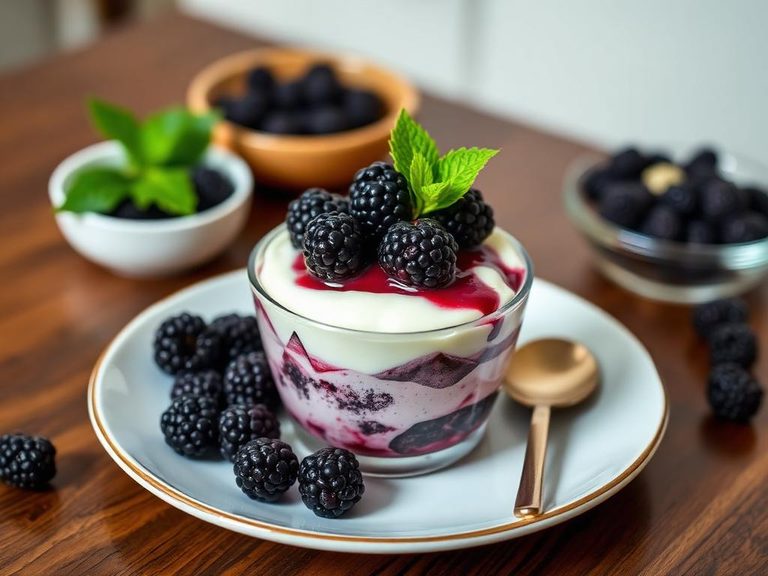
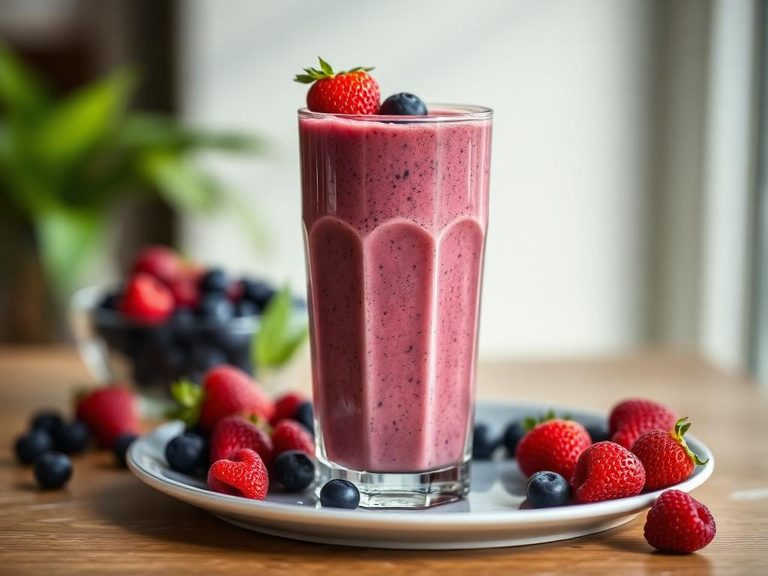
🌍 Where it's eaten
💡 Did you know?
The individual 'bumps' on a blackberry are called drupelets, and each one is actually a tiny, independent fruit containing its own seed, all clustered around a central core.
Full nutrition (USDA data · scales with serving)
| Water | 88.0 g |
| Energy | 52.0 kcal |
| Energy | 219 kj |
| Protein | 0.84 g |
| Total lipid (fat) | 1.1 g |
| Ash | 0.21 g |
| Carbohydrate, by difference | 9.8 g |
| Fiber, total dietary | 3.2 g |
| Total Sugars | 3.6 g |
| Sucrose | 0.01 g |
| Glucose | 1.7 g |
| Fructose | 1.9 g |
| Lactose | 0.00 g |
| Maltose | 0.00 g |
| Galactose | 0.00 g |
| Starch | 0.00 g |
| Calcium, Ca | 5.0 mg |
| Iron, Fe | 0.21 mg |
| Magnesium, Mg | 4.0 mg |
| Phosphorus, P | 11.0 mg |
| Potassium, K | 75.0 mg |
| Sodium, Na | 6.0 mg |
| Zinc, Zn | 0.15 mg |
| Copper, Cu | 0.22 mg |
| Manganese, Mn | 0.29 mg |
| Vitamin C, total ascorbic acid | 4.7 mg |
| Thiamin | 0.06 mg |
| Riboflavin | 0.14 mg |
| Niacin | 0.31 mg |
| Pantothenic acid | 1.3 mg |
| Vitamin B-6 | 0.04 mg |
| Folate, total | 11.0 ug |
| Folic acid | 0.00 ug |
| Folate, food | 11.0 ug |
| Folate, DFE | 11.0 ug |
| Vitamin B-12 | 0.00 ug |
| Vitamin B-12, added | 0.00 ug |
| Vitamin A, RAE | 5.0 ug |
| Retinol | 0.00 ug |
| Carotene, beta | 27.0 ug |
| Carotene, alpha | 0.00 ug |
| Cryptoxanthin, beta | 0.00 ug |
| Vitamin A, IU | 46.0 iu |
| Lycopene | 0.00 ug |
| Vitamin E (alpha-tocopherol) | 0.91 mg |
| Vitamin E, added | 0.00 mg |
| Tocopherol, beta | 0.02 mg |
| Tocopherol, gamma | 0.05 mg |
| Tocopherol, delta | 0.02 mg |
| Tocotrienol, alpha | 0.02 mg |
| Tocotrienol, beta | 0.00 mg |
| Tocotrienol, gamma | 0.08 mg |
| Tocotrienol, delta | 0.00 mg |
| Vitamin K (phylloquinone) | 5.9 ug |
| Vitamin K (Dihydrophylloquinone) | 0.00 ug |
| Vitamin K (Menaquinone-4) | 0.00 ug |
| Alcohol, ethyl | 0.00 g |
| Caffeine | 0.00 mg |
| Theobromine | 0.00 mg |
FAQ
Are wild blackberries different from store-bought ones?
Yes, wild berries are often smaller, more tart, and have a more concentrated, complex flavor than cultivated varieties bred for size and sweetness. Their nutritional profile can also vary slightly based on soil and growing conditions.
How should I wash and store them?
Gently rinse under cool water just before eating to prevent mold. Pat dry thoroughly. Store unwashed in a single layer on a paper towel in the refrigerator for 1-3 days. They also freeze exceptionally well for long-term use.
Can I eat the seeds and core?
Absolutely. The seeds are edible and contribute to the berry's fiber content. The central core (the receptacle) is also eaten, unlike in raspberries where it remains on the plant.
Nutrient density (calculated · NRF9.3)
Nutrient Rich Foods index: beneficial nutrients (protein, fiber, vitamins, minerals) minus saturated fat, added sugar & sodium, per 100 kcal.
NRF9.3 index — Fulgoni, Keast & Drewnowski, 2009. Computed from USDA nutrients.
Weight-loss friendliness (composite index)
Energy density 0.52 kcal/g · 6% calories from protein · 3.2 g fiber · 3.6 g sugar per 100 g.
Composite of energy density (Rolls et al., 1999), protein & fiber satiety, minus sugar. A calculated heuristic — ranks satiety-per-calorie, not a clinical measure.
Dietary load (calculated from USDA values)
Potential renal acid load. Positive = acid-forming, negative = alkaline-forming.
Sodium-to-potassium ratio: 0.08 (lower is better — aim for ≤ 1)
Sodium:potassium per WHO potassium guidance. Computed from USDA nutrients.