

Barbecue sauce
Common food
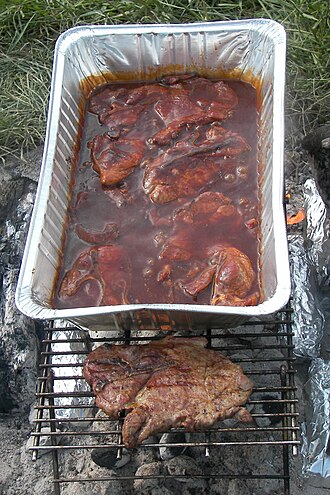
Photo: Wikipedia
Barbecue sauce is a thick, glossy condiment that balances sweet, tangy, and smoky flavors, often with a rich, tomato-based texture. Nutritionally, it's a high-carb, high-sugar addition, with over 40g of carbs and 33g of sugar per 100g, providing quick energy but minimal protein or fat.
Calorie split: 2% protein · 95% carbs · 3% fat
↓ Full nutrition💚 Why it's loved
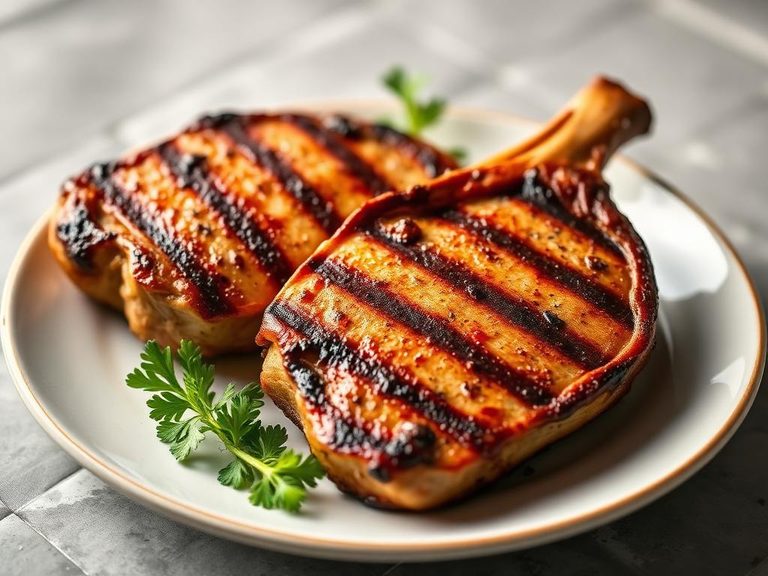
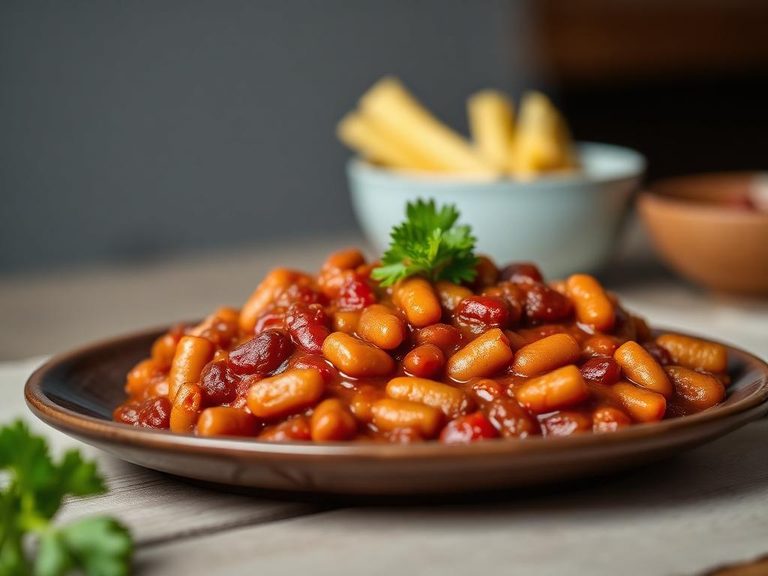
People adore barbecue sauce for its ability to transform grilled, smoked, or roasted meats into sticky, caramelized, and deeply flavorful meals. It's a cultural staple for backyard cookouts, tailgates, and comfort food, evoking a sense of communal feasting and nostalgia.
⚠️ Watch-outs & how to enjoy it better
The high sugar content can cause rapid blood-sugar spikes, making it a concern for those managing diabetes or watching their glycemic load. To counteract this, use it sparingly as a glaze rather than a drenching sauce, or pair it with protein-rich foods like chicken or pork to slow sugar absorption. Always check labels for high-fructose corn syrup and sodium.
Key benefits
- Adds intense, complex flavor to simple dishes
- Can be a quick source of energy from carbohydrates
- Versatile base for marinades, glazes, and dipping sauces
- Often contains antioxidants from tomatoes and spices like paprika or garlic
🍽️ Popular dishes
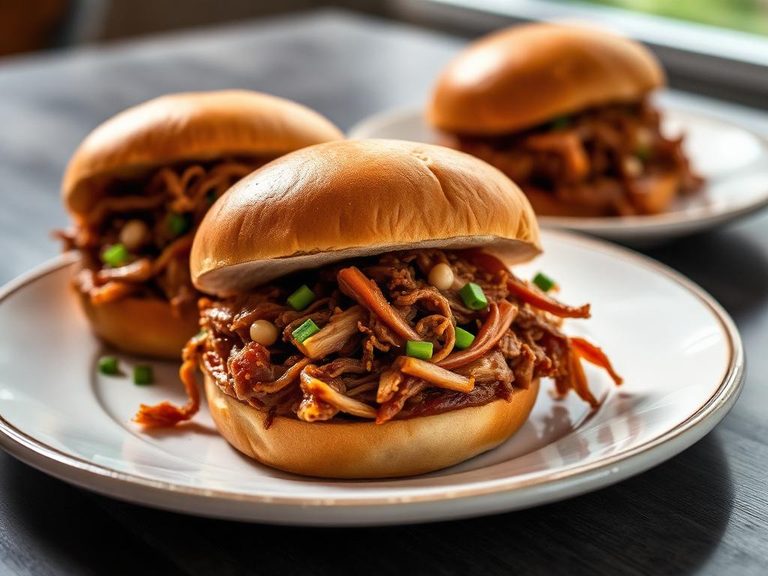

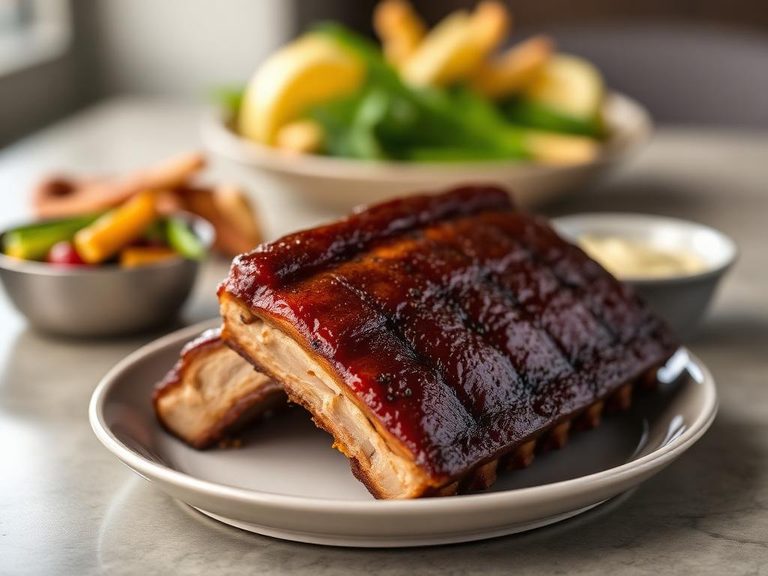
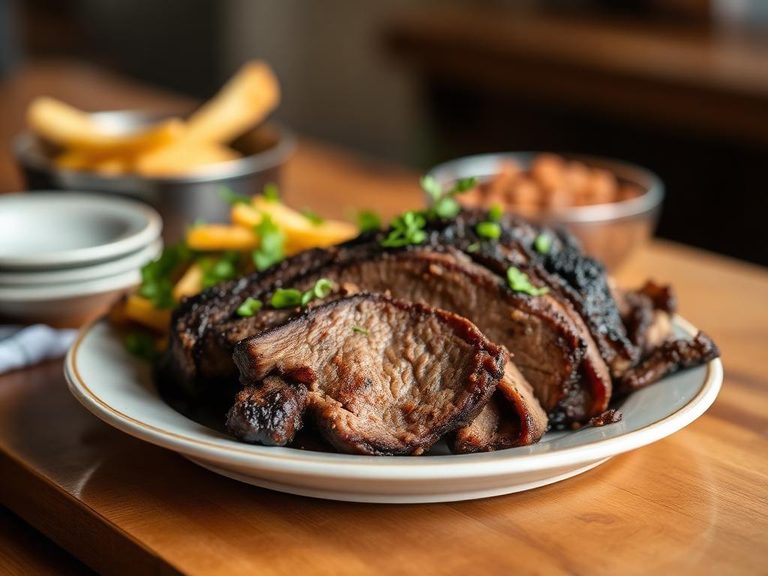
🌍 Where it's eaten
💡 Did you know?
The first commercially bottled barbecue sauce, 'K.C. Masterpiece,' was created in 1978 by a competition cook who entered it in a contest as a joke and won.
Full nutrition (USDA data · scales with serving)
| Water | 54.7 g |
| Energy | 172 kcal |
| Protein | 0.82 g |
| Total lipid (fat) | 0.63 g |
| Carbohydrate, by difference | 40.8 g |
| Fiber, total dietary | 0.90 g |
| Total Sugars | 33.2 g |
| Calcium, Ca | 33.0 mg |
| Iron, Fe | 0.64 mg |
| Magnesium, Mg | 13.0 mg |
| Phosphorus, P | 20.0 mg |
| Potassium, K | 232 mg |
| Sodium, Na | 1027 mg |
| Zinc, Zn | 0.17 mg |
| Copper, Cu | 0.07 mg |
| Selenium, Se | 1.3 ug |
| Vitamin C, total ascorbic acid | 0.60 mg |
| Thiamin | 0.02 mg |
| Riboflavin | 0.06 mg |
| Niacin | 0.60 mg |
| Vitamin B-6 | 0.07 mg |
| Folate, total | 2.0 ug |
| Folic acid | 0.00 ug |
| Folate, food | 2.0 ug |
| Folate, DFE | 2.0 ug |
| Choline, total | 7.1 mg |
| Vitamin B-12 | 0.00 ug |
| Vitamin B-12, added | 0.00 ug |
| Vitamin A, RAE | 11.0 ug |
| Retinol | 0.00 ug |
| Carotene, beta | 133 ug |
| Carotene, alpha | 0.00 ug |
| Cryptoxanthin, beta | 2.0 ug |
| Lycopene | 4550 ug |
| Lutein + zeaxanthin | 88.0 ug |
| Vitamin E (alpha-tocopherol) | 0.80 mg |
| Vitamin E, added | 0.00 mg |
| Vitamin D (D2 + D3) | 0.00 ug |
| Vitamin K (phylloquinone) | 1.8 ug |
| Alcohol, ethyl | 0.00 g |
| Caffeine | 0.00 mg |
| Theobromine | 0.00 mg |
Fat & fatty acid profile (per 100g)
| Fatty acids, total saturated | 0.04 g |
| SFA 4:0 | 0.00 g |
| SFA 6:0 | 0.00 g |
| SFA 8:0 | 0.00 g |
| SFA 10:0 | 0.00 g |
| SFA 12:0 | 0.00 g |
| SFA 14:0 | 0.00 g |
| SFA 16:0 | 0.03 g |
| SFA 18:0 | 0.01 g |
| Fatty acids, total monounsaturated | 0.08 g |
| MUFA 16:1 | 0.00 g |
| MUFA 18:1 | 0.04 g |
| MUFA 20:1 | 0.01 g |
| MUFA 22:1 | 0.02 g |
| Fatty acids, total polyunsaturated | 0.10 g |
| PUFA 18:2 | 0.08 g |
| PUFA 18:3 | 0.02 g |
| PUFA 18:4 | 0.00 g |
| PUFA 20:4 | 0.00 g |
| PUFA 20:5 n-3 (EPA) | 0.00 g |
| PUFA 22:5 n-3 (DPA) | 0.00 g |
| PUFA 22:6 n-3 (DHA) | 0.00 g |
| Cholesterol | 0.00 mg |
FAQ
Is barbecue sauce gluten-free?
Not always. Some brands use wheat-based vinegar or soy sauce containing wheat. Always check the label for certified gluten-free products if you have celiac disease or sensitivity.
Can I make a healthier version at home?
Yes. You can reduce sugar by using unsweetened tomato paste, apple cider vinegar, and spices. Sweeten minimally with dates, a touch of honey, or sugar-free alternatives like monk fruit.
Why does barbecue sauce sometimes separate?
Separation is natural due to the oil and vinegar components. Simply stir it well before use. For cooking, simmering it gently can help re-emulsify the ingredients.
Nutrient density (calculated · NRF9.3)
Nutrient Rich Foods index: beneficial nutrients (protein, fiber, vitamins, minerals) minus saturated fat, added sugar & sodium, per 100 kcal.
NRF9.3 index — Fulgoni, Keast & Drewnowski, 2009. Computed from USDA nutrients.
Weight-loss friendliness (composite index)
Energy density 1.72 kcal/g · 2% calories from protein · 0.9 g fiber · 33.2 g sugar per 100 g.
Composite of energy density (Rolls et al., 1999), protein & fiber satiety, minus sugar. A calculated heuristic — ranks satiety-per-calorie, not a clinical measure.
Dietary load (calculated from USDA values)
Potential renal acid load. Positive = acid-forming, negative = alkaline-forming.
Sodium-to-potassium ratio: 4.43 (lower is better — aim for ≤ 1)
Sodium:potassium per WHO potassium guidance. Computed from USDA nutrients.