

Apricot, with skin, raw
Whole food · Fruits and Fruit Juices
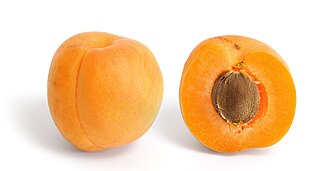
Photo: Wikipedia
A raw apricot, skin-on, is a small, velvety stone fruit with a delicate balance of sweet and tart flavors. Its tender, juicy flesh and slightly chewy skin provide a satisfying texture, while its low-calorie profile makes it a refreshing, nutrient-dense snack. Rich in fiber and vitamins, it offers a simple yet flavorful way to support digestive health and overall wellness.
Calorie split: 8% protein · 85% carbs · 8% fat
↓ Full nutrition💚 Why it's loved
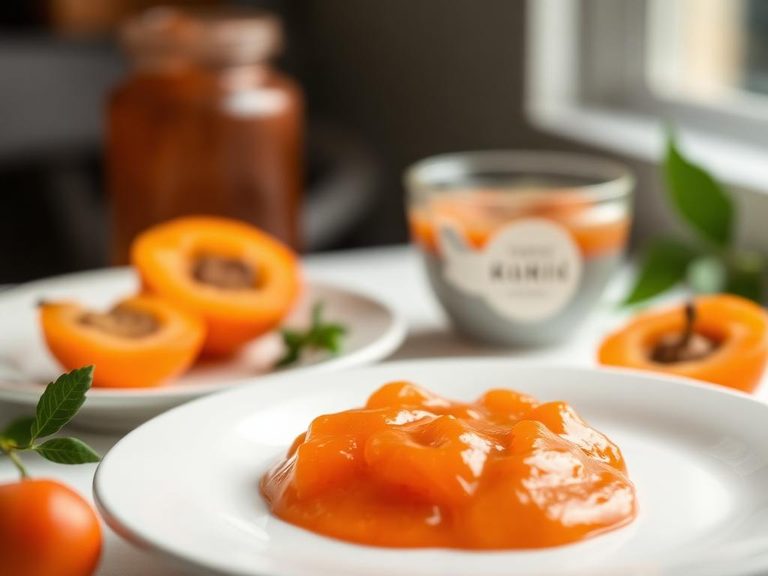
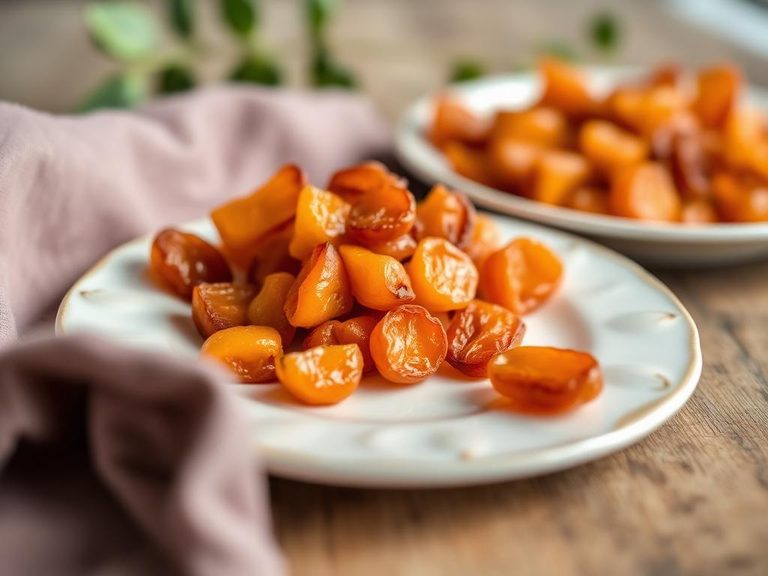
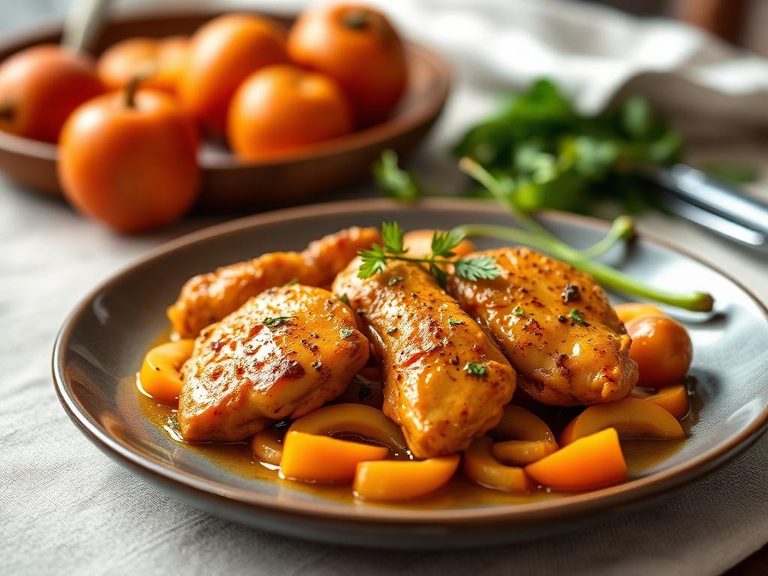
People love apricots for their sweet-tart, honeyed flavor and velvety texture, which makes them a versatile ingredient in both sweet and savory dishes. Their cultural significance in Mediterranean and Middle Eastern cuisines, where they are often dried or used in jams, adds to their enduring appeal.
⚠️ Watch-outs & how to enjoy it better
Some individuals may experience digestive discomfort or blood sugar spikes due to the natural sugars, especially if consumed in large quantities. To counteract this, pair apricots with protein or healthy fats (like nuts or yogurt) and practice portion control, especially for those managing blood sugar levels.
Key benefits
- High in dietary fiber (1.51g per 100g) to support digestion
- Low in calories (48 kcal per 100g) for weight management
- Rich in vitamin A and beta-carotene for eye health
- Contains antioxidants like lutein and zeaxanthin
- Provides potassium for heart and muscle function
🍽️ Popular dishes


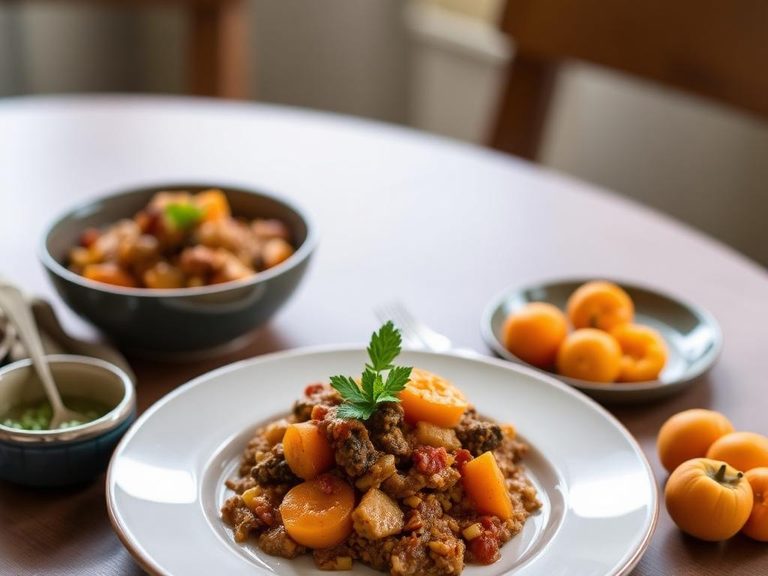
🌍 Where it's eaten
💡 Did you know?
Apricots are one of the earliest cultivated fruits, with evidence of their cultivation dating back to ancient Armenia over 4,000 years ago, and they are often referred to as 'Armenian plums' in some languages.
Full nutrition (USDA data · scales with serving)
| Water | 87.9 g |
| Energy (Atwater General Factors) | 48.4 kcal |
| Energy (Atwater Specific Factors) | 43.5 kcal |
| Nitrogen | 0.15 g |
| Protein | 0.96 g |
| Total lipid (fat) | 0.41 g |
| Ash | 0.52 g |
| Carbohydrate, by difference | 10.2 g |
| Fiber, total dietary | 1.5 g |
| Sugars, Total | 6.3 g |
| Sucrose | 2.0 g |
| Glucose | 2.6 g |
| Fructose | 1.7 g |
| Lactose | 0.00 g |
| Maltose | 0.00 g |
| Calcium, Ca | 11.6 mg |
| Iron, Fe | 0.16 mg |
| Magnesium, Mg | 8.9 mg |
| Phosphorus, P | 22.5 mg |
| Potassium, K | 231 mg |
| Sodium, Na | 0.00 mg |
| Zinc, Zn | 0.15 mg |
| Copper, Cu | 0.06 mg |
| Manganese, Mn | 0.05 mg |
| Vitamin C, total ascorbic acid | 3.1 mg |
| Biotin | 0.00 ug |
Fat & fatty acid profile (per 100g)
Estimated from Apricots, canned, heavy syrup pack, without skin, solids and liquids — USDA does not publish this profile for Apricot.
| Fatty acids, total saturated | 0.01 g |
| SFA 16:0 | 0.01 g |
| SFA 18:0 | 0.00 g |
| Fatty acids, total monounsaturated | 0.04 g |
| MUFA 18:1 | 0.04 g |
| Fatty acids, total polyunsaturated | 0.02 g |
| PUFA 18:2 | 0.02 g |
| Fatty acids, total trans | 0.00 g |
| Cholesterol | 0.00 mg |
Amino acid profile (per 100g)
Estimated from Apricots, canned, heavy syrup pack, without skin, solids and liquids — USDA does not publish this profile for Apricot.
| Tryptophan | 0.01 g |
| Threonine | 0.02 g |
| Isoleucine | 0.02 g |
| Leucine | 0.03 g |
| Lysine | 0.04 g |
| Methionine | 0.00 g |
| Cystine | 0.00 g |
| Phenylalanine | 0.02 g |
| Tyrosine | 0.01 g |
| Valine | 0.02 g |
| Arginine | 0.02 g |
| Histidine | 0.01 g |
| Alanine | 0.03 g |
| Aspartic acid | 0.12 g |
| Glutamic acid | 0.05 g |
| Glycine | 0.02 g |
| Proline | 0.03 g |
| Serine | 0.03 g |
FAQ
Are raw apricots with skin nutritious?
Yes, they are rich in fiber, vitamin A, and antioxidants, with a low calorie count of 48 kcal per 100g.
Can I eat apricot skin?
Absolutely, the skin is edible and contains additional fiber and nutrients, though some may prefer to peel it for a smoother texture.
How do I store raw apricots?
Store them at room temperature until ripe, then refrigerate for up to a week to maintain freshness.
Nutrient density (calculated · NRF9.3)
Nutrient Rich Foods index: beneficial nutrients (protein, fiber, vitamins, minerals) minus saturated fat, added sugar & sodium, per 100 kcal.
NRF9.3 index — Fulgoni, Keast & Drewnowski, 2009. Computed from USDA nutrients.
Weight-loss friendliness (composite index)
Energy density 0.48 kcal/g · 8% calories from protein · 1.5 g fiber · 0.0 g sugar per 100 g.
Composite of energy density (Rolls et al., 1999), protein & fiber satiety, minus sugar. A calculated heuristic — ranks satiety-per-calorie, not a clinical measure.
Dietary load (calculated from USDA values)
Potential renal acid load. Positive = acid-forming, negative = alkaline-forming.
Sodium-to-potassium ratio: 0.00 (lower is better — aim for ≤ 1)
Sodium:potassium per WHO potassium guidance. Computed from USDA nutrients.