Seeds, pumpkin and squash seeds, whole, roasted, without salt
Whole food · Nut and Seed Products

Photo: Wikipedia
Roasted pumpkin and squash seeds are a crunchy, nutty snack with a satisfying, earthy flavor and a satisfyingly firm bite. They are a nutritional powerhouse, offering a remarkable 18.4g of fiber and 18.55g of protein per 100g, alongside a substantial 446 kcal. Their rich, toasty profile makes them a versatile and deeply satisfying addition to both sweet and savory dishes.
💚 Why it's loved
People love them for their addictive, savory crunch and the deep, toasted flavor that intensifies when roasted. Their versatility is key—they are enjoyed as a standalone snack, a salad topper, or a key ingredient in global cuisines from Mexican to Mediterranean.
⚠️ Watch-outs & how to enjoy it better
The high fiber content (18.4g per 100g) can cause digestive discomfort or bloating in some individuals if consumed in large quantities. To mitigate this, start with a small portion (e.g., 30g) and drink plenty of water. Additionally, while roasted without salt, they are often used in seasoned preparations; those monitoring sodium should check labels or roast them plain at home.
Key benefits
- Excellent source of dietary fiber (18.4g per 100g) for digestive health.
- High in plant-based protein (18.55g per 100g).
- Provides essential minerals like magnesium, zinc, and iron.
- Contains healthy fats, including omega-6 fatty acids.
🍽️ Popular dishes
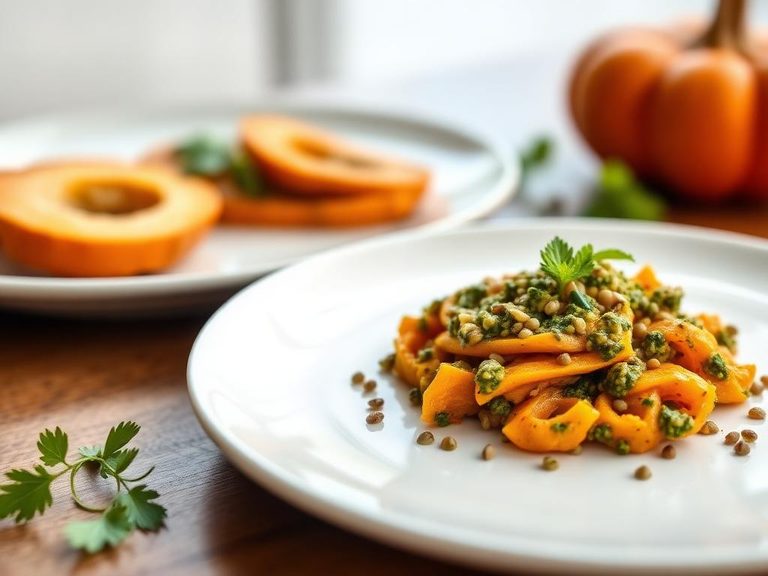
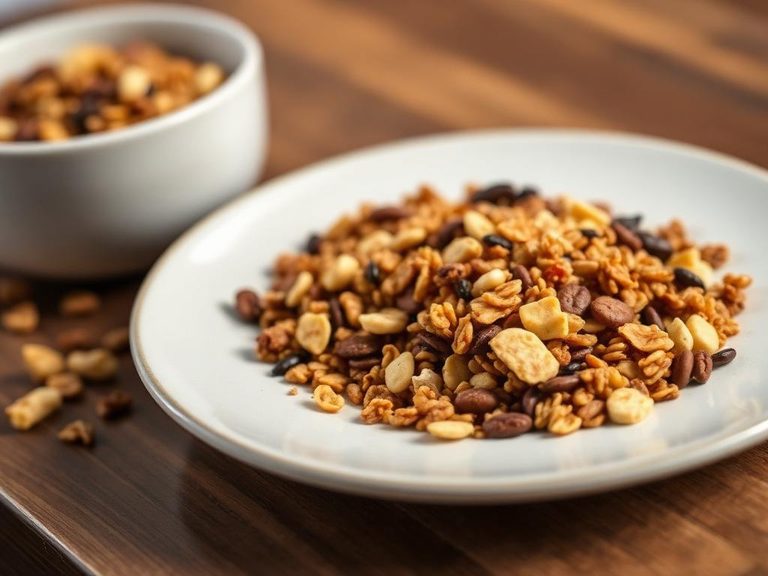
🌍 Where it's eaten
💡 Did you know?
The word 'pepita' is the Spanish term for pumpkin seed, and it's widely used in English to describe these seeds, especially when they are green and hulled.
Full nutrition (scales with serving)
| Water | 4.5 g |
| Energy | 446 kcal |
| Energy | 1866 kj |
| Protein | 18.6 g |
| Total lipid (fat) | 19.4 g |
| Ash | 3.8 g |
| Carbohydrate, by difference | 53.8 g |
| Fiber, total dietary | 18.4 g |
| Calcium, Ca | 55.0 mg |
| Iron, Fe | 3.3 mg |
| Magnesium, Mg | 262 mg |
| Phosphorus, P | 92.0 mg |
| Potassium, K | 919 mg |
| Sodium, Na | 18.0 mg |
| Zinc, Zn | 10.3 mg |
| Copper, Cu | 0.69 mg |
| Manganese, Mn | 0.50 mg |
| Vitamin C, total ascorbic acid | 0.30 mg |
| Thiamin | 0.03 mg |
| Riboflavin | 0.05 mg |
| Niacin | 0.29 mg |
| Pantothenic acid | 0.06 mg |
| Vitamin B-6 | 0.04 mg |
| Folate, total | 9.0 ug |
| Folic acid | 0.00 ug |
| Folate, food | 9.0 ug |
| Folate, DFE | 9.0 ug |
| Vitamin B-12 | 0.00 ug |
| Vitamin A, RAE | 3.0 ug |
| Retinol | 0.00 ug |
| Vitamin A, IU | 62.0 iu |
| Vitamin D (D2 + D3), International Units | 0.00 iu |
| Vitamin D (D2 + D3) | 0.00 ug |
Fat & fatty acid profile (per 100g)
| Fatty acids, total saturated | 3.7 g |
| SFA 12:0 | 0.02 g |
| SFA 14:0 | 0.02 g |
| SFA 16:0 | 2.4 g |
| SFA 18:0 | 1.2 g |
| Fatty acids, total monounsaturated | 6.0 g |
| MUFA 16:1 | 0.04 g |
| MUFA 18:1 | 6.0 g |
| Fatty acids, total polyunsaturated | 8.8 g |
| PUFA 18:2 | 8.8 g |
| PUFA 18:3 | 0.08 g |
| Cholesterol | 0.00 mg |
Amino acid profile (per 100g)
| Tryptophan | 0.33 g |
| Threonine | 0.68 g |
| Isoleucine | 0.96 g |
| Leucine | 1.6 g |
| Lysine | 1.4 g |
| Methionine | 0.42 g |
| Cystine | 0.23 g |
| Phenylalanine | 0.92 g |
| Tyrosine | 0.77 g |
| Valine | 1.5 g |
| Arginine | 3.0 g |
| Histidine | 0.52 g |
| Alanine | 0.88 g |
| Aspartic acid | 1.9 g |
| Glutamic acid | 3.3 g |
| Glycine | 1.4 g |
| Proline | 0.76 g |
| Serine | 0.87 g |
FAQ
What is the difference between pumpkin seeds and pepitas?
Pepitas are the hulled, inner kernel of a pumpkin seed, typically green. 'Pumpkin seeds' often refers to the whole, unhulled seed, which has a white or beige shell. Nutritionally, they are very similar.
How should I store roasted pumpkin seeds?
Store them in an airtight container at room temperature for up to 2 weeks, or in the refrigerator for up to 2 months to maintain freshness and crunch.
Can I eat the shells?
Yes, the shells are edible and contain additional fiber. However, they can be tough to digest for some people, so if you have digestive sensitivities, you may prefer hulled pepitas.
Are they good for blood sugar?
Their high fiber and protein content can help slow the absorption of sugar, making them a better snack choice than many processed options. However, they are calorie-dense, so portion control is important.