Pears, raw, green anjou (Includes foods for USDA's Food Distribution Program)
Whole food · Fruits and Fruit Juices
The raw green Anjou pear is a short, rounded fruit with a classic pear shape, featuring smooth, forest-green skin that often develops a subtle yellow blush as it ripens. Its flesh is creamy-white, exceptionally juicy, and offers a rich, sweet flavor with a hint of honey and a slightly grainy texture from natural stone cells. Nutritionally, it's a low-calorie, high-fiber snack that provides a quick source of natural energy from its sugars.
💚 Why it's loved
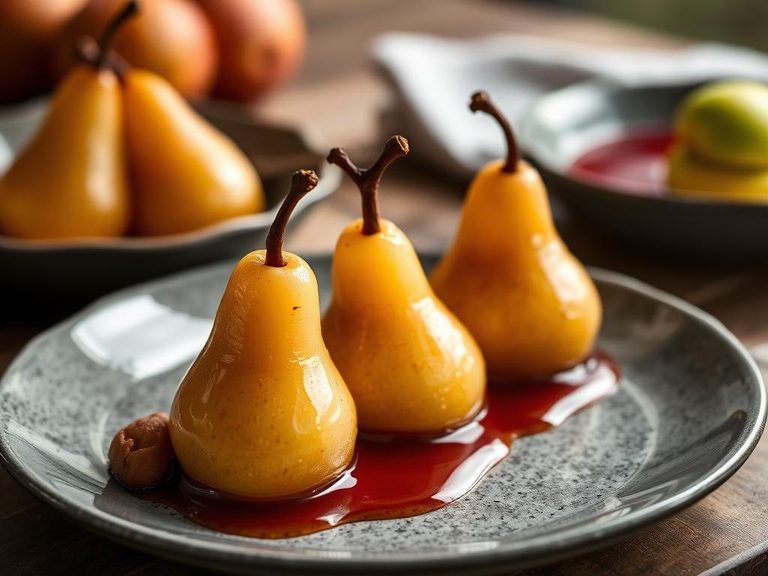
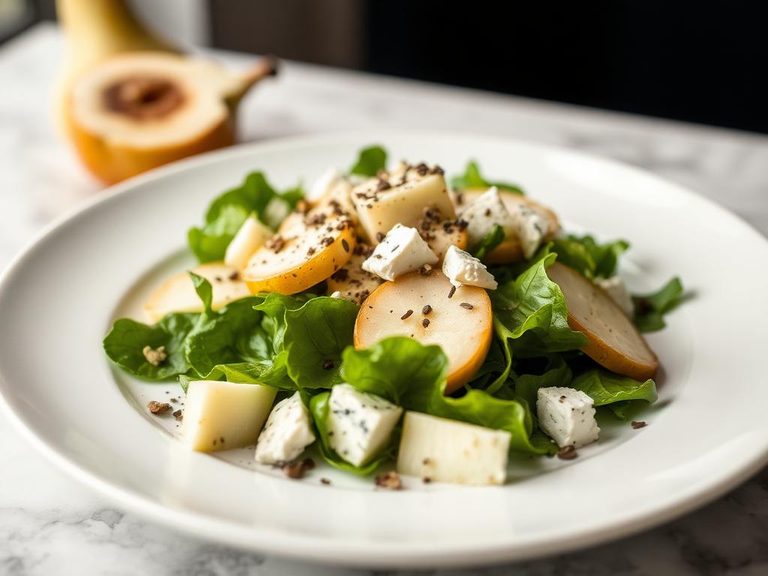
People adore the Anjou for its dependable, rich sweetness and satisfying, juicy crunch that isn't overly grainy. Its sturdy flesh holds up beautifully in both fresh preparations and cooked applications, making it a versatile favorite for everything from lunchboxes to elegant tarts.
⚠️ Watch-outs & how to enjoy it better
Due to its relatively high natural sugar content (9.73g per 100g), it can cause a faster blood-sugar spike compared to lower-sugar fruits. To mitigate this, pair slices with a source of protein or healthy fat like almond butter, a handful of nuts, or a piece of cheese to slow sugar absorption. Also, its skin, while edible, can be tough for some; peeling it is an easy solution.
Key benefits
- Excellent source of dietary fiber, aiding digestion and promoting satiety.
- Low in calories and fat, making it a nutrient-dense snack option.
- Provides a quick, natural energy boost from its carbohydrate content.
- Contains vitamin C, an antioxidant that supports immune function.
- High water content helps with hydration.
🍽️ Popular dishes
🌍 Where it's eaten
💡 Did you know?
The Anjou pear is one of the few pear varieties that does not change color when ripe; it stays green, so you must check for ripeness by gently pressing the neck near the stem—if it yields slightly, it's ready to eat.
Full nutrition (scales with serving)
| Water | 83.3 g |
| Energy | 66.0 kcal |
| Energy | 275 kj |
| Protein | 0.44 g |
| Total lipid (fat) | 0.10 g |
| Ash | 0.37 g |
| Carbohydrate, by difference | 15.8 g |
| Fiber, total dietary | 3.1 g |
| Total Sugars | 9.7 g |
| Sucrose | 0.33 g |
| Glucose | 3.3 g |
| Fructose | 6.1 g |
| Lactose | 0.00 g |
| Maltose | 0.00 g |
| Galactose | 0.00 g |
| Calcium, Ca | 11.0 mg |
| Iron, Fe | 0.24 mg |
| Magnesium, Mg | 7.0 mg |
| Phosphorus, P | 13.0 mg |
| Potassium, K | 127 mg |
| Sodium, Na | 1.0 mg |
| Zinc, Zn | 0.10 mg |
| Copper, Cu | 0.08 mg |
| Manganese, Mn | 0.05 mg |
| Selenium, Se | 0.00 ug |
| Vitamin C, total ascorbic acid | 4.4 mg |
| Thiamin | 0.01 mg |
| Riboflavin | 0.02 mg |
| Niacin | 0.15 mg |
| Pantothenic acid | 0.04 mg |
| Vitamin B-6 | 0.03 mg |
| Folate, total | 9.0 ug |
| Folate, food | 9.0 ug |
| Choline, total | 5.1 mg |
| Vitamin A, RAE | 1.0 ug |
| Carotene, beta | 14.0 ug |
| Carotene, alpha | 0.00 ug |
| Cryptoxanthin, beta | 1.0 ug |
| Vitamin A, IU | 25.0 iu |
| Lycopene | 0.00 ug |
| Lutein + zeaxanthin | 46.0 ug |
| Vitamin E (alpha-tocopherol) | 0.12 mg |
| Vitamin K (phylloquinone) | 4.3 ug |
| Vitamin K (Dihydrophylloquinone) | 0.00 ug |
Fat & fatty acid profile (per 100g)
| Fatty acids, total trans | 0.00 g |
Amino acid profile (per 100g)
| Tryptophan | 0.00 g |
| Threonine | 0.01 g |
| Isoleucine | 0.01 g |
| Leucine | 0.02 g |
| Lysine | 0.02 g |
| Methionine | 0.00 g |
| Cystine | 0.00 g |
| Phenylalanine | 0.01 g |
| Tyrosine | 0.00 g |
| Valine | 0.02 g |
| Arginine | 0.01 g |
| Histidine | 0.00 g |
| Alanine | 0.02 g |
| Aspartic acid | 0.12 g |
| Glutamic acid | 0.04 g |
| Glycine | 0.01 g |
| Proline | 0.03 g |
| Serine | 0.02 g |
FAQ
How do I know when an Anjou pear is ripe?
Unlike many pears, the Anjou's green skin doesn't turn yellow. Check for ripeness by gently pressing the neck (the narrow part near the stem). If it yields to light pressure, it's ripe and ready to eat. If it's hard, let it ripen at room temperature for a few days.
Can I eat the skin of a green Anjou pear?
Yes, the skin is edible and contains a good portion of the pear's fiber and nutrients. Simply wash it thoroughly. If you find the skin tough or prefer a smoother texture in recipes, you can easily peel it.
What's the best way to store Anjou pears?
To ripen unripe pears, leave them at room temperature. Once ripe, you can store them in the refrigerator's crisper drawer to slow further ripening and keep them fresh for an additional 3-5 days.