

Squash, summer, green, zucchini, includes skin, raw
Whole food · Vegetables and Vegetable Products
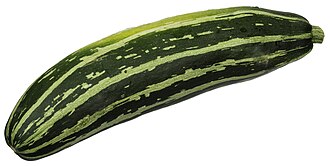
Photo: Wikipedia
Raw zucchini is a crisp, mildly sweet summer squash with a tender, water-rich flesh and edible green skin. At just 19 calories per 100g, it's a light, hydrating vegetable with a subtle, grassy flavor and a satisfying crunch. Its low-calorie profile and fiber content make it a popular choice for adding volume and nutrients to meals without significant energy density.
Calorie split: 21% protein · 69% carbs · 10% fat
↓ Full nutrition💚 Why it's loved
People love zucchini for its mild, adaptable flavor that absorbs seasonings and sauces beautifully, and its satisfying crunch when raw. It's a cultural staple in Mediterranean and Italian cuisines, often used in everything from salads to grilled dishes, making it a beloved, easy-to-use vegetable.
⚠️ Watch-outs & how to enjoy it better
Raw zucchini can be slightly bland or watery for some palates, and its high water content may lead to sogginess in dishes if not prepared properly. To counteract this, pair it with flavorful dressings, fats like olive oil, or protein-rich ingredients to enhance taste and texture, and consider salting and draining slices to reduce excess moisture.
Key benefits
- Extremely low in calories, ideal for weight management
- Good source of dietary fiber for digestive health
- Provides vitamin C and potassium
- High water content aids hydration
- Versatile raw ingredient for salads and snacks
🍽️ Popular dishes
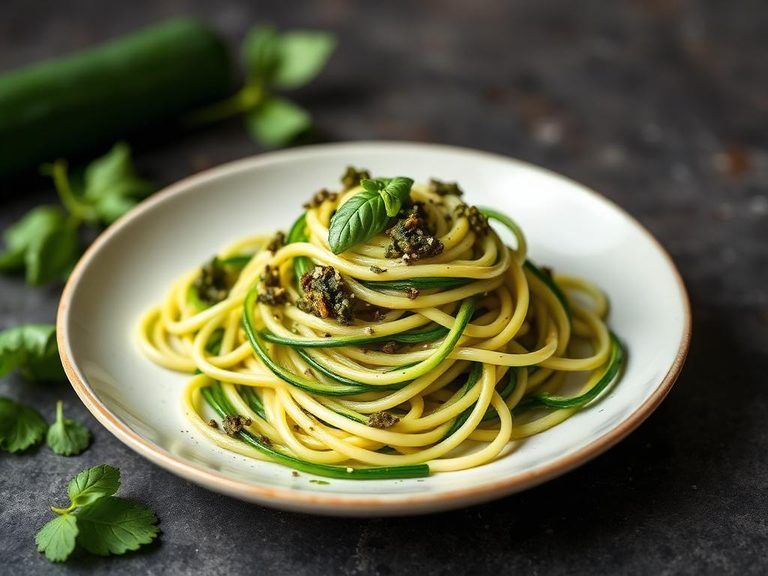
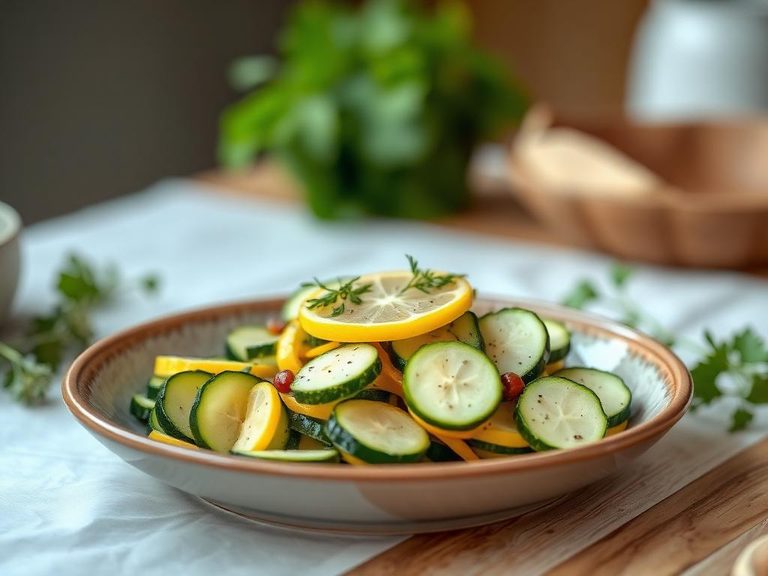
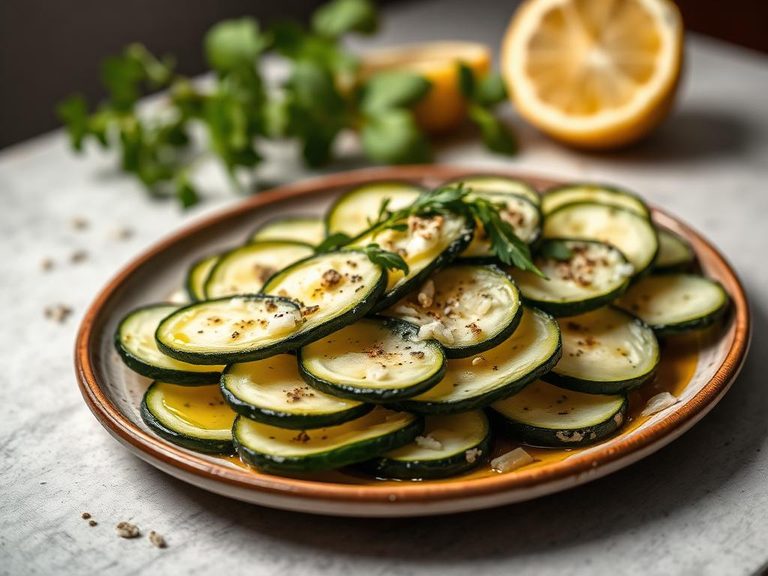
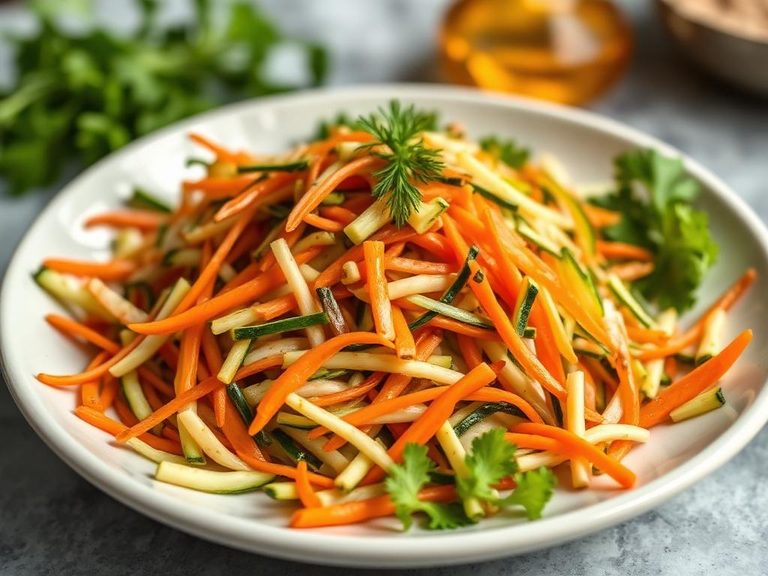
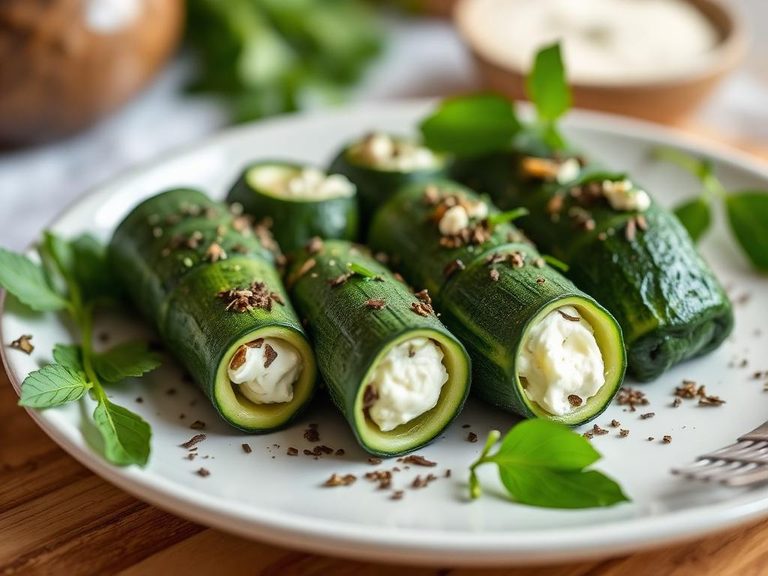
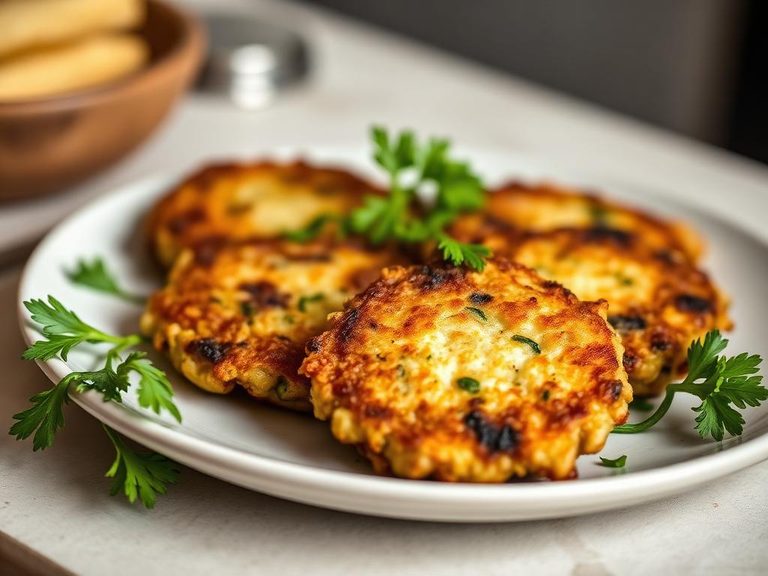
🌍 Where it's eaten
💡 Did you know?
Zucchini is botanically a fruit, specifically a berry, though it's treated as a vegetable in culinary contexts.
Full nutrition (USDA data · scales with serving)
| Water | 95.0 g |
| Energy (Atwater General Factors) | 19.0 kcal |
| Energy (Atwater Specific Factors) | 16.0 kcal |
| Nitrogen | 0.16 g |
| Protein | 0.98 g |
| Total lipid (fat) | 0.20 g |
| Ash | 0.54 g |
| Carbohydrate, by difference | 3.3 g |
| Fiber, total dietary | 0.75 g |
| Calcium, Ca | 20.9 mg |
| Iron, Fe | 0.19 mg |
| Magnesium, Mg | 15.3 mg |
| Phosphorus, P | 32.9 mg |
| Potassium, K | 226 mg |
| Sodium, Na | 0.00 mg |
| Zinc, Zn | 0.26 mg |
| Copper, Cu | 0.06 mg |
| Manganese, Mn | 0.15 mg |
| Vitamin C, total ascorbic acid | 15.0 mg |
| Folate, total | 71.0 ug |
| 5-methyl tetrahydrofolate (5-MTHF) | 20.0 ug |
Fat & fatty acid profile (per 100g)
Estimated from Squash, winter, butternut, cooked, baked, with salt — USDA does not publish this profile for Squash.
| Fatty acids, total saturated | 0.02 g |
| SFA 12:0 | 0.00 g |
| SFA 14:0 | 0.00 g |
| SFA 16:0 | 0.02 g |
| SFA 18:0 | 0.00 g |
| Fatty acids, total monounsaturated | 0.01 g |
| MUFA 16:1 | 0.00 g |
| MUFA 18:1 | 0.01 g |
| Fatty acids, total polyunsaturated | 0.04 g |
| PUFA 18:2 | 0.01 g |
| PUFA 18:3 | 0.02 g |
| Fatty acids, total trans | 0.00 g |
| Cholesterol | 0.00 mg |
Amino acid profile (per 100g)
Estimated from Squash, winter, butternut, cooked, baked, with salt — USDA does not publish this profile for Squash.
| Tryptophan | 0.01 g |
| Threonine | 0.03 g |
| Isoleucine | 0.04 g |
| Leucine | 0.05 g |
| Lysine | 0.03 g |
| Methionine | 0.01 g |
| Cystine | 0.01 g |
| Phenylalanine | 0.04 g |
| Tyrosine | 0.03 g |
| Valine | 0.04 g |
| Arginine | 0.05 g |
| Histidine | 0.02 g |
| Alanine | 0.04 g |
| Aspartic acid | 0.10 g |
| Glutamic acid | 0.16 g |
| Glycine | 0.03 g |
| Proline | 0.03 g |
| Serine | 0.04 g |
FAQ
Is raw zucchini safe to eat?
Yes, raw zucchini is safe and commonly eaten in salads, slaws, and as a snack. It's low in calories and provides nutrients like vitamin C and fiber.
How does raw zucchini differ from cooked zucchini nutritionally?
Raw zucchini retains more vitamin C and has a slightly higher fiber content compared to cooked, but cooking can make some nutrients more bioavailable. Both are low in calories and fat.
Can raw zucchini cause digestive issues?
For most people, raw zucchini is easy to digest. However, its high water and fiber content may cause bloating or gas in sensitive individuals, especially if eaten in large quantities. Start with small portions and increase gradually.
Nutrient density (calculated · NRF9.3)
Nutrient Rich Foods index: beneficial nutrients (protein, fiber, vitamins, minerals) minus saturated fat, added sugar & sodium, per 100 kcal.
NRF9.3 index — Fulgoni, Keast & Drewnowski, 2009. Computed from USDA nutrients.
Weight-loss friendliness (composite index)
Energy density 0.19 kcal/g · 21% calories from protein · 0.8 g fiber · 0.0 g sugar per 100 g.
Composite of energy density (Rolls et al., 1999), protein & fiber satiety, minus sugar. A calculated heuristic — ranks satiety-per-calorie, not a clinical measure.
Dietary load (calculated from USDA values)
Potential renal acid load. Positive = acid-forming, negative = alkaline-forming.
Sodium-to-potassium ratio: 0.00 (lower is better — aim for ≤ 1)
Sodium:potassium per WHO potassium guidance. Computed from USDA nutrients.