

Spoonbread
Common food

Photo: Wikipedia
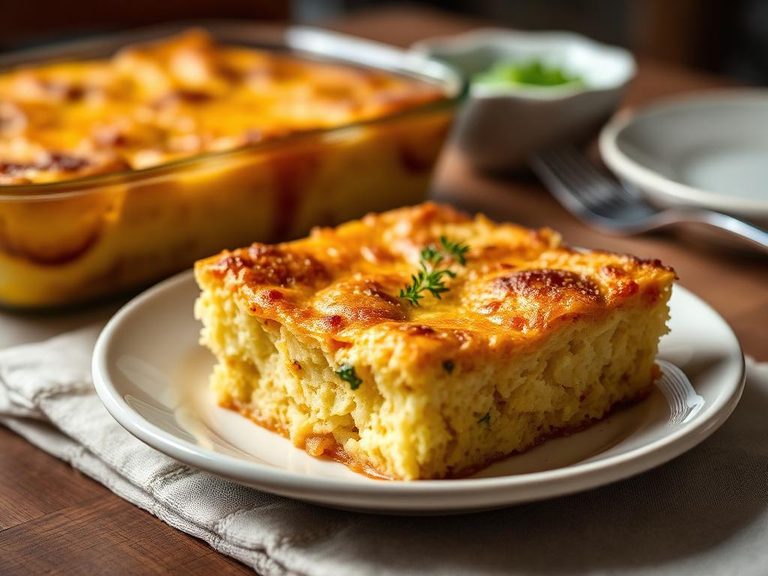
Spoonbread is a savory, custard-like Southern American casserole, traditionally made with cornmeal, eggs, and milk or butter, yielding a texture that is soft, moist, and slightly sweet. Its nutritional profile is moderate in calories and carbohydrates, with a notable protein content from eggs and dairy, making it a comforting yet balanced side dish. The dish is often baked until golden on top, offering a delicate balance of creamy interior and slightly crisp edges.
Calorie split: 16% protein · 45% carbs · 39% fat
↓ Full nutrition💚 Why it's loved
People love spoonbread for its comforting, creamy texture and subtle sweetness, which pairs beautifully with savory dishes like fried chicken or barbecue. Its cultural roots in Southern cuisine evoke nostalgia and warmth, making it a beloved staple at family gatherings and holiday meals.
⚠️ Watch-outs & how to enjoy it better
Spoonbread can be high in sodium if prepared with added salt or processed ingredients, potentially affecting blood pressure. To counteract this, use low-sodium broth or reduce added salt, and pair it with fiber-rich vegetables or lean proteins to balance the meal. Those with lactose intolerance should opt for lactose-free milk or plant-based alternatives to avoid digestive discomfort.
Key benefits
- Rich in protein from eggs and dairy, supporting muscle maintenance.
- Moderate calorie content, suitable for balanced meal plans.
- Contains calcium from dairy, beneficial for bone health.
- Provides energy from carbohydrates, ideal for active lifestyles.
- Low in fiber, making it easy to digest for sensitive stomachs.
🍽️ Popular dishes


🌍 Where it's eaten
💡 Did you know?
Spoonbread is sometimes called 'cornmeal mush' or 'corn pone' in different regions, and its origins trace back to Native American corn-based dishes adapted by early settlers in the American South.
Full nutrition (USDA data · scales with serving)
| Water | 65.9 g |
| Energy | 166 kcal |
| Protein | 6.7 g |
| Total lipid (fat) | 7.1 g |
| Carbohydrate, by difference | 18.6 g |
| Fiber, total dietary | 0.70 g |
| Total Sugars | 4.8 g |
| Calcium, Ca | 126 mg |
| Iron, Fe | 1.1 mg |
| Magnesium, Mg | 19.0 mg |
| Phosphorus, P | 147 mg |
| Potassium, K | 195 mg |
| Sodium, Na | 382 mg |
| Zinc, Zn | 0.75 mg |
| Copper, Cu | 0.01 mg |
| Selenium, Se | 9.5 ug |
| Vitamin C, total ascorbic acid | 0.10 mg |
| Thiamin | 0.13 mg |
| Riboflavin | 0.26 mg |
| Niacin | 0.88 mg |
| Vitamin B-6 | 0.08 mg |
| Folate, total | 37.0 ug |
| Folic acid | 22.0 ug |
| Folate, food | 15.0 ug |
| Folate, DFE | 52.0 ug |
| Choline, total | 65.2 mg |
| Vitamin B-12 | 0.44 ug |
| Vitamin B-12, added | 0.00 ug |
| Vitamin A, RAE | 118 ug |
| Retinol | 114 ug |
| Carotene, beta | 41.0 ug |
| Carotene, alpha | 10.0 ug |
| Cryptoxanthin, beta | 2.0 ug |
| Lycopene | 0.00 ug |
| Lutein + zeaxanthin | 351 ug |
| Vitamin E (alpha-tocopherol) | 0.57 mg |
| Vitamin E, added | 0.00 mg |
| Vitamin D (D2 + D3) | 1.6 ug |
| Vitamin K (phylloquinone) | 3.6 ug |
| Alcohol, ethyl | 0.00 g |
| Caffeine | 0.00 mg |
| Theobromine | 0.00 mg |
Fat & fatty acid profile (per 100g)
| Fatty acids, total saturated | 2.3 g |
| SFA 4:0 | 0.04 g |
| SFA 6:0 | 0.03 g |
| SFA 8:0 | 0.02 g |
| SFA 10:0 | 0.05 g |
| SFA 12:0 | 0.06 g |
| SFA 14:0 | 0.20 g |
| SFA 16:0 | 1.3 g |
| SFA 18:0 | 0.57 g |
| Fatty acids, total monounsaturated | 2.6 g |
| MUFA 16:1 | 0.08 g |
| MUFA 18:1 | 2.5 g |
| MUFA 20:1 | 0.01 g |
| MUFA 22:1 | 0.00 g |
| Fatty acids, total polyunsaturated | 1.4 g |
| PUFA 18:2 | 1.3 g |
| PUFA 18:3 | 0.09 g |
| PUFA 18:4 | 0.00 g |
| PUFA 20:4 | 0.00 g |
| PUFA 20:5 n-3 (EPA) | 0.00 g |
| PUFA 22:5 n-3 (DPA) | 0.00 g |
| PUFA 22:6 n-3 (DHA) | 0.00 g |
| Cholesterol | 86.0 mg |
FAQ
What is spoonbread made of?
Spoonbread is typically made from cornmeal, eggs, milk or butter, and sometimes sugar or salt, baked into a soft, custard-like casserole.
Is spoonbread gluten-free?
Yes, spoonbread is generally gluten-free as it is made from cornmeal, but always check for added ingredients that might contain gluten.
How do you serve spoonbread?
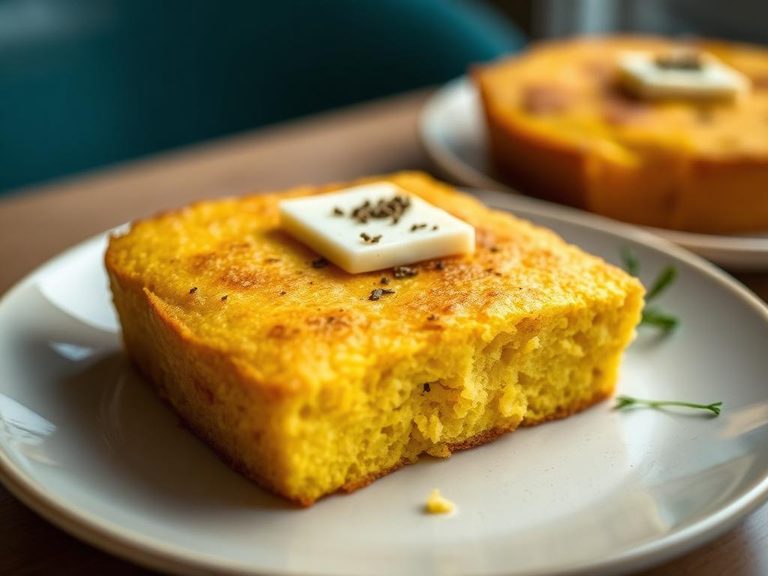
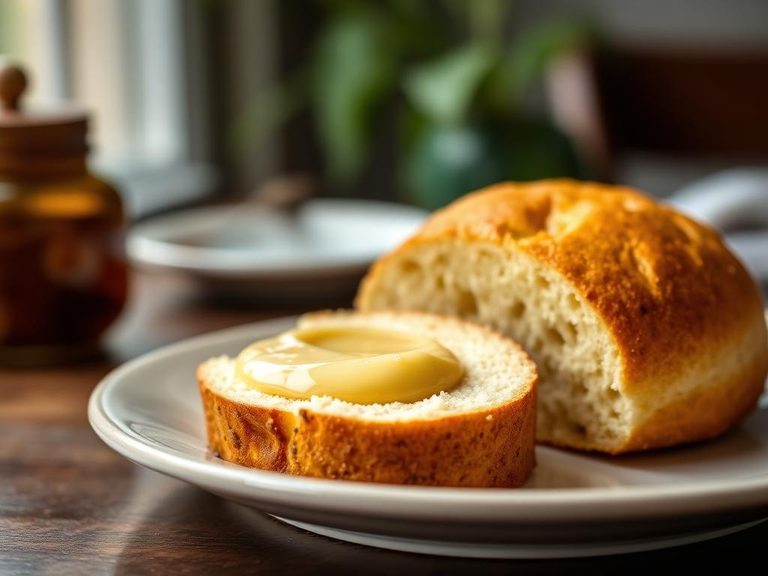
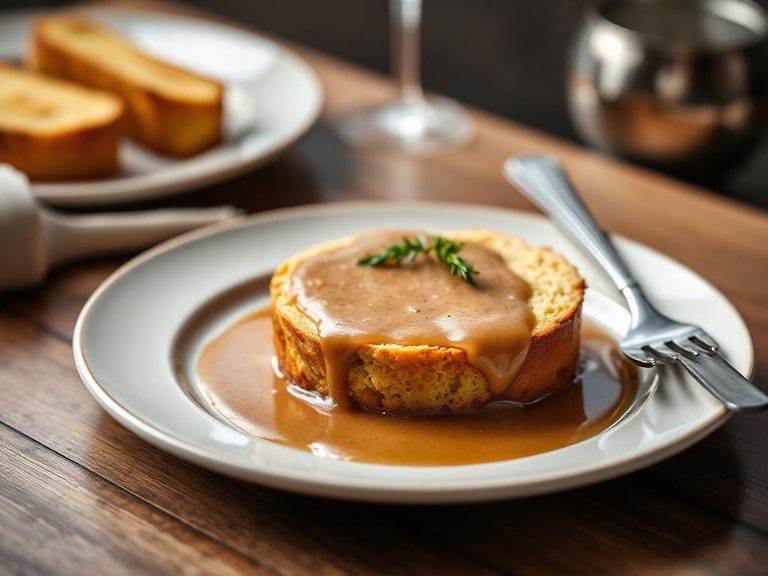
Spoonbread is usually served warm as a side dish, often with butter, honey, or gravy, and pairs well with meats like fried chicken or barbecue.
Can spoonbread be made ahead of time?
Yes, spoonbread can be prepared in advance and reheated, though it is best enjoyed fresh for optimal texture and flavor.
Nutrient density (calculated · NRF9.3)
Nutrient Rich Foods index: beneficial nutrients (protein, fiber, vitamins, minerals) minus saturated fat, added sugar & sodium, per 100 kcal.
NRF9.3 index — Fulgoni, Keast & Drewnowski, 2009. Computed from USDA nutrients.
Weight-loss friendliness (composite index)
Energy density 1.66 kcal/g · 16% calories from protein · 0.7 g fiber · 4.8 g sugar per 100 g.
Composite of energy density (Rolls et al., 1999), protein & fiber satiety, minus sugar. A calculated heuristic — ranks satiety-per-calorie, not a clinical measure.
Dietary load (calculated from USDA values)
Potential renal acid load. Positive = acid-forming, negative = alkaline-forming.
Sodium-to-potassium ratio: 1.96 (lower is better — aim for ≤ 1)
Sodium:potassium per WHO potassium guidance. Computed from USDA nutrients.