Soup, tomato, canned
Common food
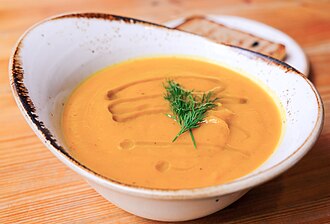
Photo: Wikipedia
Canned tomato soup is a smooth, velvety, and often sweet-tart liquid made from pureed tomatoes, typically with added salt and sugar. Its texture is uniformly silky, ranging from thin and brothy to thick and creamy depending on the brand. Nutritionally, it's a low-calorie, low-fat source of carbohydrates, primarily from natural and added sugars.
💚 Why it's loved
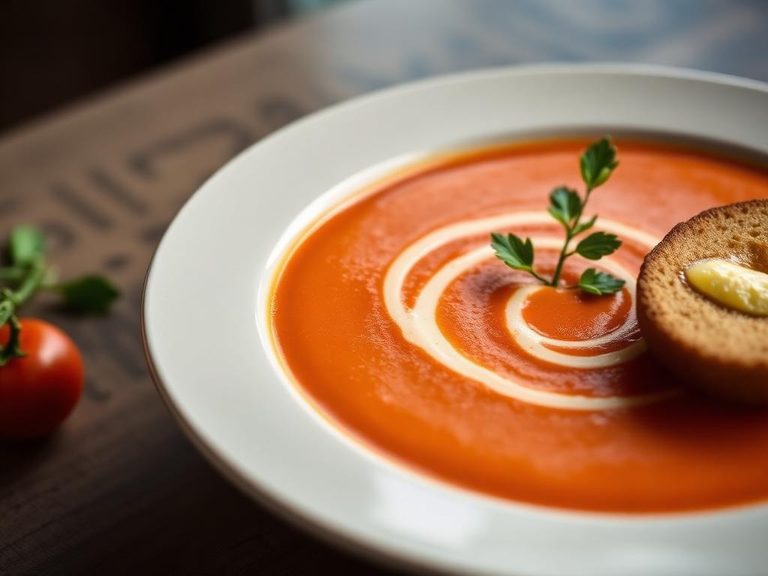
People adore its comforting, nostalgic warmth and the perfect balance of sweet and tangy tomato flavor. It's a versatile base for quick meals, from a simple lunch paired with a grilled cheese sandwich to a starting point for stews and sauces.
⚠️ Watch-outs & how to enjoy it better
The primary downside is the high sodium content common in canned versions, which can contribute to water retention and elevated blood pressure. Its sugar content (4.16g per 100g) can also cause a noticeable blood-sugar spike, especially when consumed alone. To counteract this, pair it with a source of protein and fat (like cheese, beans, or a dollop of Greek yogurt) to slow sugar absorption, and choose a 'low-sodium' or 'no salt added' variety.
Key benefits
- Low in calories (34 kcal per 100g)
- Very low in fat (0.33g per 100g)
- Source of quick, easily digestible carbohydrates
- Contains lycopene, a potent antioxidant from tomatoes
- Convenient, shelf-stable pantry staple
🍽️ Popular dishes

🌍 Where it's eaten
💡 Did you know?
The iconic Campbell's condensed tomato soup, which popularized the canned version, was first introduced in 1897 and was originally marketed as a 'health food' for invalids.
Full nutrition (scales with serving)
| Water | 90.3 g |
| Energy | 34.0 kcal |
| Protein | 0.63 g |
| Total lipid (fat) | 0.33 g |
| Carbohydrate, by difference | 7.7 g |
| Fiber, total dietary | 0.60 g |
| Total Sugars | 4.2 g |
| Calcium, Ca | 8.0 mg |
| Iron, Fe | 0.44 mg |
| Magnesium, Mg | 7.0 mg |
| Phosphorus, P | 13.0 mg |
| Potassium, K | 113 mg |
| Sodium, Na | 263 mg |
| Zinc, Zn | 0.14 mg |
| Copper, Cu | 0.08 mg |
| Selenium, Se | 0.30 ug |
| Vitamin C, total ascorbic acid | 2.8 mg |
| Thiamin | 0.01 mg |
| Riboflavin | 0.02 mg |
| Niacin | 0.38 mg |
| Vitamin B-6 | 0.04 mg |
| Folate, total | 4.0 ug |
| Folic acid | 0.00 ug |
| Folate, food | 4.0 ug |
| Folate, DFE | 4.0 ug |
| Choline, total | 4.6 mg |
| Vitamin B-12 | 0.00 ug |
| Vitamin B-12, added | 0.00 ug |
| Vitamin A, RAE | 6.0 ug |
| Retinol | 0.00 ug |
| Carotene, beta | 72.0 ug |
| Carotene, alpha | 0.00 ug |
| Cryptoxanthin, beta | 0.00 ug |
| Lycopene | 5085 ug |
| Lutein + zeaxanthin | 0.00 ug |
| Vitamin E (alpha-tocopherol) | 0.51 mg |
| Vitamin E, added | 0.00 mg |
| Vitamin D (D2 + D3) | 0.00 ug |
| Vitamin K (phylloquinone) | 1.1 ug |
| Fatty acids, total saturated | 0.05 g |
| SFA 4:0 | 0.00 g |
| SFA 6:0 | 0.00 g |
| SFA 8:0 | 0.00 g |
| SFA 10:0 | 0.00 g |
| SFA 12:0 | 0.00 g |
| SFA 14:0 | 0.00 g |
| SFA 16:0 | 0.04 g |
| SFA 18:0 | 0.01 g |
| Fatty acids, total monounsaturated | 0.12 g |
| MUFA 16:1 | 0.00 g |
| MUFA 18:1 | 0.12 g |
| MUFA 20:1 | 0.00 g |
| MUFA 22:1 | 0.00 g |
| Fatty acids, total polyunsaturated | 0.12 g |
| PUFA 18:2 | 0.11 g |
| PUFA 18:3 | 0.01 g |
| PUFA 18:4 | 0.00 g |
| PUFA 20:4 | 0.00 g |
| PUFA 20:5 n-3 (EPA) | 0.00 g |
| PUFA 22:5 n-3 (DPA) | 0.00 g |
| PUFA 22:6 n-3 (DHA) | 0.00 g |
| Cholesterol | 0.00 mg |
| Alcohol, ethyl | 0.00 g |
| Caffeine | 0.00 mg |
| Theobromine | 0.00 mg |
FAQ
Is canned tomato soup healthy?
It can be part of a healthy diet due to its low calorie and fat content. However, be mindful of high sodium and added sugar levels. Opting for low-sodium versions and pairing it with protein or fiber makes it a more balanced choice.
Can I use canned tomato soup as a pasta sauce?
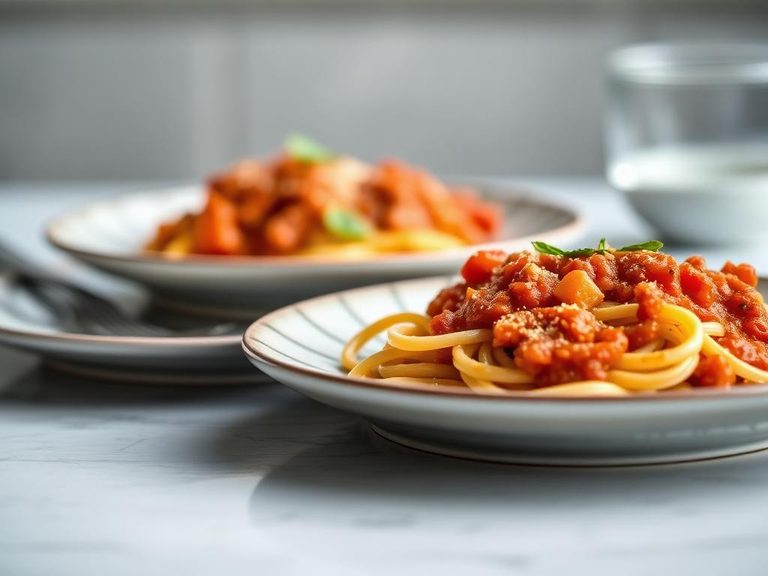
Yes, it's a common and quick substitute. To improve it, simmer it with herbs like basil or oregano, a clove of minced garlic, and a splash of olive oil to create a richer, more complex sauce.
How is condensed tomato soup different from regular canned soup?
Condensed soup is thicker and requires dilution with an equal volume of water or milk before heating. This makes it more versatile, allowing you to control the thickness and richness of the final dish.