

Soup, mushroom barley, canned, condensed
Whole food · Soups, Sauces, and Gravies
This is a classic, comforting pantry staple: a thick, savory blend of tender pearl barley and earthy mushrooms, simmered into a rich, umami-laden broth. Its texture is wonderfully hearty, with a satisfying chew from the barley and a soft, meaty bite from the mushrooms. Nutritionally, it's a light yet filling option, offering complex carbohydrates for sustained energy with minimal fat.
Calorie split: 10% protein · 63% carbs · 27% fat
↓ Full nutrition💚 Why it's loved
People adore it for its deep, savory umami flavor and the satisfying, chewy texture of the barley. It's a nostalgic, warming bowl of comfort that's incredibly versatile as a starter, a light meal, or a base for other dishes.
⚠️ Watch-outs & how to enjoy it better
The condensed, canned version is often very high in sodium, which can be a concern for those monitoring salt intake. To counteract this, you can dilute it with water or unsalted broth, and always choose a 'low sodium' variety if available. Additionally, barley contains gluten, making it unsuitable for those with celiac disease or gluten sensitivity.
Key benefits
- Excellent source of complex carbohydrates for steady energy
- Low in fat and contains no added sugar
- Provides a comforting, savory umami flavor base
- Convenient, shelf-stable, and quick to prepare
- Can be easily extended with fresh vegetables or protein
🍽️ Popular dishes
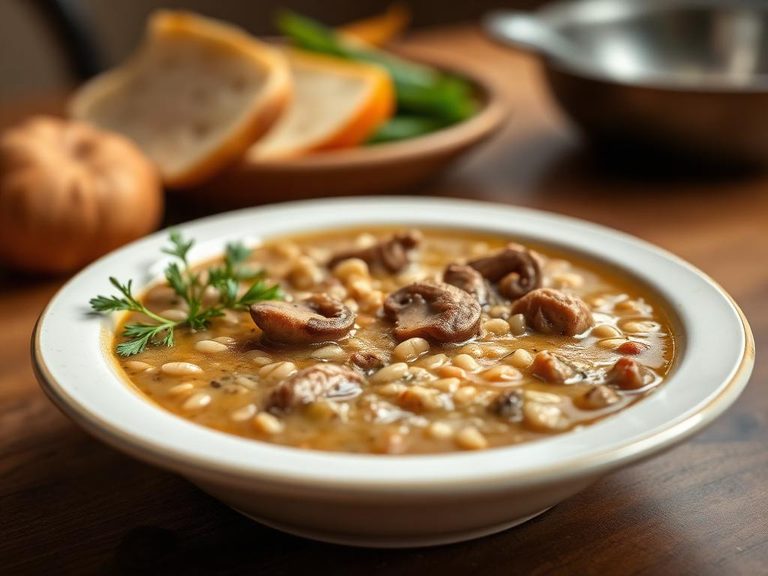
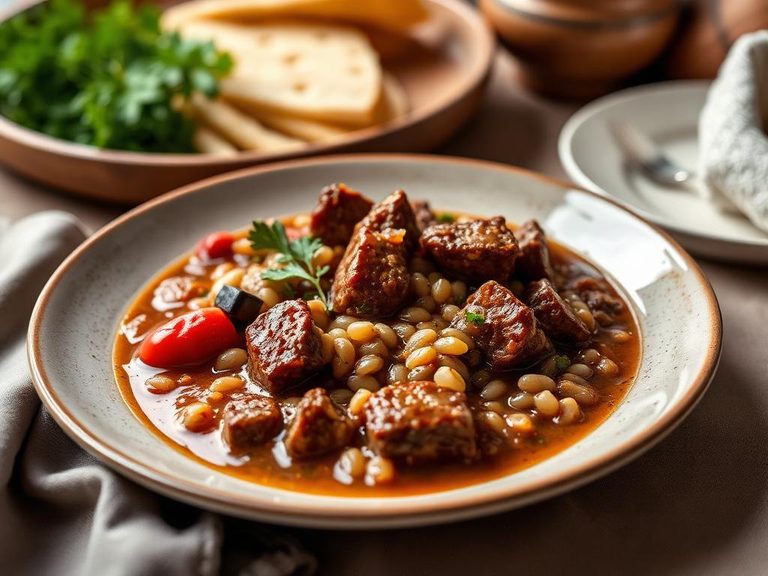
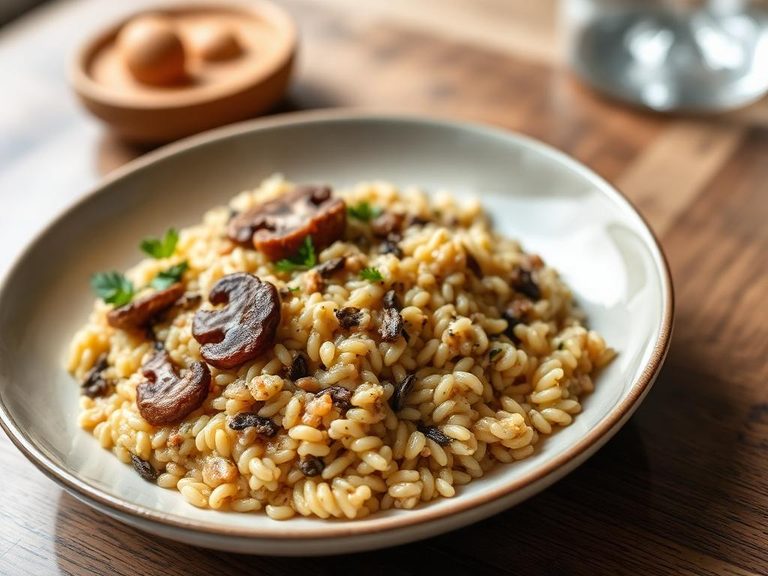
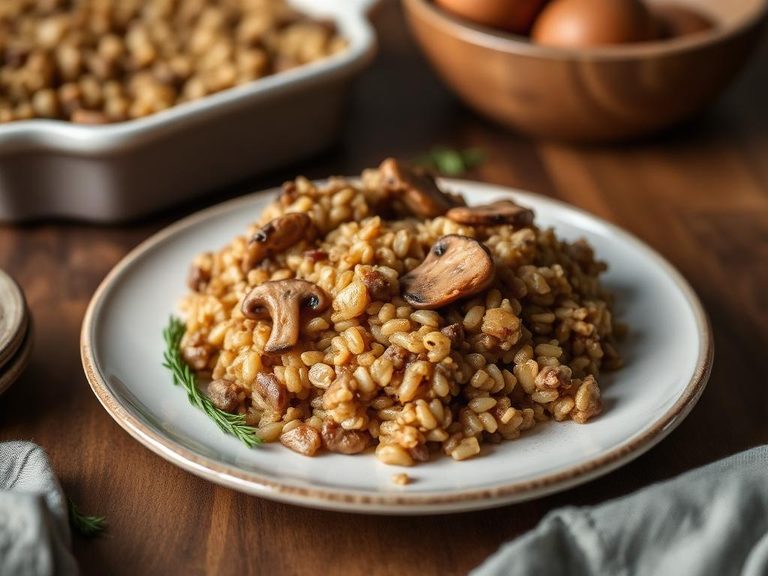
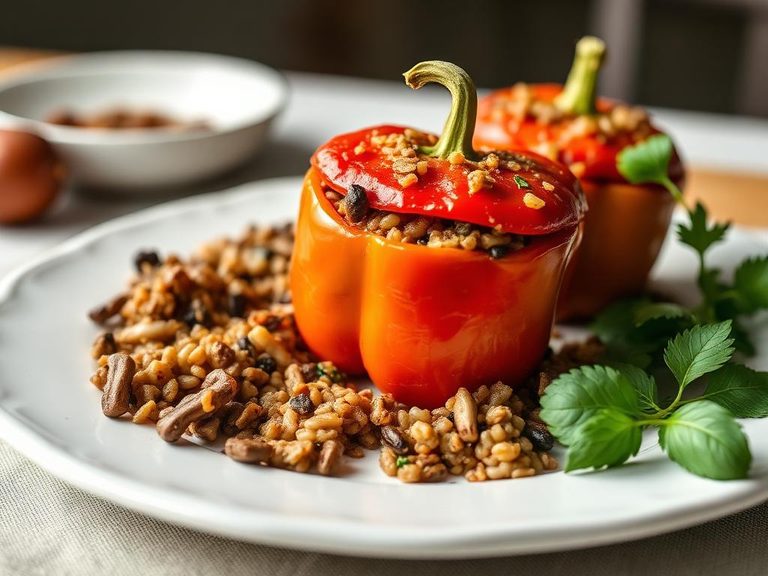
🌍 Where it's eaten
💡 Did you know?
Pearl barley, the grain in this soup, is a 'pearled' or polished grain, which removes the bran layer for a quicker cooking time and milder flavor, but also strips away much of its fiber.
Full nutrition (USDA data · scales with serving)
| Water | 84.9 g |
| Energy | 61.0 kcal |
| Energy | 255 kj |
| Protein | 1.5 g |
| Total lipid (fat) | 1.8 g |
| Ash | 2.2 g |
| Carbohydrate, by difference | 9.6 g |
| Calcium, Ca | 10.0 mg |
| Iron, Fe | 0.40 mg |
| Magnesium, Mg | 7.0 mg |
| Phosphorus, P | 50.0 mg |
| Potassium, K | 76.0 mg |
| Sodium, Na | 573 mg |
| Zinc, Zn | 0.40 mg |
| Copper, Cu | 0.16 mg |
| Manganese, Mn | 0.10 mg |
| Vitamin C, total ascorbic acid | 0.00 mg |
| Thiamin | 0.02 mg |
| Riboflavin | 0.07 mg |
| Niacin | 0.70 mg |
| Pantothenic acid | 0.10 mg |
| Vitamin B-6 | 0.14 mg |
| Folate, total | 5.0 ug |
| Folic acid | 0.00 ug |
| Folate, food | 5.0 ug |
| Folate, DFE | 5.0 ug |
| Vitamin B-12 | 0.00 ug |
| Vitamin A, RAE | 8.0 ug |
| Retinol | 0.00 ug |
| Vitamin A, IU | 158 iu |
Fat & fatty acid profile (per 100g)
| Fatty acids, total saturated | 0.35 g |
| SFA 14:0 | 0.00 g |
| SFA 16:0 | 0.22 g |
| SFA 18:0 | 0.13 g |
| Fatty acids, total monounsaturated | 0.80 g |
| MUFA 18:1 | 0.80 g |
| Fatty acids, total polyunsaturated | 0.57 g |
| PUFA 18:2 | 0.54 g |
| PUFA 18:3 | 0.03 g |
| Cholesterol | 0.00 mg |
Amino acid profile (per 100g)
Estimated from Soup, bean with pork, canned, condensed — USDA does not publish this profile for Soup.
| Tryptophan | 0.06 g |
| Threonine | 0.24 g |
| Isoleucine | 0.29 g |
| Leucine | 0.48 g |
| Lysine | 0.40 g |
| Methionine | 0.07 g |
| Cystine | 0.07 g |
| Phenylalanine | 0.33 g |
| Tyrosine | 0.18 g |
| Valine | 0.32 g |
| Arginine | 0.31 g |
| Histidine | 0.15 g |
| Alanine | 0.29 g |
| Aspartic acid | 0.66 g |
| Glutamic acid | 1.1 g |
| Glycine | 0.28 g |
| Proline | 0.27 g |
| Serine | 0.29 g |
FAQ
Is canned mushroom barley soup healthy?
It can be a healthy part of a balanced diet. It's low in fat and provides complex carbs, but the primary nutritional drawback is often high sodium. Choosing low-sodium versions and pairing it with a lean protein (like chicken or tofu) and extra vegetables makes it a more complete, nutritious meal.
How do I prepare condensed mushroom barley soup?
Typically, you mix the condensed soup with an equal part of water or milk (e.g., 1 can of soup to 1 can of water). For a richer flavor, use broth. Heat gently in a saucepan until hot, stirring occasionally. You can also stir in a splash of cream or a pat of butter for extra richness.
What can I add to canned mushroom barley soup to make it better?
It's a fantastic base! Stir in sautéed fresh mushrooms, diced carrots, celery, or peas. Add cooked shredded chicken, ground beef, or lentils for protein. A dollop of sour cream or a sprinkle of fresh parsley on top before serving elevates it instantly.
Nutrient density (calculated · NRF9.3)
Nutrient Rich Foods index: beneficial nutrients (protein, fiber, vitamins, minerals) minus saturated fat, added sugar & sodium, per 100 kcal.
NRF9.3 index — Fulgoni, Keast & Drewnowski, 2009. Computed from USDA nutrients.
Weight-loss friendliness (composite index)
Energy density 0.61 kcal/g · 10% calories from protein · 0.0 g fiber · 0.0 g sugar per 100 g.
Composite of energy density (Rolls et al., 1999), protein & fiber satiety, minus sugar. A calculated heuristic — ranks satiety-per-calorie, not a clinical measure.
Dietary load (calculated from USDA values)
Potential renal acid load. Positive = acid-forming, negative = alkaline-forming.
Sodium-to-potassium ratio: 7.54 (lower is better — aim for ≤ 1)
Sodium:potassium per WHO potassium guidance. Computed from USDA nutrients.