Soup, broth
Common food

Photo: Wikipedia
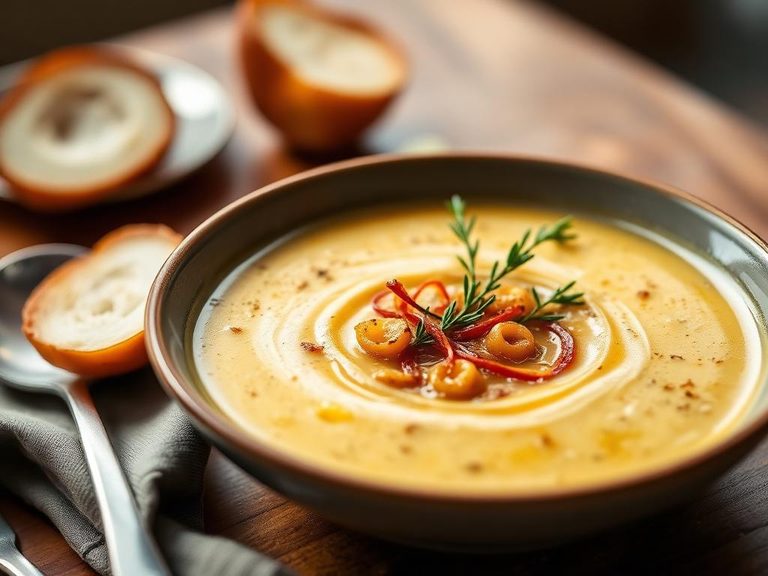
Soup, broth is a clear, savory liquid base made by simmering bones, meat, or vegetables, offering a light, umami-rich flavor and a thin, watery texture. It is exceptionally low in calories, providing only about 6 kcal per 100g, with minimal protein and virtually no fat or carbohydrates. This makes it a foundational, hydrating ingredient for countless dishes worldwide.
💚 Why it's loved
People love broth for its deep, comforting flavor that forms the soul of soups and stews, and for its incredible versatility as a cooking liquid that enhances everything from grains to vegetables. It carries cultural significance as a symbol of home cooking and nourishment across many traditions.
⚠️ Watch-outs & how to enjoy it better
The primary downside is its potential for very high sodium content, which can be a concern for those monitoring blood pressure. To counteract this, choose low-sodium varieties, rinse canned versions, or make your own to control salt. Also, some commercial broths may contain allergens like soy or gluten; always check labels for specific dietary needs.
Key benefits
- Extremely low-calorie base for meals
- Provides hydration and electrolytes
- Rich source of savory umami flavor
- Versatile foundation for soups, stews, and sauces
- Can be a gentle, easy-to-digest food
🍽️ Popular dishes
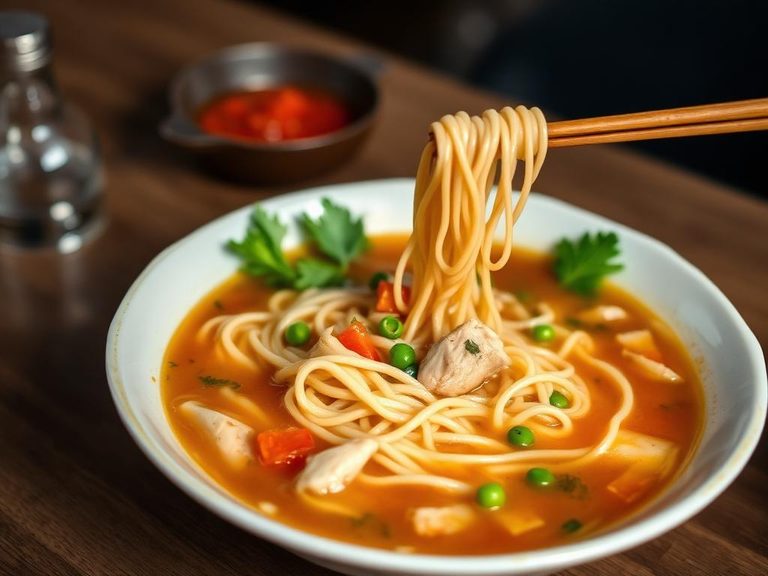
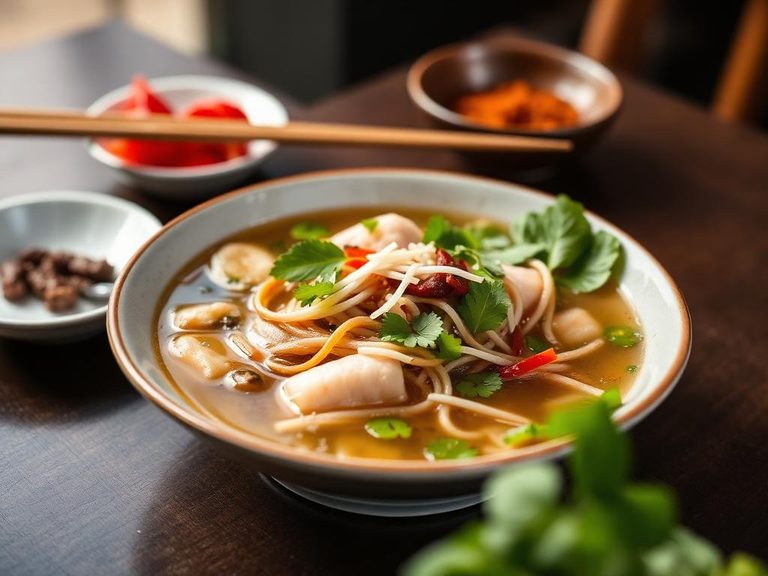
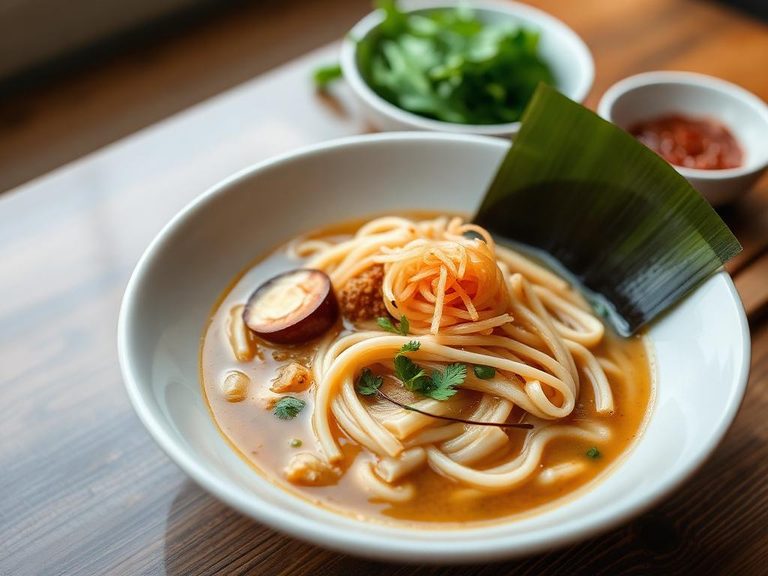
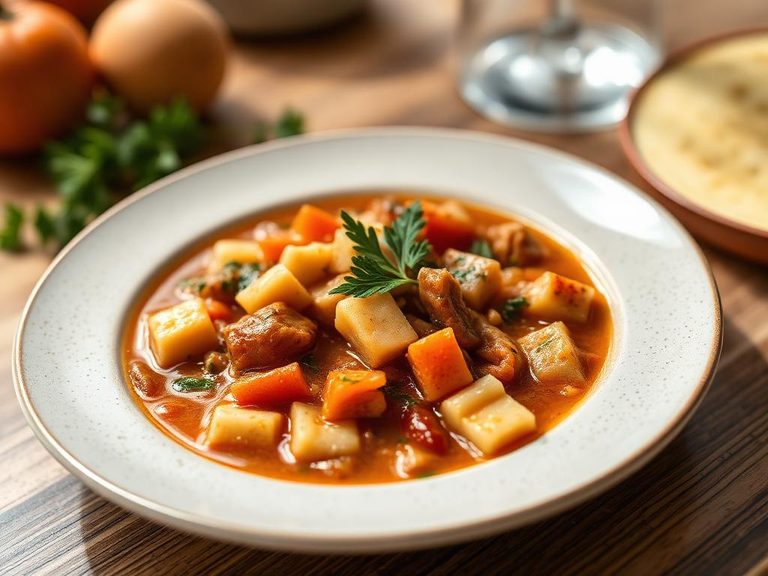
🌍 Where it's eaten
💡 Did you know?
The word 'bouillon' in French simply means 'boiling,' referring to the cooking process itself, while 'consommé' is a clarified, refined version of broth that must be perfectly clear.
Full nutrition (scales with serving)
| Water | 97.7 g |
| Energy | 6.0 kcal |
| Protein | 0.89 g |
| Total lipid (fat) | 0.22 g |
| Carbohydrate, by difference | 0.24 g |
| Fiber, total dietary | 0.00 g |
| Total Sugars | 0.22 g |
| Calcium, Ca | 5.0 mg |
| Iron, Fe | 0.12 mg |
| Magnesium, Mg | 2.0 mg |
| Phosphorus, P | 8.0 mg |
| Potassium, K | 36.0 mg |
| Sodium, Na | 372 mg |
| Zinc, Zn | 0.04 mg |
| Copper, Cu | 0.01 mg |
| Selenium, Se | 0.60 ug |
| Vitamin C, total ascorbic acid | 0.00 mg |
| Thiamin | 0.01 mg |
| Riboflavin | 0.04 mg |
| Niacin | 0.50 mg |
| Vitamin B-6 | 0.01 mg |
| Folate, total | 1.0 ug |
| Folic acid | 0.00 ug |
| Folate, food | 1.0 ug |
| Folate, DFE | 1.0 ug |
| Choline, total | 2.0 mg |
| Vitamin B-12 | 0.04 ug |
| Vitamin B-12, added | 0.00 ug |
| Vitamin A, RAE | 0.00 ug |
| Retinol | 0.00 ug |
| Carotene, beta | 0.00 ug |
| Carotene, alpha | 0.00 ug |
| Cryptoxanthin, beta | 0.00 ug |
| Lycopene | 0.00 ug |
| Lutein + zeaxanthin | 0.00 ug |
| Vitamin E (alpha-tocopherol) | 0.02 mg |
| Vitamin E, added | 0.00 mg |
| Vitamin D (D2 + D3) | 0.00 ug |
| Vitamin K (phylloquinone) | 0.00 ug |
| Fatty acids, total saturated | 0.06 g |
| SFA 4:0 | 0.00 g |
| SFA 6:0 | 0.00 g |
| SFA 8:0 | 0.00 g |
| SFA 10:0 | 0.00 g |
| SFA 12:0 | 0.00 g |
| SFA 14:0 | 0.01 g |
| SFA 16:0 | 0.03 g |
| SFA 18:0 | 0.02 g |
| Fatty acids, total monounsaturated | 0.05 g |
| MUFA 16:1 | 0.01 g |
| MUFA 18:1 | 0.05 g |
| MUFA 20:1 | 0.00 g |
| MUFA 22:1 | 0.00 g |
| Fatty acids, total polyunsaturated | 0.01 g |
| PUFA 18:2 | 0.01 g |
| PUFA 18:3 | 0.00 g |
| PUFA 18:4 | 0.00 g |
| PUFA 20:4 | 0.00 g |
| PUFA 20:5 n-3 (EPA) | 0.00 g |
| PUFA 22:5 n-3 (DPA) | 0.00 g |
| PUFA 22:6 n-3 (DHA) | 0.00 g |
| Cholesterol | 1.0 mg |
| Alcohol, ethyl | 0.00 g |
| Caffeine | 0.00 mg |
| Theobromine | 0.00 mg |
FAQ
What is the difference between broth and stock?
Broth is typically made from meat and/or vegetables and is seasoned, resulting in a lighter flavor. Stock is primarily made from simmered bones (often with some meat) and is less seasoned, offering more gelatin and body for sauces and gravies.
Can I drink broth by itself?
Yes, clear broths are often consumed as a light beverage, appetizer, or soothing drink. It's a common practice in many cultures, especially when feeling unwell or as a warm, savory drink.
How can I reduce the sodium in store-bought broth?
Look for 'low-sodium' or 'no salt added' versions. You can also dilute regular broth with water, or use it as a cooking liquid for grains or vegetables where some salt will be absorbed, rather than drinking it straight.