

Roast beef spread
Whole food · Sausages and Luncheon Meats

Photo: Wikipedia
Roast beef spread is a savory, protein-rich paste made from finely shredded or ground cooked beef, often blended with a small amount of fat or broth. It has a smooth, dense, and spreadable texture with a deep, umami-rich meat flavor. Nutritionally, it's a powerhouse of protein with minimal carbohydrates.
Calorie split: 27% protein · 7% carbs · 66% fat
↓ Full nutrition💚 Why it's loved
People love it for its intense, savory beef flavor and incredible versatility—it can elevate a simple cracker, a sandwich, or a baked potato. It's a staple in many cultures as a quick, protein-packed snack or meal component.
⚠️ Watch-outs & how to enjoy it better
The primary concern is its high sodium content, which can be problematic for those monitoring blood pressure. It's also a processed meat, so moderation is advised. To counteract sodium, pair it with potassium-rich foods like avocado or leafy greens, and always check labels for lower-sodium versions.
Key benefits
- Excellent source of high-quality protein for muscle maintenance.
- Very low in carbohydrates and sugars, suitable for low-carb diets.
- Provides iron and B vitamins, particularly B12.
- A convenient, shelf-stable way to consume cooked beef.
- Offers a concentrated, savory flavor base for other dishes.
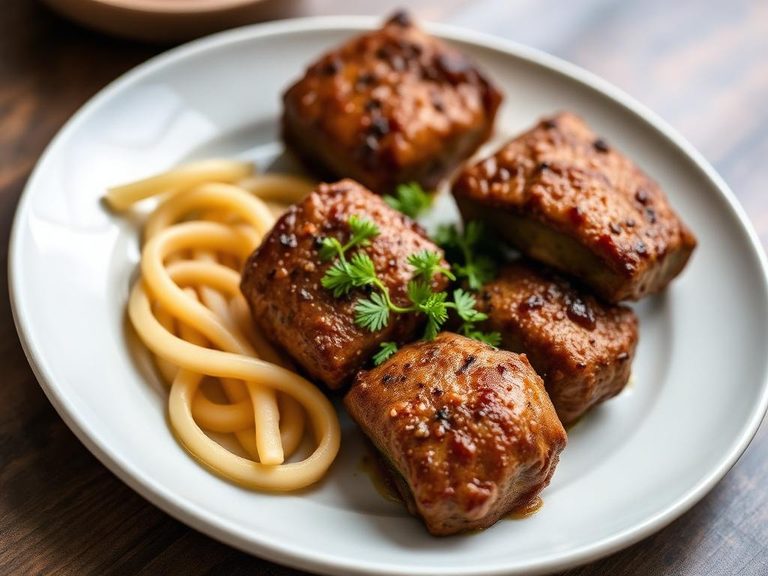
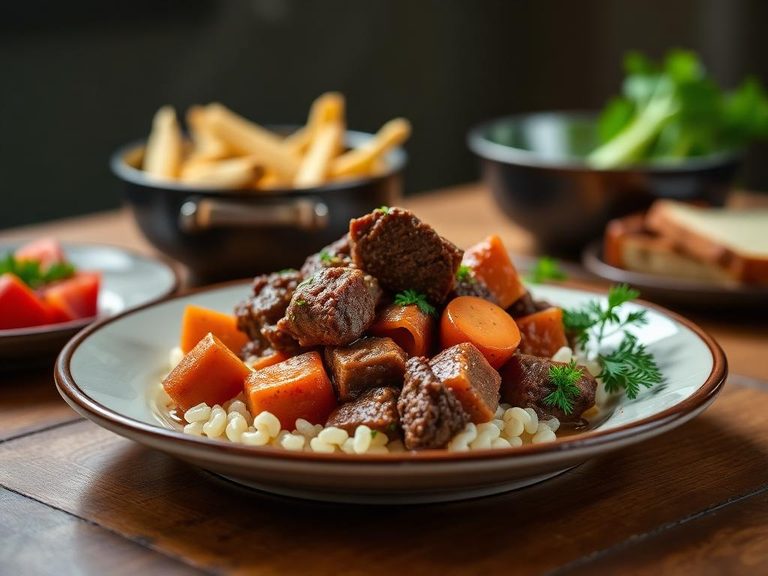
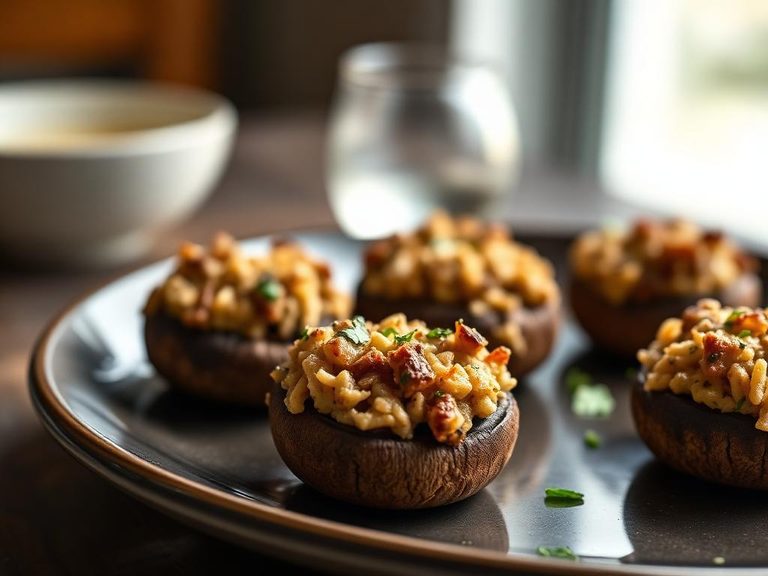
🍽️ Popular dishes


🌍 Where it's eaten
💡 Did you know?
The process of making potted beef or rillettes involves slow-cooking meat in its own fat until it falls apart, then packing it into a container where the fat solidifies, creating a natural seal that can preserve the meat for weeks without refrigeration.
Full nutrition (USDA data · scales with serving)
| Water | 61.7 g |
| Energy | 223 kcal |
| Energy | 931 kj |
| Protein | 15.3 g |
| Total lipid (fat) | 16.3 g |
| Ash | 3.0 g |
| Carbohydrate, by difference | 3.7 g |
| Fiber, total dietary | 0.20 g |
| Total Sugars | 0.71 g |
| Calcium, Ca | 23.0 mg |
| Iron, Fe | 2.1 mg |
| Magnesium, Mg | 24.0 mg |
| Phosphorus, P | 116 mg |
| Potassium, K | 259 mg |
| Sodium, Na | 724 mg |
| Zinc, Zn | 6.1 mg |
| Copper, Cu | 0.10 mg |
| Selenium, Se | 22.6 ug |
| Vitamin C, total ascorbic acid | 0.20 mg |
| Thiamin | 0.02 mg |
| Riboflavin | 0.23 mg |
| Niacin | 4.2 mg |
| Vitamin B-6 | 0.15 mg |
| Folate, total | 8.0 ug |
| Folic acid | 0.00 ug |
| Folate, food | 8.0 ug |
| Folate, DFE | 8.0 ug |
| Vitamin B-12 | 2.4 ug |
| Vitamin A, RAE | 0.00 ug |
| Retinol | 0.00 ug |
| Carotene, beta | 0.00 ug |
| Carotene, alpha | 0.00 ug |
| Cryptoxanthin, beta | 0.00 ug |
| Vitamin A, IU | 1.0 iu |
| Lycopene | 0.00 ug |
| Lutein + zeaxanthin | 0.00 ug |
| Alcohol, ethyl | 0.00 g |
| Caffeine | 0.00 mg |
| Theobromine | 0.00 mg |
Fat & fatty acid profile (per 100g)
| Fatty acids, total saturated | 6.4 g |
| SFA 4:0 | 6.4 g |
| Fatty acids, total monounsaturated | 5.6 g |
| MUFA 16:1 | 0.49 g |
| MUFA 18:1 | 5.1 g |
| MUFA 20:1 | 0.01 g |
| MUFA 22:1 | 0.00 g |
| Fatty acids, total polyunsaturated | 0.43 g |
| PUFA 18:2 | 0.36 g |
| PUFA 18:3 | 0.04 g |
| PUFA 18:4 | 0.00 g |
| PUFA 20:4 | 0.03 g |
| PUFA 20:5 n-3 (EPA) | 0.00 g |
| PUFA 22:5 n-3 (DPA) | 0.00 g |
| PUFA 22:6 n-3 (DHA) | 0.00 g |
| Cholesterol | 70.0 mg |
Amino acid profile (per 100g)
Estimated from Roast beef, deli style, prepackaged, sliced — USDA does not publish this profile for Roast beef spread.
| Hydroxyproline | 0.13 g |
FAQ
Is roast beef spread the same as beef pâté?
Not exactly. Pâté is typically a smoother, richer emulsion often made with liver and more fat. Roast beef spread is usually coarser, made from muscle meat, and has a more straightforward beefy flavor.
How long does it last once opened?
Once opened, it should be refrigerated in an airtight container and consumed within 5 to 7 days for optimal quality and safety.
Can I make it at home?
Yes. A simple method is to slow-cook a beef chuck roast until very tender, shred it finely, then blend it with some of the cooking liquid, a bit of fat (like butter or tallow), and seasonings until it reaches a spreadable consistency.
Nutrient density (calculated · NRF9.3)
Nutrient Rich Foods index: beneficial nutrients (protein, fiber, vitamins, minerals) minus saturated fat, added sugar & sodium, per 100 kcal.
NRF9.3 index — Fulgoni, Keast & Drewnowski, 2009. Computed from USDA nutrients.
Weight-loss friendliness (composite index)
Energy density 2.23 kcal/g · 27% calories from protein · 0.2 g fiber · 0.7 g sugar per 100 g.
Composite of energy density (Rolls et al., 1999), protein & fiber satiety, minus sugar. A calculated heuristic — ranks satiety-per-calorie, not a clinical measure.
Dietary load (calculated from USDA values)
Potential renal acid load. Positive = acid-forming, negative = alkaline-forming.
Sodium-to-potassium ratio: 2.80 (lower is better — aim for ≤ 1)
Sodium:potassium per WHO potassium guidance. Computed from USDA nutrients.