

Kamikaze
Common food

Photo: Wikipedia
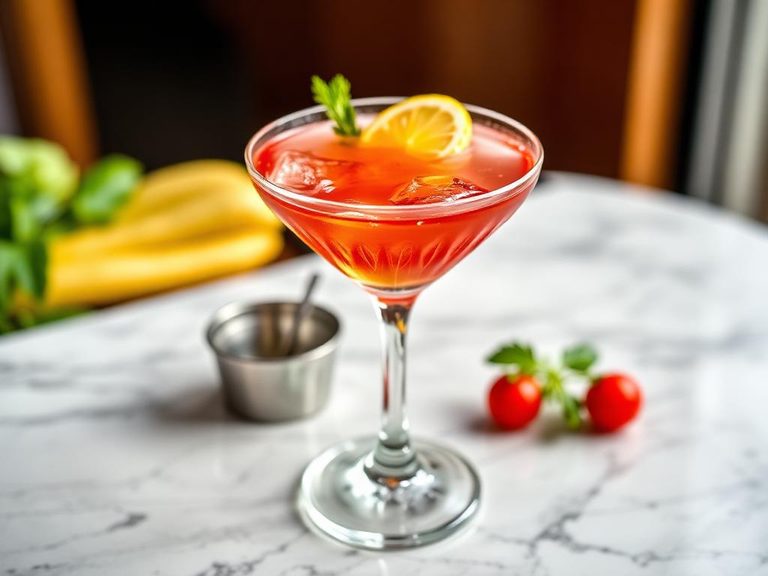
The Kamikaze is a vibrant, sweet-tart cocktail, not a food, typically made with vodka, triple sec, and fresh lime juice. It delivers a sharp, citrus-forward punch with a smooth, slightly syrupy finish from the liqueur. While nutritionally sparse, it's a low-calorie spirit-based drink with minimal protein, fat, or fiber.
Calorie split: 1% protein · 97% carbs · 2% fat
↓ Full nutrition💚 Why it's loved
People love the Kamikaze for its bold, refreshing simplicity and its versatility—it can be served as a shot, on the rocks, or as a martini. It's a staple in bar culture for its reliable, crowd-pleasing balance of sweet and sour.
⚠️ Watch-outs & how to enjoy it better
The high sugar content from triple sec can cause rapid blood-sugar spikes, and the alcohol can dehydrate. Those watching sugar intake or with alcohol sensitivities should be cautious. To counteract, pair with a protein-rich snack, sip slowly, and alternate with water.
Key benefits
- Low in calories compared to creamy cocktails
- Contains no fat or cholesterol
- Provides a quick source of simple carbohydrates for energy
- Can be made with fresh lime juice for a small vitamin C boost
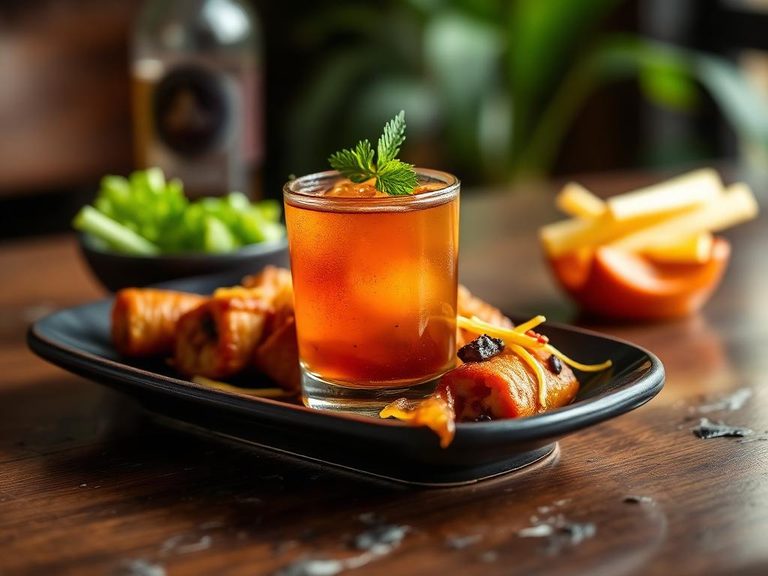
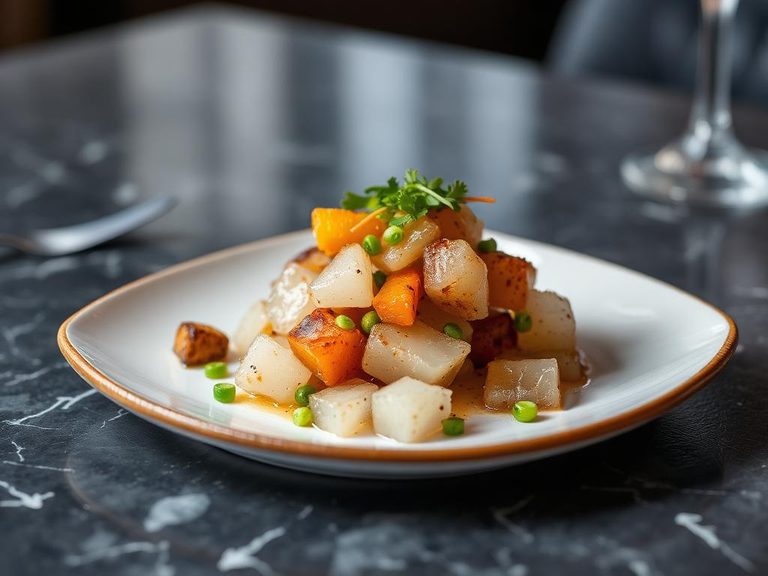
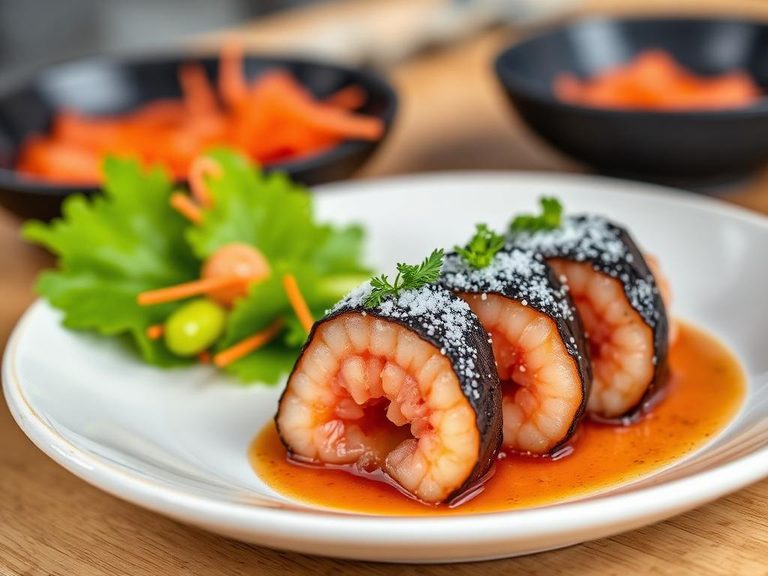
🍽️ Popular dishes

🌍 Where it's eaten
💡 Did you know?
The cocktail's name is Japanese for 'divine wind,' referencing the typhoons that saved Japan from Mongol invasions, though the drink itself has no direct Japanese culinary roots.
Full nutrition (USDA data · scales with serving)
| Water | 69.7 g |
| Energy | 187 kcal |
| Protein | 0.06 g |
| Total lipid (fat) | 0.07 g |
| Carbohydrate, by difference | 6.9 g |
| Fiber, total dietary | 0.10 g |
| Total Sugars | 5.6 g |
| Calcium, Ca | 3.0 mg |
| Iron, Fe | 0.09 mg |
| Magnesium, Mg | 2.0 mg |
| Phosphorus, P | 5.0 mg |
| Potassium, K | 20.0 mg |
| Sodium, Na | 5.0 mg |
| Zinc, Zn | 0.04 mg |
| Copper, Cu | 0.02 mg |
| Selenium, Se | 0.10 ug |
| Vitamin C, total ascorbic acid | 1.6 mg |
| Thiamin | 0.01 mg |
| Riboflavin | 0.01 mg |
| Niacin | 0.05 mg |
| Vitamin B-6 | 0.01 mg |
| Folate, total | 2.0 ug |
| Folic acid | 0.00 ug |
| Folate, food | 2.0 ug |
| Folate, DFE | 2.0 ug |
| Choline, total | 1.3 mg |
| Vitamin B-12 | 0.00 ug |
| Vitamin B-12, added | 0.00 ug |
| Vitamin A, RAE | 0.00 ug |
| Retinol | 0.00 ug |
| Carotene, beta | 2.0 ug |
| Carotene, alpha | 0.00 ug |
| Cryptoxanthin, beta | 0.00 ug |
| Lycopene | 0.00 ug |
| Lutein + zeaxanthin | 0.00 ug |
| Vitamin E (alpha-tocopherol) | 0.03 mg |
| Vitamin E, added | 0.00 mg |
| Vitamin D (D2 + D3) | 0.00 ug |
| Vitamin K (phylloquinone) | 0.10 ug |
| Alcohol, ethyl | 23.2 g |
| Caffeine | 0.00 mg |
| Theobromine | 0.00 mg |
Fat & fatty acid profile (per 100g)
| Fatty acids, total saturated | 0.01 g |
| SFA 4:0 | 0.00 g |
| SFA 6:0 | 0.00 g |
| SFA 8:0 | 0.00 g |
| SFA 10:0 | 0.00 g |
| SFA 12:0 | 0.00 g |
| SFA 14:0 | 0.00 g |
| SFA 16:0 | 0.01 g |
| SFA 18:0 | 0.00 g |
| Fatty acids, total monounsaturated | 0.01 g |
| MUFA 16:1 | 0.00 g |
| MUFA 18:1 | 0.00 g |
| MUFA 20:1 | 0.00 g |
| MUFA 22:1 | 0.00 g |
| Fatty acids, total polyunsaturated | 0.02 g |
| PUFA 18:2 | 0.01 g |
| PUFA 18:3 | 0.01 g |
| PUFA 18:4 | 0.00 g |
| PUFA 20:4 | 0.00 g |
| PUFA 20:5 n-3 (EPA) | 0.00 g |
| PUFA 22:5 n-3 (DPA) | 0.00 g |
| PUFA 22:6 n-3 (DHA) | 0.00 g |
| Cholesterol | 0.00 mg |
FAQ
Is the Kamikaze a food or a drink?
It is a cocktail, an alcoholic beverage, not a food item. The nutritional data provided is for the liquid drink itself.
Why is the calorie count so low for a cocktail?
Its calories come almost entirely from alcohol and sugar in the triple sec. Spirits like vodka have no fat or protein, and fresh lime juice adds minimal calories.
Can I make a non-alcoholic version?
Yes, a 'mocktail' version can be made with lime juice, triple sec syrup or orange liqueur alternative, and a non-alcoholic spirit or sparkling water.
Nutrient density (calculated · NRF9.3)
Nutrient Rich Foods index: beneficial nutrients (protein, fiber, vitamins, minerals) minus saturated fat, added sugar & sodium, per 100 kcal.
NRF9.3 index — Fulgoni, Keast & Drewnowski, 2009. Computed from USDA nutrients.
Weight-loss friendliness (composite index)
Energy density 1.87 kcal/g · 0% calories from protein · 0.1 g fiber · 5.6 g sugar per 100 g.
Composite of energy density (Rolls et al., 1999), protein & fiber satiety, minus sugar. A calculated heuristic — ranks satiety-per-calorie, not a clinical measure.
Dietary load (calculated from USDA values)
Potential renal acid load. Positive = acid-forming, negative = alkaline-forming.
Sodium-to-potassium ratio: 0.25 (lower is better — aim for ≤ 1)
Sodium:potassium per WHO potassium guidance. Computed from USDA nutrients.