

Idli
Common food

Photo: Wikipedia
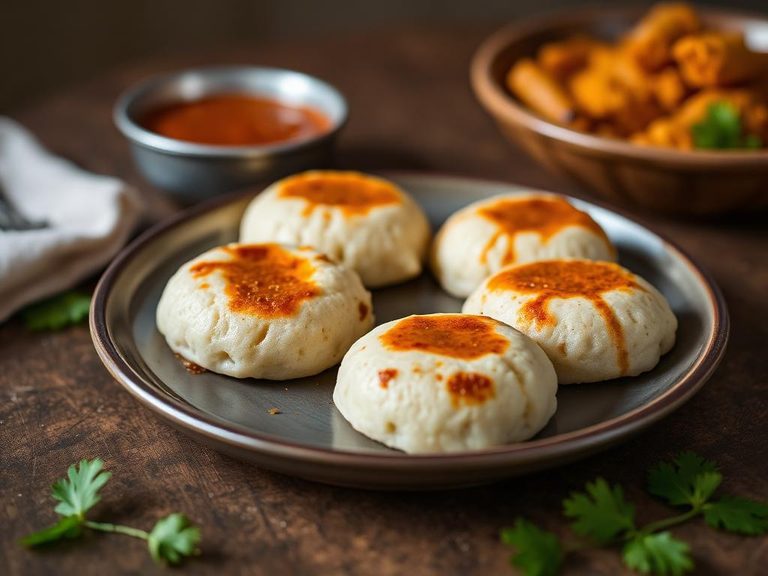
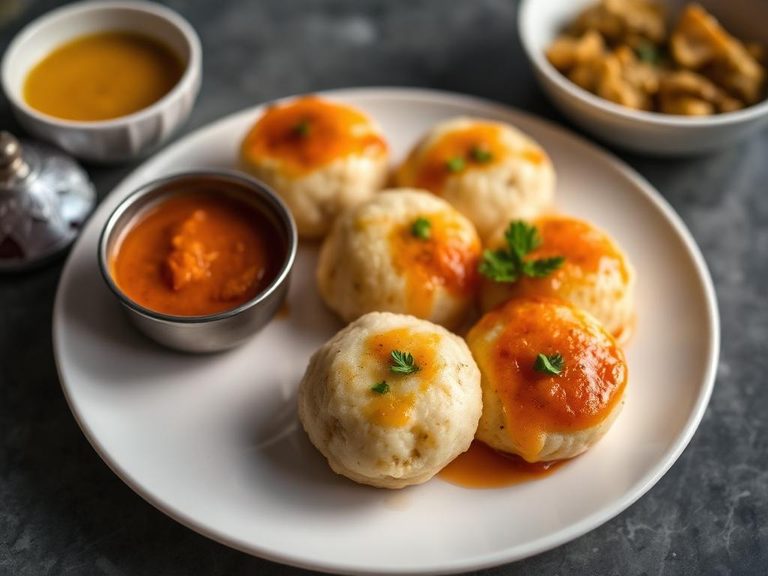
Idli is a soft, fluffy, steamed savory cake made from a fermented batter of rice and black lentils. Its mild, slightly tangy flavor and pillowy texture make it a perfect canvas for accompaniments. Nutritionally, it's a standout low-fat, high-fiber, plant-based protein source.
Calorie split: 20% protein · 78% carbs · 2% fat
↓ Full nutrition💚 Why it's loved
People love idli for its comforting, neutral taste that perfectly soaks up spicy sambar and tangy coconut chutney. It's a beloved, quick, and wholesome breakfast staple across South India, representing home-cooked comfort.
⚠️ Watch-outs & how to enjoy it better
The primary concern is its high glycemic index, which can cause rapid blood-sugar spikes, especially when eaten alone. To counteract this, always pair idli with protein-rich sambar and healthy-fat coconut chutney to slow digestion and balance the meal.
Key benefits
- Excellent source of plant-based protein from fermented lentils.
- High in dietary fiber, promoting digestive health and sativery.
- Naturally low in fat, making it a heart-healthy choice.
- Fermentation increases nutrient bioavailability and adds probiotics.
- Gluten-free and suitable for those with celiac disease.
🍽️ Popular dishes
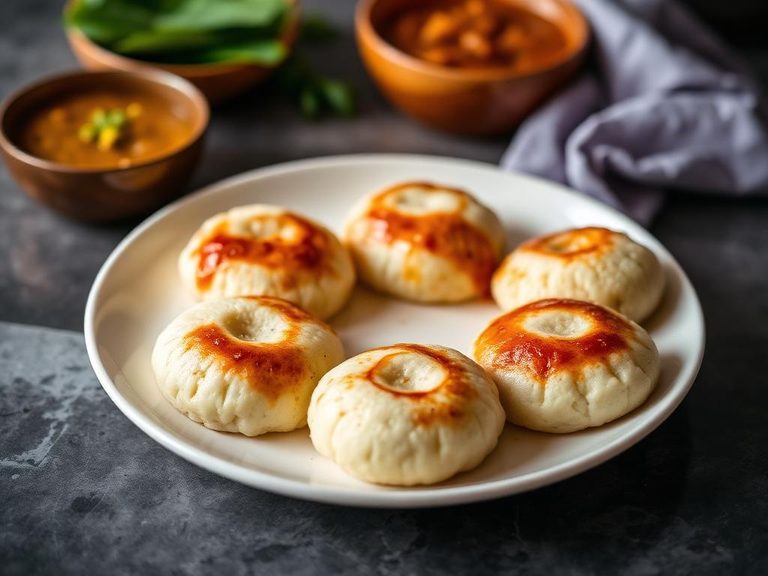
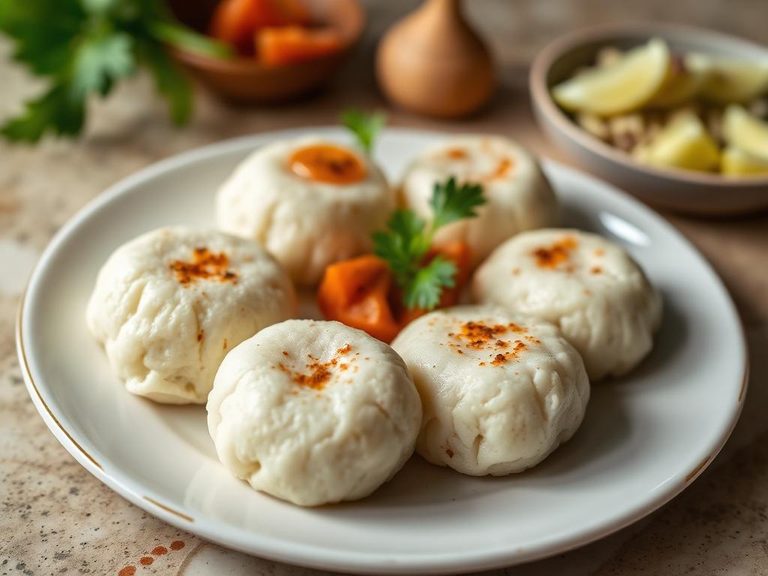
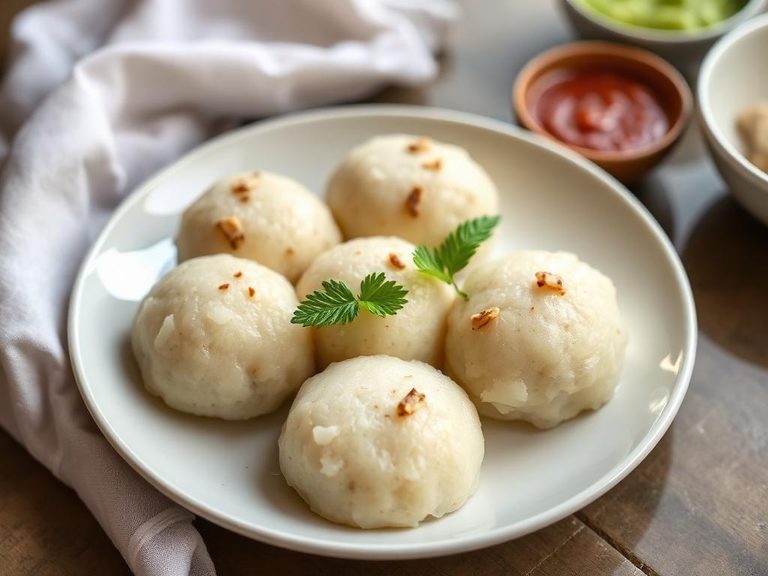
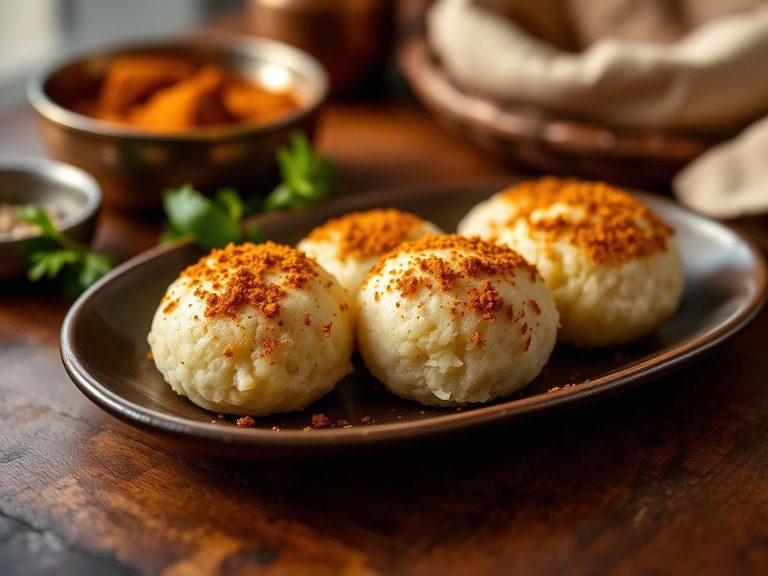
🌍 Where it's eaten
💡 Did you know?
The fermentation process for idli batter is a natural leavening that can take 12-24 hours, and the specific wild yeasts and lactobacilli involved are unique to the local environment, making authentic idli taste subtly different across regions.
Full nutrition (USDA data · scales with serving)
| Water | 67.2 g |
| Energy | 128 kcal |
| Protein | 6.4 g |
| Total lipid (fat) | 0.35 g |
| Carbohydrate, by difference | 25.0 g |
| Fiber, total dietary | 5.8 g |
| Total Sugars | 1.9 g |
| Calcium, Ca | 10.0 mg |
| Iron, Fe | 0.89 mg |
| Magnesium, Mg | 25.0 mg |
| Phosphorus, P | 67.0 mg |
| Potassium, K | 233 mg |
| Sodium, Na | 252 mg |
| Zinc, Zn | 0.86 mg |
| Copper, Cu | 0.14 mg |
| Selenium, Se | 3.5 ug |
| Vitamin C, total ascorbic acid | 0.20 mg |
| Thiamin | 0.12 mg |
| Riboflavin | 0.04 mg |
| Niacin | 0.68 mg |
| Vitamin B-6 | 0.04 mg |
| Folate, total | 39.0 ug |
| Folic acid | 0.00 ug |
| Folate, food | 39.0 ug |
| Folate, DFE | 39.0 ug |
| Choline, total | 21.7 mg |
| Vitamin B-12 | 0.00 ug |
| Vitamin B-12, added | 0.00 ug |
| Vitamin A, RAE | 0.00 ug |
| Retinol | 0.00 ug |
| Carotene, beta | 3.0 ug |
| Carotene, alpha | 0.00 ug |
| Cryptoxanthin, beta | 0.00 ug |
| Lycopene | 0.00 ug |
| Lutein + zeaxanthin | 0.00 ug |
| Vitamin E (alpha-tocopherol) | 0.04 mg |
| Vitamin E, added | 0.00 mg |
| Vitamin D (D2 + D3) | 0.00 ug |
| Vitamin K (phylloquinone) | 3.1 ug |
| Alcohol, ethyl | 0.00 g |
| Caffeine | 0.00 mg |
| Theobromine | 0.00 mg |
Fat & fatty acid profile (per 100g)
| Fatty acids, total saturated | 0.06 g |
| SFA 4:0 | 0.00 g |
| SFA 6:0 | 0.00 g |
| SFA 8:0 | 0.00 g |
| SFA 10:0 | 0.00 g |
| SFA 12:0 | 0.00 g |
| SFA 14:0 | 0.00 g |
| SFA 16:0 | 0.04 g |
| SFA 18:0 | 0.01 g |
| Fatty acids, total monounsaturated | 0.09 g |
| MUFA 16:1 | 0.00 g |
| MUFA 18:1 | 0.09 g |
| MUFA 20:1 | 0.00 g |
| MUFA 22:1 | 0.00 g |
| Fatty acids, total polyunsaturated | 0.14 g |
| PUFA 18:2 | 0.12 g |
| PUFA 18:3 | 0.02 g |
| PUFA 18:4 | 0.00 g |
| PUFA 20:4 | 0.00 g |
| PUFA 20:5 n-3 (EPA) | 0.00 g |
| PUFA 22:5 n-3 (DPA) | 0.00 g |
| PUFA 22:6 n-3 (DHA) | 0.00 g |
| Cholesterol | 0.00 mg |
FAQ
Why is idli batter fermented?
Fermentation makes the batter light and fluffy for steaming, develops its characteristic mild tang, and breaks down starches and proteins, making nutrients easier to digest and absorb.
Can idli be made without rice?
Yes, many healthy variations exist. Rava (semolina) idli is popular, and others use oats, millets, or quinoa for a lower-carb, higher-nutrient alternative.
How do you store leftover idli?
Refrigerate in an airtight container for up to 2 days. To reheat, sprinkle with water and steam for 2-3 minutes or microwave for 30-45 seconds to restore softness.
Nutrient density (calculated · NRF9.3)
Nutrient Rich Foods index: beneficial nutrients (protein, fiber, vitamins, minerals) minus saturated fat, added sugar & sodium, per 100 kcal.
NRF9.3 index — Fulgoni, Keast & Drewnowski, 2009. Computed from USDA nutrients.
Weight-loss friendliness (composite index)
Energy density 1.28 kcal/g · 20% calories from protein · 5.8 g fiber · 1.9 g sugar per 100 g.
Composite of energy density (Rolls et al., 1999), protein & fiber satiety, minus sugar. A calculated heuristic — ranks satiety-per-calorie, not a clinical measure.
Dietary load (calculated from USDA values)
Potential renal acid load. Positive = acid-forming, negative = alkaline-forming.
Sodium-to-potassium ratio: 1.08 (lower is better — aim for ≤ 1)
Sodium:potassium per WHO potassium guidance. Computed from USDA nutrients.