

Chokecherries, raw, pitted (Shoshone Bannock)
Whole food · American Indian/Alaska Native Foods

Photo: Wikipedia
Chokecherries are the small, dark, astringent fruit of the Prunus virginiana shrub, a staple for many Indigenous peoples of North America. Raw and pitted, they offer a complex, tannic flavor—simultaneously tart, bitter, and subtly sweet—with a firm, juicy texture. Nutritionally, they are a standout for their exceptionally high fiber content, providing nearly 60% of the daily value per 100g.
Calorie split: 7% protein · 87% carbs · 6% fat
↓ Full nutrition💚 Why it's loved
People cherish chokecherries for their deep, wild flavor that balances tartness with a subtle sweetness, making them a prized ingredient for traditional jellies, sauces, and pemmican. Their cultural significance and connection to ancestral foraging practices add a layer of meaning beyond taste.
⚠️ Watch-outs & how to enjoy it better
The raw fruit's intense astringency and bitterness can be off-putting to the uninitiated, and the hard pit contains amygdalin, which can release cyanide if crushed and consumed. To enjoy safely, always use pitted berries, and consider cooking them (e.g., into syrups or jams) to mellow the tannins and enhance palatability.
Key benefits
- Exceptionally high in dietary fiber (17g per 100g)
- Good source of plant-based protein for a fruit (2.89g per 100g)
- Rich in antioxidants like anthocyanins and quercetin
- Low in fat and a source of natural sugars
- Traditionally used in Indigenous food systems for preservation and nutrition
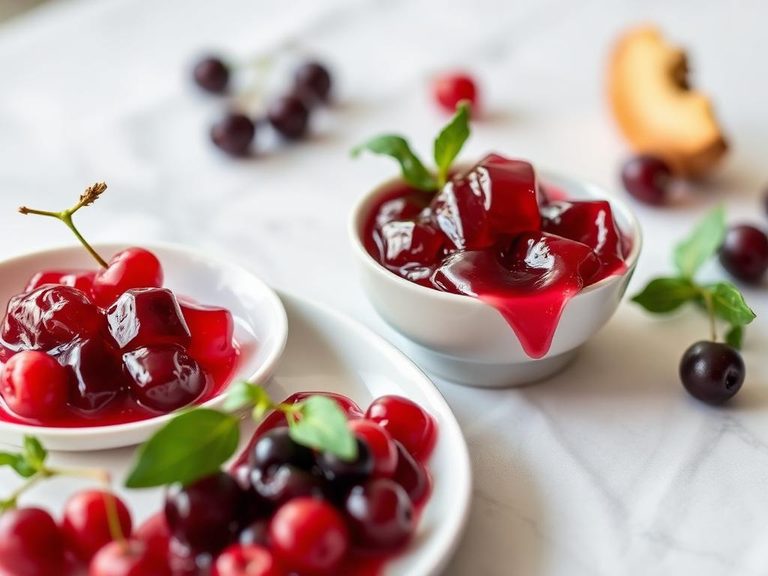
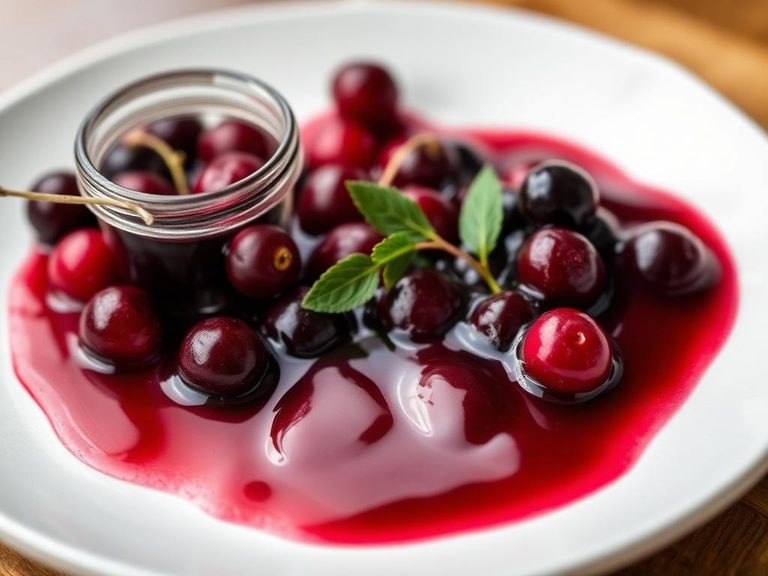
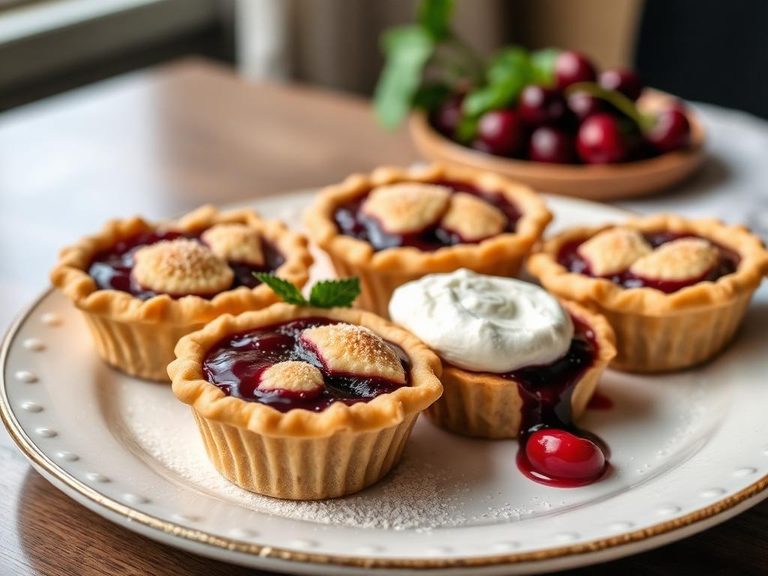
🍽️ Popular dishes
🌍 Where it's eaten
💡 Did you know?
The name 'chokecherry' comes from the effect the fruit's astringent tannins have on the throat, which can cause a choking sensation if eaten raw in large quantities.
Full nutrition (USDA data · scales with serving)
| Water | 61.5 g |
| Energy | 156 kcal |
| Energy | 652 kj |
| Protein | 2.9 g |
| Total lipid (fat) | 0.98 g |
| Ash | 0.75 g |
| Carbohydrate, by difference | 33.9 g |
| Fiber, total dietary | 17.0 g |
| Total Sugars | 14.2 g |
| Sucrose | 0.00 g |
| Glucose | 8.8 g |
| Fructose | 5.4 g |
| Lactose | 0.00 g |
| Maltose | 0.00 g |
| Galactose | 0.00 g |
| Starch | 0.87 g |
| Calcium, Ca | 40.0 mg |
| Iron, Fe | 0.40 mg |
| Magnesium, Mg | 21.0 mg |
| Phosphorus, P | 45.0 mg |
| Potassium, K | 309 mg |
| Sodium, Na | 2.0 mg |
| Zinc, Zn | 0.19 mg |
| Copper, Cu | 0.07 mg |
| Manganese, Mn | 0.19 mg |
| Selenium, Se | 1.7 ug |
| Vitamin C, total ascorbic acid | 0.70 mg |
| Thiamin | 0.03 mg |
| Riboflavin | 0.06 mg |
| Niacin | 0.67 mg |
| Pantothenic acid | 0.33 mg |
| Vitamin B-6 | 0.19 mg |
| Folate, total | 10.0 ug |
| Folic acid | 0.00 ug |
| Folate, food | 10.0 ug |
| Folate, DFE | 10.0 ug |
| Vitamin B-12 | 0.00 ug |
| Vitamin B-12, added | 0.00 ug |
| Vitamin A, RAE | 2.0 ug |
| Retinol | 0.00 ug |
| Carotene, beta | 26.0 ug |
| Carotene, alpha | 0.00 ug |
| Cryptoxanthin, beta | 0.00 ug |
| Vitamin A, IU | 43.0 iu |
| Lycopene | 0.00 ug |
| Vitamin E (alpha-tocopherol) | 0.75 mg |
| Vitamin E, added | 0.00 mg |
| Tocopherol, beta | 0.04 mg |
| Tocopherol, gamma | 0.82 mg |
| Tocopherol, delta | 0.07 mg |
| Tocotrienol, alpha | 0.07 mg |
| Tocotrienol, beta | 0.00 mg |
| Tocotrienol, gamma | 0.00 mg |
| Tocotrienol, delta | 0.00 mg |
| Vitamin D (D2 + D3), International Units | 0.00 iu |
| Vitamin D (D2 + D3) | 0.00 ug |
| Vitamin K (phylloquinone) | 29.3 ug |
| Vitamin K (Dihydrophylloquinone) | 0.00 ug |
| Vitamin K (Menaquinone-4) | 0.00 ug |
| Alcohol, ethyl | 0.00 g |
| Caffeine | 0.00 mg |
FAQ
Are chokecherries the same as chokeberries (Aronia)?
No, they are different plants. Chokecherries (Prunus virginiana) are in the cherry family, while chokeberries (Aronia) are in the apple family. They have different flavors and nutritional profiles.
How can I reduce the bitterness when cooking with them?
Cooking is key. Simmering the berries with sugar to make syrups, jellies, or sauces breaks down the tannins and transforms the flavor. Some traditional recipes also involve boiling and discarding the first water.
Is the pit really dangerous?
The pit (seed) contains compounds that can metabolize into cyanide. While you would need to crush and consume a very large number of pits to be at risk, it is standard practice to always pit the berries before use.
Nutrient density (calculated · NRF9.3)
Nutrient Rich Foods index: beneficial nutrients (protein, fiber, vitamins, minerals) minus saturated fat, added sugar & sodium, per 100 kcal.
NRF9.3 index — Fulgoni, Keast & Drewnowski, 2009. Computed from USDA nutrients.
Weight-loss friendliness (composite index)
Energy density 1.56 kcal/g · 7% calories from protein · 17.0 g fiber · 14.2 g sugar per 100 g.
Composite of energy density (Rolls et al., 1999), protein & fiber satiety, minus sugar. A calculated heuristic — ranks satiety-per-calorie, not a clinical measure.
Dietary load (calculated from USDA values)
Potential renal acid load. Positive = acid-forming, negative = alkaline-forming.
Sodium-to-potassium ratio: 0.01 (lower is better — aim for ≤ 1)
Sodium:potassium per WHO potassium guidance. Computed from USDA nutrients.