Chocolate milk, reduced fat (2%)
Common food

Photo: Wikipedia
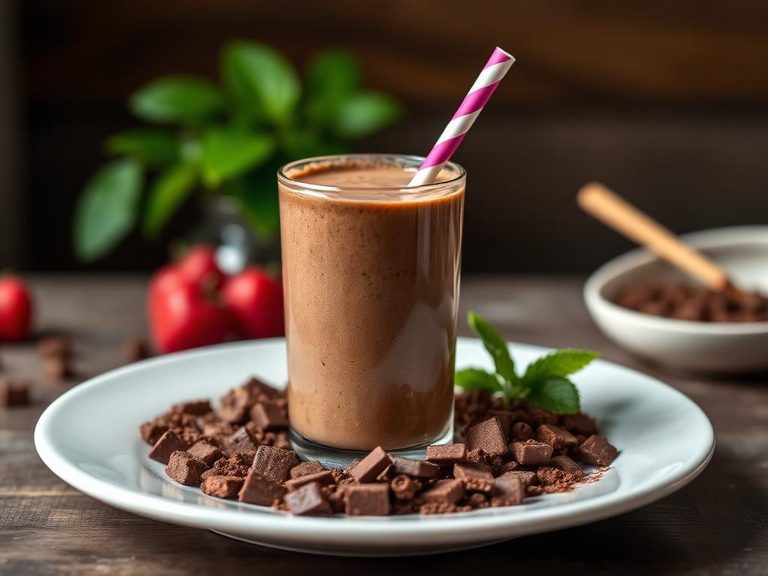
Reduced-fat chocolate milk is a creamy, sweetened dairy beverage that blends the familiar richness of milk with cocoa for a comforting, dessert-like drink. Its texture is smooth and slightly thinner than whole milk, with a balanced sweet-chocolate flavor. Nutritionally, it offers a solid protein punch alongside its carbohydrates, making it a popular recovery drink.
💚 Why it's loved
People love it for its nostalgic, comforting flavor that feels like a treat but offers the nutritional benefits of milk. It's a versatile staple, enjoyed chilled as a standalone drink, a breakfast companion, or a post-workout recovery tool.
⚠️ Watch-outs & how to enjoy it better
The added sugars (about 10g per 100g) can cause blood-sugar spikes, making it less ideal for those managing diabetes or watching sugar intake. To counteract this, pair it with a source of fiber or healthy fat (like a handful of nuts or whole-grain toast) to slow absorption, or opt for a smaller portion. It also contains lactose, a common allergen, so those with lactose intolerance should choose lactose-free versions or consume with a lactase enzyme supplement.
Key benefits
- Excellent source of high-quality protein for muscle repair
- Provides calcium and vitamin D for bone health
- Convenient source of carbohydrates for energy replenishment
- Often fortified with vitamins A and B12
- A palatable way to increase dairy intake for some
🍽️ Popular dishes




🌍 Where it's eaten
💡 Did you know?
A 2019 study in the journal *Applied Physiology, Nutrition, and Metabolism* found that chocolate milk was as effective as many commercial sports drinks for rehydration and performance recovery in endurance athletes, largely due to its ideal carbohydrate-to-protein ratio.
Full nutrition (scales with serving)
| Water | 82.2 g |
| Energy | 76.0 kcal |
| Protein | 3.0 g |
| Total lipid (fat) | 1.9 g |
| Carbohydrate, by difference | 12.1 g |
| Fiber, total dietary | 0.70 g |
| Total Sugars | 9.6 g |
| Calcium, Ca | 109 mg |
| Iron, Fe | 0.24 mg |
| Magnesium, Mg | 14.0 mg |
| Phosphorus, P | 102 mg |
| Potassium, K | 169 mg |
| Sodium, Na | 66.0 mg |
| Zinc, Zn | 0.39 mg |
| Copper, Cu | 0.07 mg |
| Selenium, Se | 3.4 ug |
| Vitamin C, total ascorbic acid | 0.00 mg |
| Thiamin | 0.04 mg |
| Riboflavin | 0.18 mg |
| Niacin | 0.16 mg |
| Vitamin B-6 | 0.02 mg |
| Folate, total | 2.0 ug |
| Folic acid | 0.00 ug |
| Folate, food | 2.0 ug |
| Folate, DFE | 2.0 ug |
| Choline, total | 17.1 mg |
| Vitamin B-12 | 0.33 ug |
| Vitamin B-12, added | 0.00 ug |
| Vitamin A, RAE | 64.0 ug |
| Retinol | 63.0 ug |
| Carotene, beta | 11.0 ug |
| Carotene, alpha | 0.00 ug |
| Cryptoxanthin, beta | 0.00 ug |
| Lycopene | 0.00 ug |
| Lutein + zeaxanthin | 0.00 ug |
| Vitamin E (alpha-tocopherol) | 0.04 mg |
| Vitamin E, added | 0.00 mg |
| Vitamin D (D2 + D3) | 1.2 ug |
| Vitamin K (phylloquinone) | 0.20 ug |
| Fatty acids, total saturated | 1.2 g |
| SFA 4:0 | 0.06 g |
| SFA 6:0 | 0.03 g |
| SFA 8:0 | 0.02 g |
| SFA 10:0 | 0.04 g |
| SFA 12:0 | 0.04 g |
| SFA 14:0 | 0.17 g |
| SFA 16:0 | 0.52 g |
| SFA 18:0 | 0.27 g |
| Fatty acids, total monounsaturated | 0.46 g |
| MUFA 16:1 | 0.02 g |
| MUFA 18:1 | 0.43 g |
| MUFA 20:1 | 0.00 g |
| MUFA 22:1 | 0.00 g |
| Fatty acids, total polyunsaturated | 0.09 g |
| PUFA 18:2 | 0.08 g |
| PUFA 18:3 | 0.00 g |
| PUFA 18:4 | 0.01 g |
| PUFA 20:4 | 0.00 g |
| PUFA 20:5 n-3 (EPA) | 0.00 g |
| PUFA 22:5 n-3 (DPA) | 0.00 g |
| PUFA 22:6 n-3 (DHA) | 0.00 g |
| Cholesterol | 8.0 mg |
| Alcohol, ethyl | 0.00 g |
| Caffeine | 1.0 mg |
| Theobromine | 22.0 mg |
FAQ
Is reduced-fat chocolate milk healthier than regular chocolate milk?
It has less saturated fat and fewer calories per serving than whole-milk chocolate milk, but the sugar content is often similar. The 'healthier' choice depends on your dietary goals—prioritizing lower fat or lower sugar.
Can I use chocolate milk in cooking and baking?
Absolutely. It can substitute for regular milk in recipes for pancakes, waffles, muffins, and even some savory sauces to add a subtle sweetness and chocolate depth.
Why is it recommended for athletes?
Its natural blend of carbohydrates (to refuel energy stores) and protein (to repair muscle tissue), along with fluids and electrolytes for rehydration, makes it a cost-effective and evidence-backed recovery beverage.