

Vada
Common food
Vada is a savory, deep-fried South Indian fritter, typically made from a spiced lentil batter. It has a delightfully crisp, golden-brown exterior giving way to a soft, fluffy, and slightly grainy interior. Nutritionally, it's a notable plant-based protein source, packing nearly 13 grams per 100 grams.
Calorie split: 19% protein · 49% carbs · 32% fat
↓ Full nutrition💚 Why it's loved
People adore vada for its irresistible contrast of textures—the shattering crunch followed by a tender, savory center. It's a beloved cultural staple, enjoyed as a hearty breakfast, a snack, or a festive treat across South India and beyond.
⚠️ Watch-outs & how to enjoy it better
As a deep-fried food, it is high in calories and fat, which may be a concern for those monitoring weight or heart health. The batter can cause a rapid rise in blood sugar, so individuals with diabetes should be mindful of portion size. Tip: Pair it with protein-rich sambar or fiber-rich coconut chutney to slow glucose absorption and enhance satiety.
Key benefits
- High in plant-based protein from lentils
- Good source of dietary fiber for digestion
- Provides essential minerals like iron and potassium
- Naturally gluten-free when made traditionally
- Energy-dense due to its carbohydrate and fat content
🍽️ Popular dishes
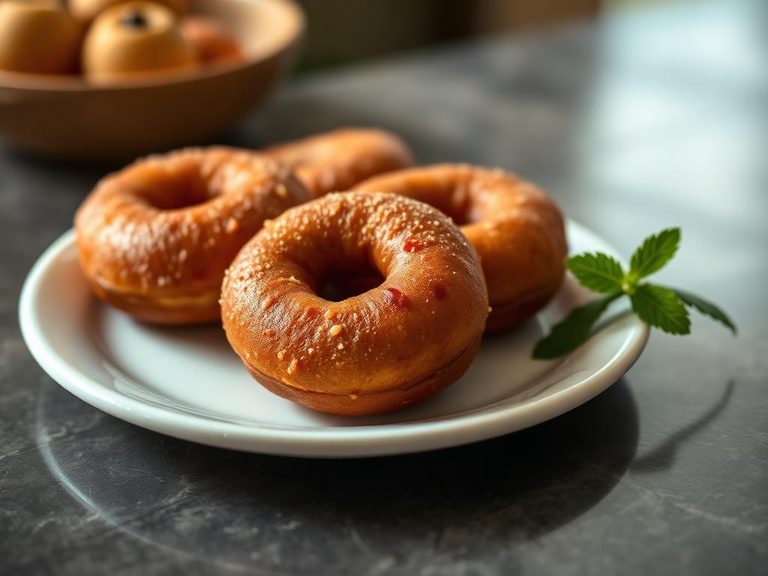
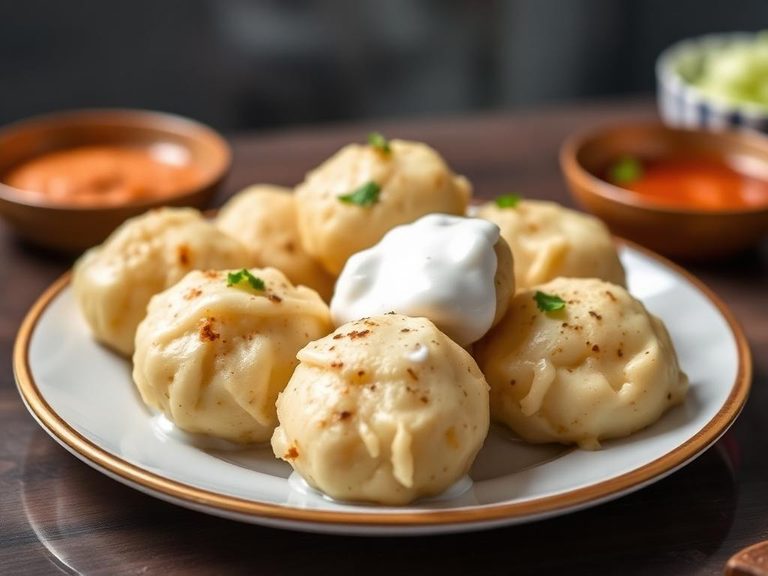
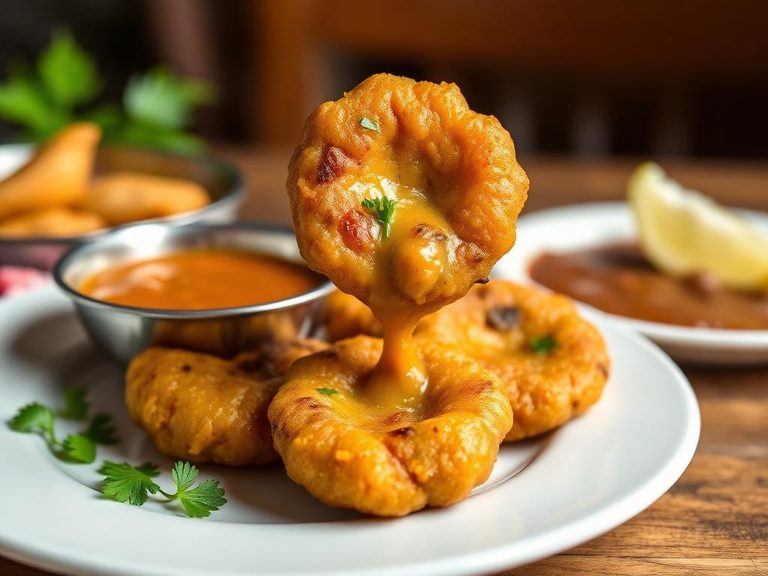
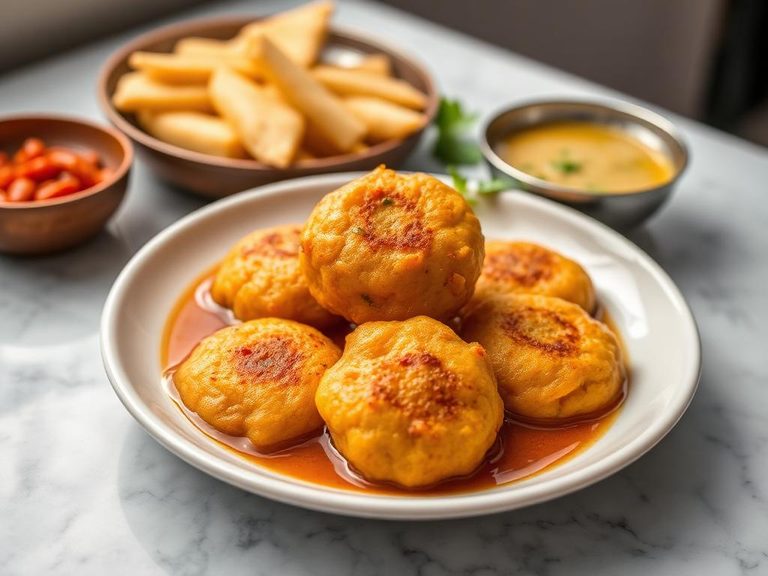
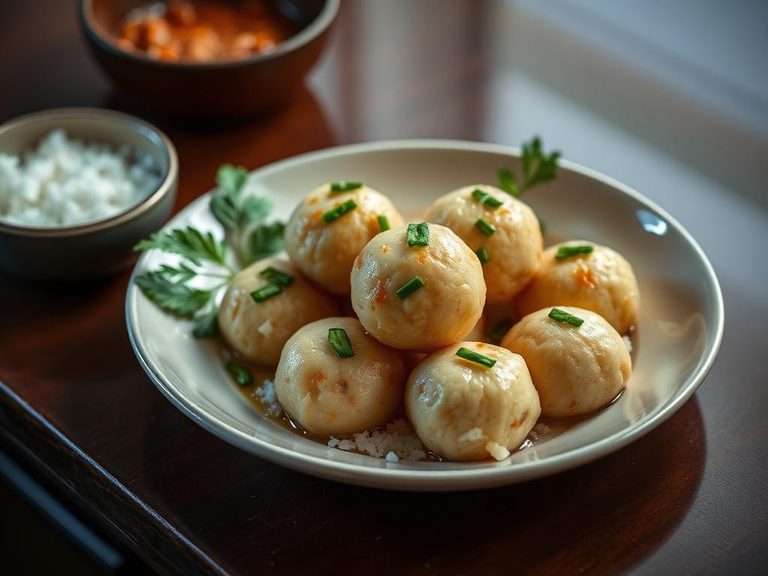
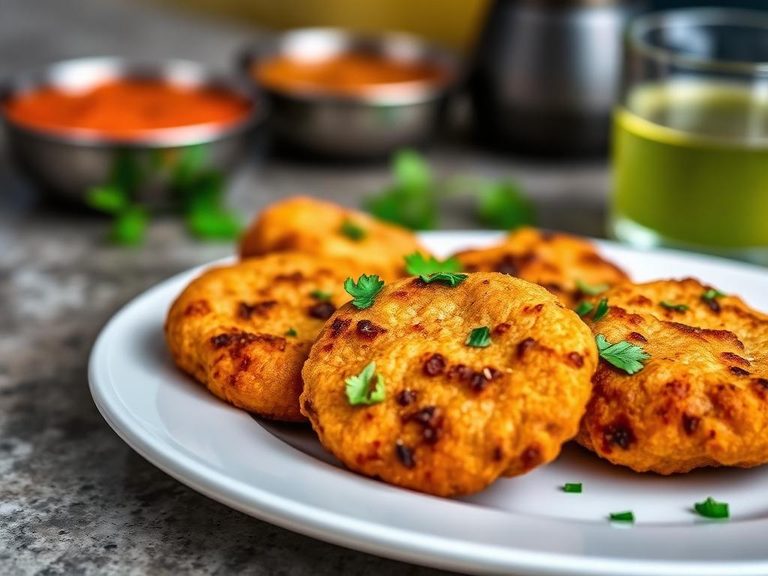
🌍 Where it's eaten
💡 Did you know?
The traditional method of grinding the lentil batter by hand on a stone grinder (called a 'attukal' or 'wet grinder') is believed to incorporate less heat and air, resulting in a lighter, fluffier vada compared to using a high-speed blender.
Full nutrition (USDA data · scales with serving)
| Water | 42.0 g |
| Energy | 266 kcal |
| Protein | 12.8 g |
| Total lipid (fat) | 9.7 g |
| Carbohydrate, by difference | 33.3 g |
| Fiber, total dietary | 5.8 g |
| Total Sugars | 1.3 g |
| Calcium, Ca | 24.0 mg |
| Iron, Fe | 3.6 mg |
| Magnesium, Mg | 27.0 mg |
| Phosphorus, P | 147 mg |
| Potassium, K | 373 mg |
| Sodium, Na | 315 mg |
| Zinc, Zn | 1.7 mg |
| Copper, Cu | 0.40 mg |
| Selenium, Se | 0.10 ug |
| Vitamin C, total ascorbic acid | 9.5 mg |
| Thiamin | 0.45 mg |
| Riboflavin | 0.11 mg |
| Niacin | 1.4 mg |
| Vitamin B-6 | 0.30 mg |
| Folate, total | 247 ug |
| Folic acid | 0.00 ug |
| Folate, food | 247 ug |
| Folate, DFE | 247 ug |
| Choline, total | 50.1 mg |
| Vitamin B-12 | 0.00 ug |
| Vitamin B-12, added | 0.00 ug |
| Vitamin A, RAE | 5.0 ug |
| Retinol | 0.00 ug |
| Carotene, beta | 48.0 ug |
| Carotene, alpha | 4.0 ug |
| Cryptoxanthin, beta | 6.0 ug |
| Lycopene | 0.00 ug |
| Lutein + zeaxanthin | 54.0 ug |
| Vitamin E (alpha-tocopherol) | 2.2 mg |
| Vitamin E, added | 0.00 mg |
| Vitamin D (D2 + D3) | 0.00 ug |
| Vitamin K (phylloquinone) | 13.3 ug |
| Alcohol, ethyl | 0.00 g |
| Caffeine | 0.00 mg |
| Theobromine | 0.00 mg |
Fat & fatty acid profile (per 100g)
| Fatty acids, total saturated | 1.3 g |
| SFA 4:0 | 0.00 g |
| SFA 6:0 | 0.00 g |
| SFA 8:0 | 0.00 g |
| SFA 10:0 | 0.00 g |
| SFA 12:0 | 0.00 g |
| SFA 14:0 | 0.01 g |
| SFA 16:0 | 0.95 g |
| SFA 18:0 | 0.27 g |
| Fatty acids, total monounsaturated | 4.0 g |
| MUFA 16:1 | 0.03 g |
| MUFA 18:1 | 3.9 g |
| MUFA 20:1 | 0.07 g |
| MUFA 22:1 | 0.00 g |
| Fatty acids, total polyunsaturated | 3.8 g |
| PUFA 18:2 | 3.3 g |
| PUFA 18:3 | 0.46 g |
| PUFA 18:4 | 0.00 g |
| PUFA 20:4 | 0.00 g |
| PUFA 20:5 n-3 (EPA) | 0.00 g |
| PUFA 22:5 n-3 (DPA) | 0.00 g |
| PUFA 22:6 n-3 (DHA) | 0.00 g |
| Cholesterol | 0.00 mg |
FAQ
Why does my vada turn out oily and dense?
This is usually due to the batter being too watery or the oil not being hot enough. The batter should be thick and fluffy (aerated by grinding), and the oil must be at 170-180°C (340-355°F) to seal the exterior instantly.
Is vada gluten-free?
Traditional vada made from urad dal (black lentil) batter is naturally gluten-free. However, cross-contamination can occur, and some variations might use added flours, so it's best to verify ingredients if gluten-sensitive.
Can I make vada healthier?
Yes, you can bake or air-fry them for a lower-fat version, though the texture will differ. Using a mix of lentils and adding vegetables like onions or carrots can boost the nutrient profile.
Nutrient density (calculated · NRF9.3)
Nutrient Rich Foods index: beneficial nutrients (protein, fiber, vitamins, minerals) minus saturated fat, added sugar & sodium, per 100 kcal.
NRF9.3 index — Fulgoni, Keast & Drewnowski, 2009. Computed from USDA nutrients.
Weight-loss friendliness (composite index)
Energy density 2.66 kcal/g · 19% calories from protein · 5.8 g fiber · 1.3 g sugar per 100 g.
Composite of energy density (Rolls et al., 1999), protein & fiber satiety, minus sugar. A calculated heuristic — ranks satiety-per-calorie, not a clinical measure.
Dietary load (calculated from USDA values)
Potential renal acid load. Positive = acid-forming, negative = alkaline-forming.
Sodium-to-potassium ratio: 0.84 (lower is better — aim for ≤ 1)
Sodium:potassium per WHO potassium guidance. Computed from USDA nutrients.