

Salmonberries, raw (Alaska Native)
Whole food · American Indian/Alaska Native Foods

Photo: Wikipedia
Salmonberries (Rubus spectabilis) are a vibrant, juicy berry native to the Pacific Northwest, known for their unique flavor that blends the tartness of a raspberry with the sweetness of a huckleberry. Their soft, delicate texture and bright orange-pink hue make them a standout in foraged cuisine. With only 47 calories per 100g and a notable 1.9g of fiber, they offer a light, nutrient-dense snack.
Calorie split: 7% protein · 86% carbs · 6% fat
↓ Full nutrition💚 Why it's loved
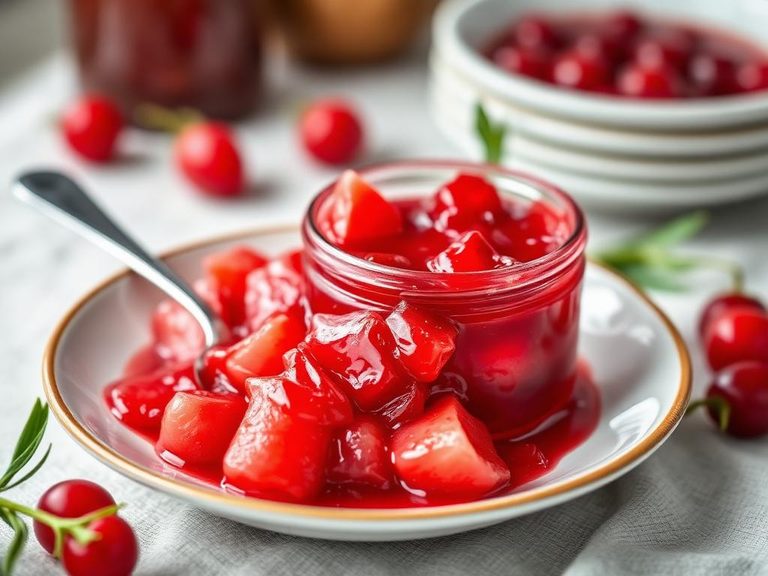
People love salmonberries for their complex, tangy-sweet flavor and their deep cultural significance in Indigenous Alaskan and Pacific Northwest traditions. They are cherished for their versatility in both fresh and cooked preparations, from jams to syrups.
⚠️ Watch-outs & how to enjoy it better
Their high natural sugar content (3.66g per 100g) can cause blood sugar spikes if consumed in large quantities. To counteract this, pair them with a source of protein or healthy fat (like nuts or yogurt) and practice portion control. Their delicate texture also makes them prone to bruising and spoilage, so they are best used fresh or quickly preserved.
Key benefits
- Rich in vitamin C and antioxidants
- Good source of dietary fiber (1.9g per 100g)
- Low in calories and fat
- Contains manganese and potassium
- Traditionally used by Alaska Native peoples for food and medicine
🍽️ Popular dishes

🌍 Where it's eaten
💡 Did you know?
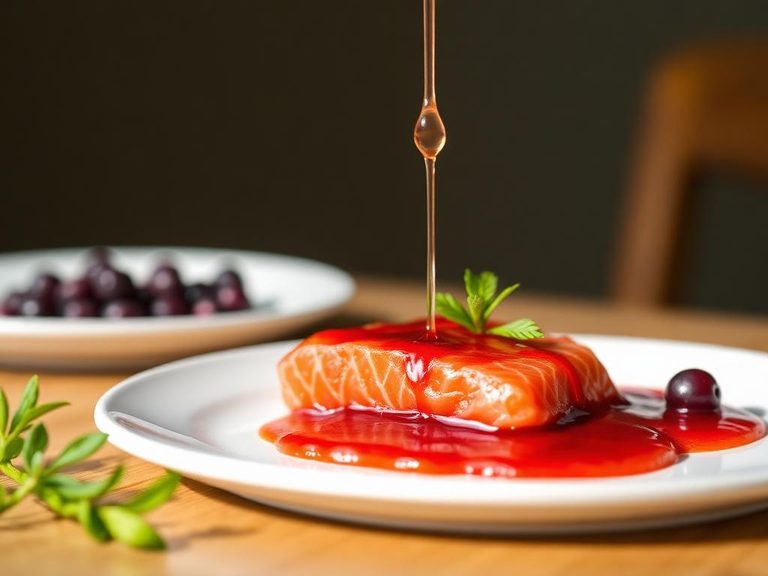
The name 'salmonberry' comes from the traditional practice of eating them with dried salmon, a combination that provided essential nutrients for survival in the region.
Full nutrition (USDA data · scales with serving)
| Water | 88.2 g |
| Energy | 47.0 kcal |
| Energy | 195 kj |
| Protein | 0.85 g |
| Total lipid (fat) | 0.33 g |
| Ash | 0.56 g |
| Carbohydrate, by difference | 10.1 g |
| Fiber, total dietary | 1.9 g |
| Total Sugars | 3.7 g |
| Sucrose | 0.02 g |
| Glucose | 1.9 g |
| Fructose | 1.8 g |
| Lactose | 0.00 g |
| Maltose | 0.00 g |
| Galactose | 0.00 g |
| Starch | 0.00 g |
| Calcium, Ca | 13.0 mg |
| Iron, Fe | 0.40 mg |
| Magnesium, Mg | 15.0 mg |
| Phosphorus, P | 27.0 mg |
| Potassium, K | 110 mg |
| Sodium, Na | 14.0 mg |
| Zinc, Zn | 0.28 mg |
| Copper, Cu | 0.03 mg |
| Manganese, Mn | 1.1 mg |
| Vitamin C, total ascorbic acid | 9.2 mg |
| Thiamin | 0.04 mg |
| Riboflavin | 0.06 mg |
| Niacin | 0.47 mg |
| Pantothenic acid | 0.17 mg |
| Vitamin B-6 | 0.08 mg |
| Folate, total | 17.0 ug |
| Folic acid | 0.00 ug |
| Folate, food | 17.0 ug |
| Folate, DFE | 17.0 ug |
| Vitamin A, RAE | 50.0 ug |
| Carotene, beta | 277 ug |
| Carotene, alpha | 41.0 ug |
| Cryptoxanthin, beta | 0.00 ug |
| Vitamin A, IU | 496 iu |
| Lycopene | 0.00 ug |
| Vitamin E (alpha-tocopherol) | 1.6 mg |
| Tocopherol, beta | 0.06 mg |
| Tocopherol, gamma | 0.37 mg |
| Tocopherol, delta | 0.09 mg |
| Tocotrienol, alpha | 0.00 mg |
| Tocotrienol, beta | 0.00 mg |
| Tocotrienol, gamma | 0.00 mg |
| Tocotrienol, delta | 0.00 mg |
| Vitamin K (phylloquinone) | 14.8 ug |
| Vitamin K (Dihydrophylloquinone) | 0.00 ug |
| Vitamin K (Menaquinone-4) | 0.00 ug |
FAQ
What do salmonberries taste like?
Salmonberries have a unique flavor that is often described as a mix between a raspberry and a huckleberry, with a sweet-tart taste and a hint of citrus.
Are salmonberries healthy?
Yes, they are low in calories and fat, high in fiber and vitamin C, and contain antioxidants that support overall health.
How are salmonberries traditionally eaten?
They are often eaten fresh, made into jams or syrups, or paired with dried salmon in traditional Alaska Native dishes.
Can I grow salmonberries at home?
Salmonberries are native to the Pacific Northwest and Alaska and thrive in moist, shaded areas. They can be grown in similar climates with proper care.
Nutrient density (calculated · NRF9.3)
Nutrient Rich Foods index: beneficial nutrients (protein, fiber, vitamins, minerals) minus saturated fat, added sugar & sodium, per 100 kcal.
NRF9.3 index — Fulgoni, Keast & Drewnowski, 2009. Computed from USDA nutrients.
Weight-loss friendliness (composite index)
Energy density 0.47 kcal/g · 7% calories from protein · 1.9 g fiber · 3.7 g sugar per 100 g.
Composite of energy density (Rolls et al., 1999), protein & fiber satiety, minus sugar. A calculated heuristic — ranks satiety-per-calorie, not a clinical measure.
Dietary load (calculated from USDA values)
Potential renal acid load. Positive = acid-forming, negative = alkaline-forming.
Sodium-to-potassium ratio: 0.13 (lower is better — aim for ≤ 1)
Sodium:potassium per WHO potassium guidance. Computed from USDA nutrients.