

Salmonberry pie
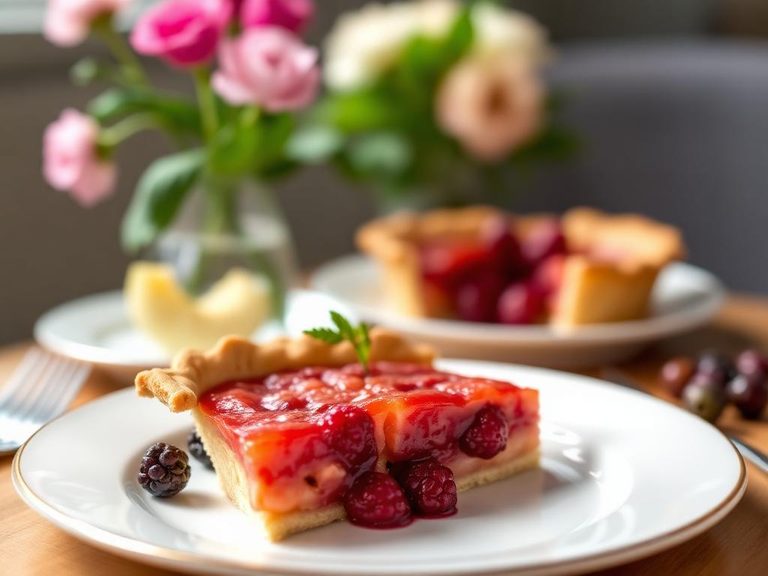
Salmonberry pie is a traditional dessert from the Pacific Northwest of North America, particularly popular among Indigenous communities in Alaska and British Columbia. It features the bright, tart salmonberry (Rubus spectabilis) as the star ingredient, often combined with sugar and a thickener inside a flaky pastry crust. The pie highlights a foraged, wild berry that is less common in mainstream baking.
🍽️ Nutrition at a glance
This pie is typically high in carbohydrates and fat due to the pastry crust and added sugar, with a moderate amount of fiber from the berries. A single slice provides a good source of Vitamin C and manganese, with a rough calorie range of 300-400 kcal per serving.
Nutrition breakdown
| Calories | 350 kcal |
| Protein | 4 g |
| Carbs | 45 g |
| Fat | 18 g |
| Fiber | 3 g |
| Sugar | 22 g |
| Sodium | 220 mg |
| Vitamin C | 15 mg |
| Manganese | 0.5 mg |
| Potassium | 120 mg |
| Vitamin K | 8 µg |
| Iron | 1.2 mg |
| Vitamin A | 45 µg |
| Magnesium | 15 mg |
| Phosphorus | 50 mg |
Per 1 slice (1/8 of a 9-inch pie, approximately 120 g) · estimated, varies by recipe
💡 What's interesting
Culturally, salmonberry pie represents a connection to traditional foraging practices and seasonal harvesting in coastal regions. Nutritionally, the salmonberry itself is a unique fruit, being one of the earliest wild berries to ripen in spring and offering a vibrant color and tangy flavor profile distinct from more common pie berries.
🍽️ Related dishes
AI estimate may be inaccurate · Terms