

Salmonberry fruit leather
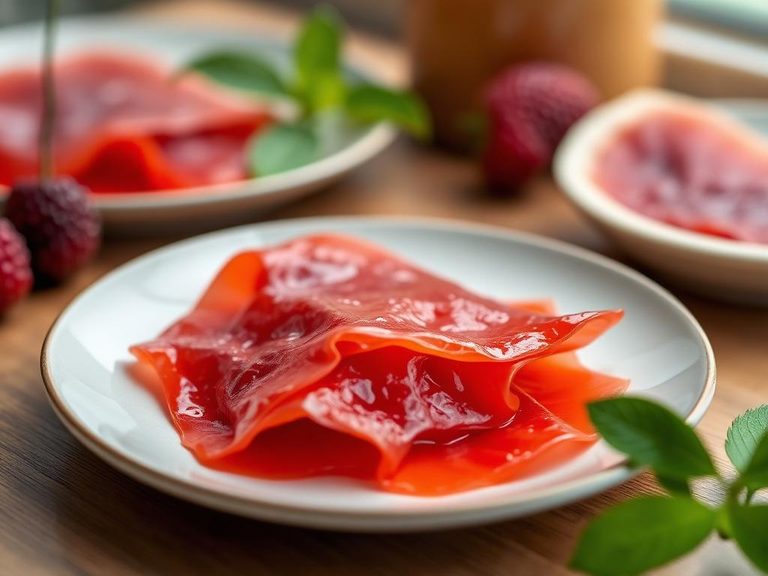
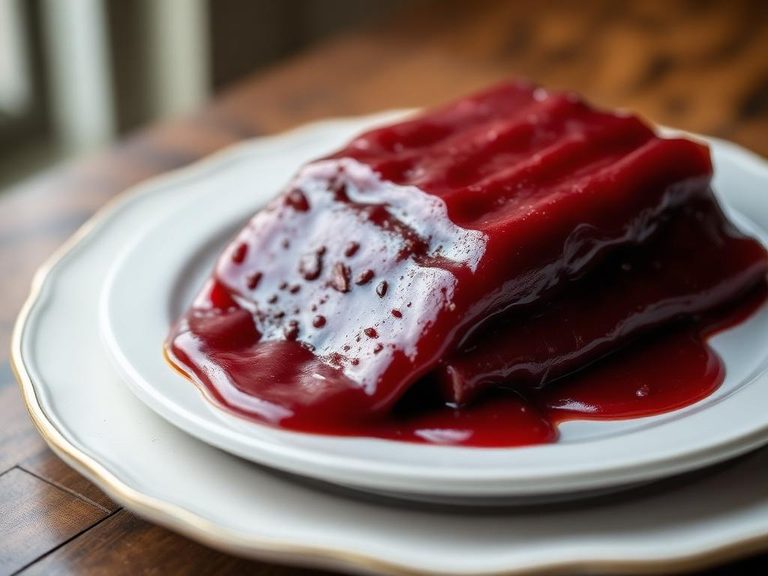
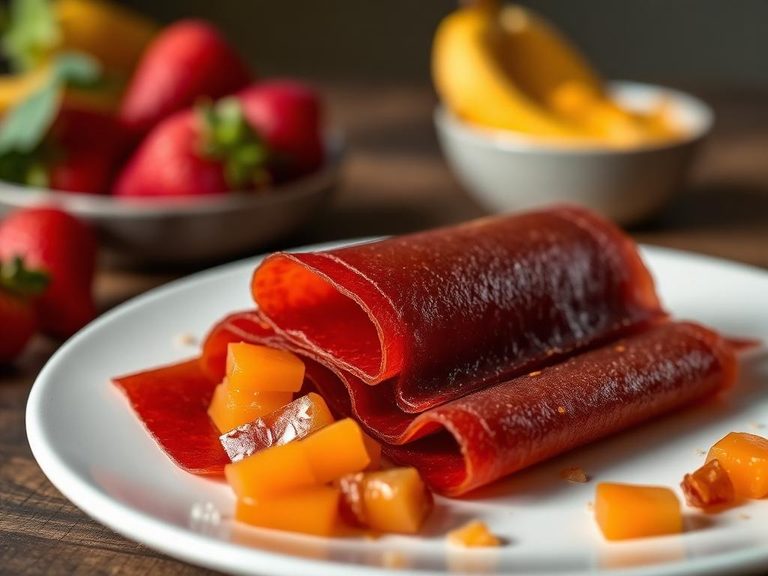
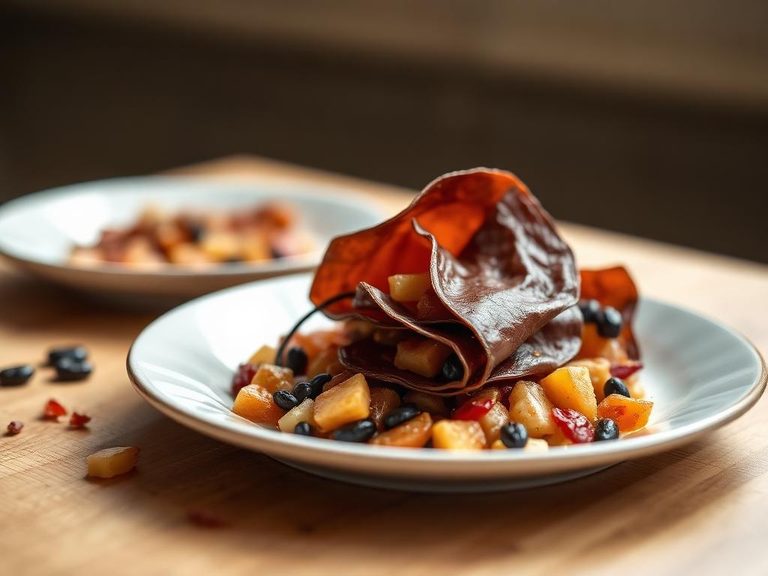
Salmonberry fruit leather is a traditional, naturally sweetened snack made from the pureed and dried fruit of the salmonberry plant (Rubus spectabilis). It is a staple food for many Indigenous peoples of the Pacific Northwest coast of North America, where the berries are harvested in late spring and early summer. The preparation involves cooking the berries into a thick paste and spreading it thinly to dry into a pliable, chewy sheet.
🍽️ Nutrition at a glance
This fruit leather is primarily a source of carbohydrates, offering quick natural energy with minimal fat and protein. It is a good source of dietary fiber, vitamin C, and antioxidants, with a typical serving containing roughly 100-150 calories.
Nutrition breakdown
| Calories | 110 kcal |
| Protein | 1 g |
| Carbs | 25 g |
| Fat | 0.5 g |
| Fiber | 4 g |
| Sugar | 18 g |
| Sodium | 5 mg |
| Vitamin C | 15 mg |
| Potassium | 200 mg |
| Manganese | 0.5 mg |
| Vitamin A | 100 IU |
| Iron | 0.8 mg |
| Magnesium | 20 mg |
| Vitamin K | 5 mcg |
| Antioxidants (Anthocyanins) | Significant |
Per 1 sheet (approx. 30 g) · estimated, varies by recipe
💡 What's interesting
Culturally, salmonberry fruit leather represents an ingenious method of preserving a highly perishable seasonal fruit for year-round use, often carried as a lightweight, durable food for travel and hunting. Nutritionally, it retains many of the berry's beneficial compounds, including anthocyanins which give it a vibrant color, without the need for added sugars or preservatives.
🍽️ Related dishes
AI estimate may be inaccurate · Terms