

Frozen novelties, ice type, italian, restaurant-prepared
Whole food · Sweets

Photo: Wikipedia
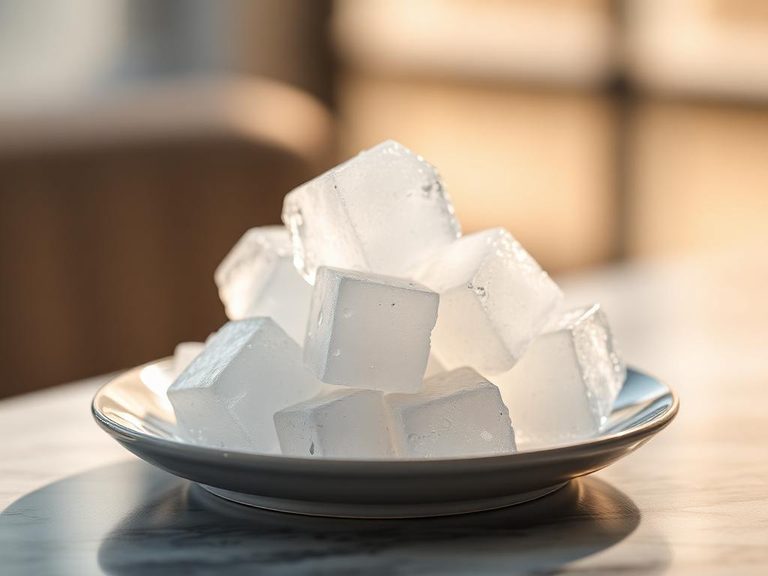
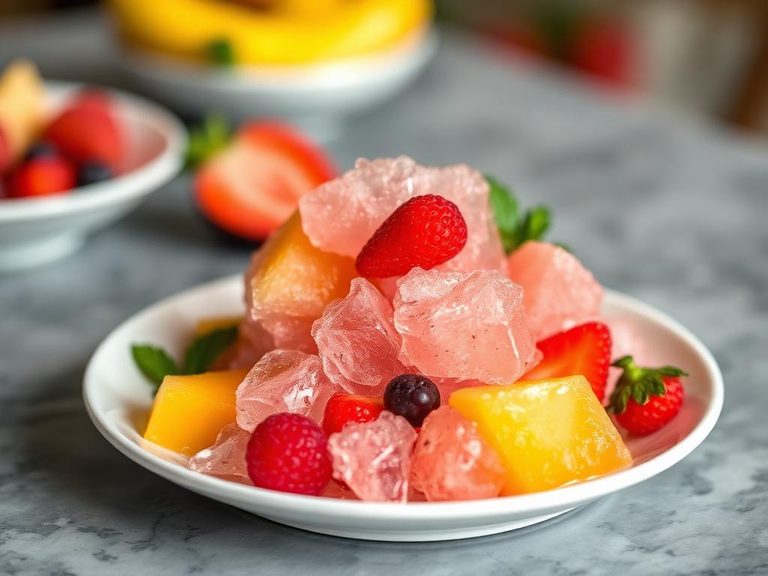
This is a light, water-based frozen dessert, typically a fruit-flavored ice or sorbet, served in a restaurant setting. It has a refreshing, slightly crystalline texture that melts quickly on the tongue, offering a clean, sweet burst of flavor without the richness of dairy. Nutritionally, it's very low in calories and fat, making it a light, guilt-free treat.
Calorie split: 0% protein · 99% carbs · 0% fat
↓ Full nutrition💚 Why it's loved
People love it for its pure, unadulterated fruit flavor and its ability to cleanse the palate, especially after a rich meal. It's a nostalgic, simple pleasure that evokes the feeling of a warm Italian summer or a classic restaurant finish.
⚠️ Watch-outs & how to enjoy it better
The main downside is the potential for a blood-sugar spike due to its high carbohydrate (13.5g) and zero-fiber content. To counteract this, enjoy it as a small portion and pair it with a source of protein or fat (like nuts or a cheese course) to slow sugar absorption. Also, be mindful of portion size to keep calorie intake in check.
Key benefits
- Very low in calories (53 kcal per 100g).
- Virtually fat-free (0.02g per 100g).
- Provides quick energy from carbohydrates.
- A light, refreshing dessert option.
- Often dairy-free, suitable for lactose-intolerant individuals.
🍽️ Popular dishes
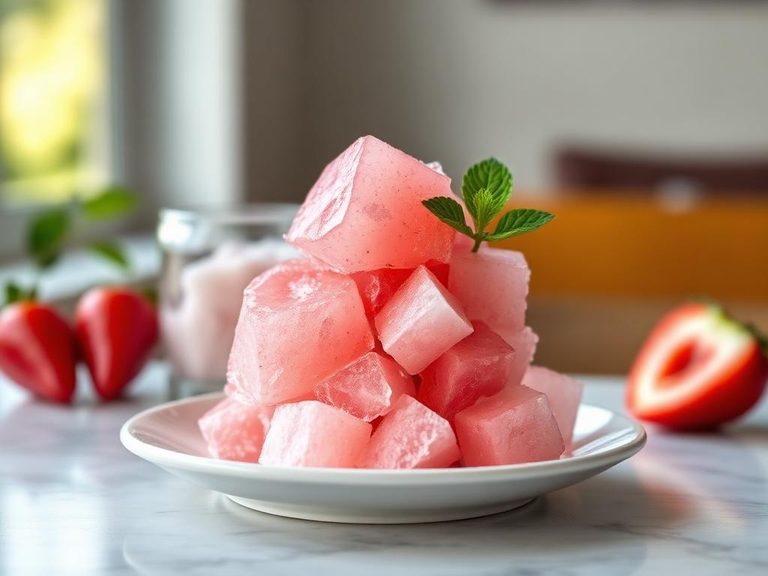
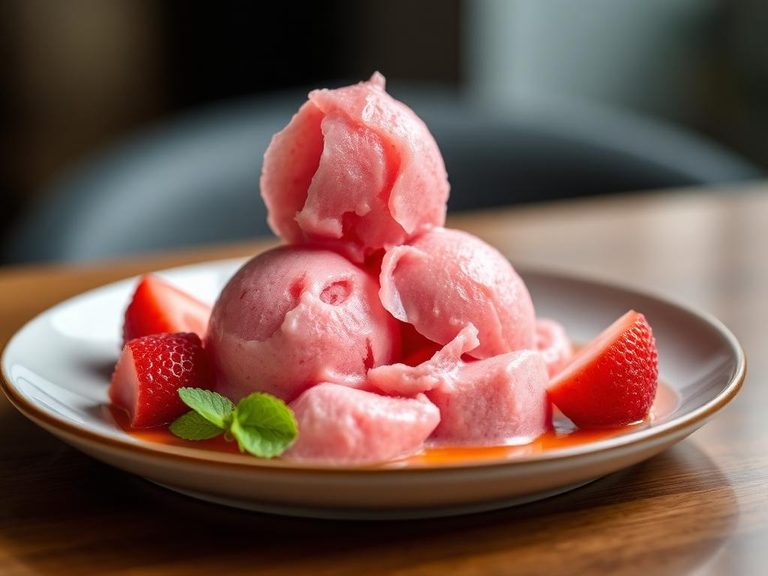
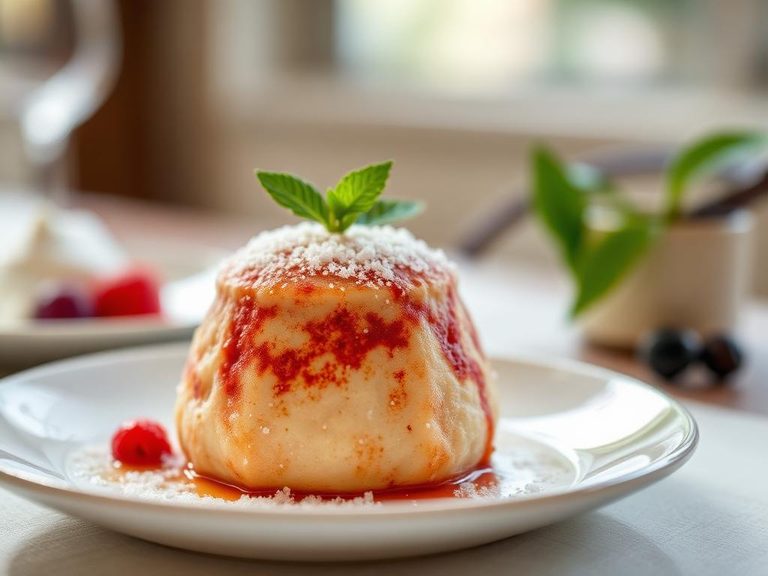
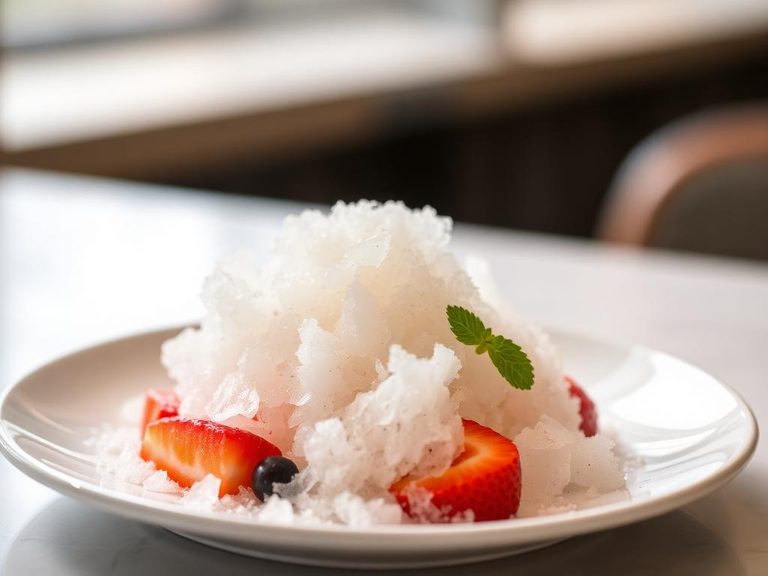
🌍 Where it's eaten
💡 Did you know?
The original Italian ice, or 'granita,' was likely inspired by the snow and ice carried down from Mount Etna in Sicily, mixed with fruit juices and sugar to create a refreshing treat.
Full nutrition (USDA data · scales with serving)
| Water | 86.4 g |
| Energy | 53.0 kcal |
| Energy | 222 kj |
| Protein | 0.03 g |
| Total lipid (fat) | 0.02 g |
| Ash | 0.05 g |
| Carbohydrate, by difference | 13.5 g |
| Fiber, total dietary | 0.00 g |
| Calcium, Ca | 1.0 mg |
| Iron, Fe | 0.09 mg |
| Magnesium, Mg | 0.00 mg |
| Phosphorus, P | 0.00 mg |
| Potassium, K | 6.0 mg |
| Sodium, Na | 4.0 mg |
| Zinc, Zn | 0.03 mg |
| Copper, Cu | 0.01 mg |
| Manganese, Mn | 0.02 mg |
| Selenium, Se | 0.10 ug |
| Vitamin C, total ascorbic acid | 0.50 mg |
| Thiamin | 0.01 mg |
| Riboflavin | 0.01 mg |
| Niacin | 0.71 mg |
| Pantothenic acid | 0.01 mg |
| Vitamin B-6 | 0.00 mg |
| Folate, total | 5.0 ug |
| Folic acid | 0.00 ug |
| Folate, food | 5.0 ug |
| Folate, DFE | 5.0 ug |
| Vitamin B-12 | 0.00 ug |
| Vitamin A, IU | 167 iu |
| Alcohol, ethyl | 0.00 g |
Fat & fatty acid profile (per 100g)
| Fatty acids, total saturated | 0.00 g |
| SFA 4:0 | 0.00 g |
| SFA 6:0 | 0.00 g |
| SFA 8:0 | 0.00 g |
| SFA 10:0 | 0.00 g |
| SFA 12:0 | 0.00 g |
| SFA 14:0 | 0.00 g |
| SFA 16:0 | 0.00 g |
| SFA 18:0 | 0.00 g |
| Fatty acids, total monounsaturated | 0.00 g |
| MUFA 16:1 | 0.00 g |
| MUFA 18:1 | 0.00 g |
| MUFA 20:1 | 0.00 g |
| MUFA 22:1 | 0.00 g |
| Fatty acids, total polyunsaturated | 0.00 g |
| PUFA 18:2 | 0.00 g |
| PUFA 18:3 | 0.00 g |
| PUFA 18:4 | 0.00 g |
| PUFA 20:4 | 0.00 g |
| PUFA 20:5 n-3 (EPA) | 0.00 g |
| PUFA 22:5 n-3 (DPA) | 0.00 g |
| PUFA 22:6 n-3 (DHA) | 0.00 g |
| Cholesterol | 0.00 mg |
FAQ
Is frozen novelties, ice type, Italian, restaurant-prepared the same as ice cream?
No, it is fundamentally different. Italian ice is a water-based frozen dessert, while ice cream is dairy-based. This means Italian ice is typically fat-free and lighter in texture, but it can be higher in sugar.
Can I make this at home?
Yes, you can make a similar dessert by freezing fruit juice or puree with sugar and water, then scraping it with a fork to create a granita texture. The restaurant-prepared version often uses a machine to create a smoother, more uniform ice.
Is this suitable for vegans?
Most Italian ice is vegan, as it is typically made from fruit, sugar, and water. However, always check the specific ingredients at a restaurant, as some variations might include dairy or other animal products.
Nutrient density (calculated · NRF9.3)
Nutrient Rich Foods index: beneficial nutrients (protein, fiber, vitamins, minerals) minus saturated fat, added sugar & sodium, per 100 kcal.
NRF9.3 index — Fulgoni, Keast & Drewnowski, 2009. Computed from USDA nutrients.
Weight-loss friendliness (composite index)
Energy density 0.53 kcal/g · 0% calories from protein · 0.0 g fiber · 0.0 g sugar per 100 g.
Composite of energy density (Rolls et al., 1999), protein & fiber satiety, minus sugar. A calculated heuristic — ranks satiety-per-calorie, not a clinical measure.
Dietary load (calculated from USDA values)
Potential renal acid load. Positive = acid-forming, negative = alkaline-forming.
Sodium-to-potassium ratio: 0.67 (lower is better — aim for ≤ 1)
Sodium:potassium per WHO potassium guidance. Computed from USDA nutrients.