

Crustaceans, crab, alaska king, raw
Whole food · Finfish and Shellfish Products

Photo: Wikipedia
Alaska king crab is the heavyweight champion of the crab world, prized for its massive, meaty legs. The raw flesh is translucent and firm, transforming into a succulent, sweet, and briny delicacy with a tender, flaky texture when cooked. It's a pure protein powerhouse, delivering an impressive 18.29 grams per 100 grams with virtually no fat or carbohydrates.
Calorie split: 93% protein · 0% carbs · 7% fat
↓ Full nutrition💚 Why it's loved
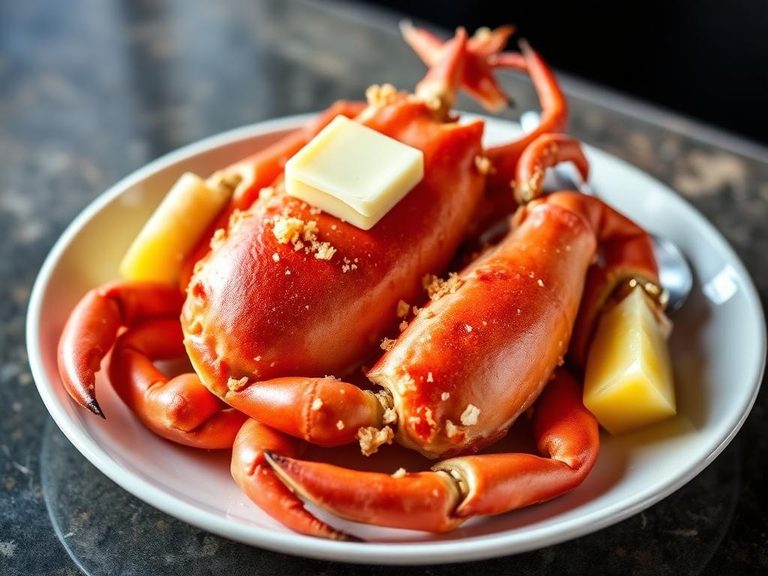
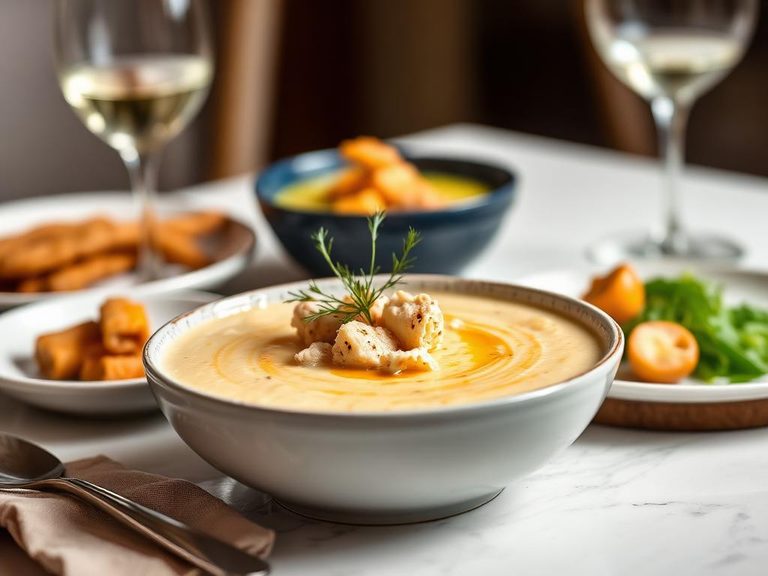
People adore it for its luxurious, sweet, and distinctly oceanic flavor that feels like a true celebration. Its versatility allows it to shine simply steamed with butter or as the star in decadent pastas and bisques.
⚠️ Watch-outs & how to enjoy it better
As a shellfish, it is a common and potentially severe allergen, requiring strict avoidance by those with allergies. It can also be high in sodium, so individuals monitoring their intake should be mindful of portion sizes and preparation methods, like avoiding heavy salted boiling liquids. Tip: Pair with potassium-rich vegetables like asparagus or a simple lemon squeeze to balance flavors without adding salt.
Key benefits
- Excellent source of lean, complete protein
- Very low in fat and calories
- Rich in essential minerals like zinc, copper, and selenium
- Provides vitamin B12 for nerve function and energy
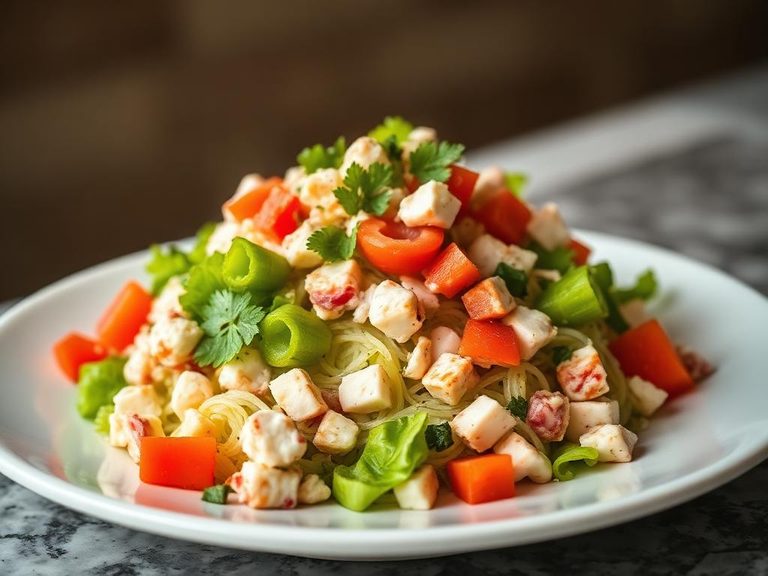
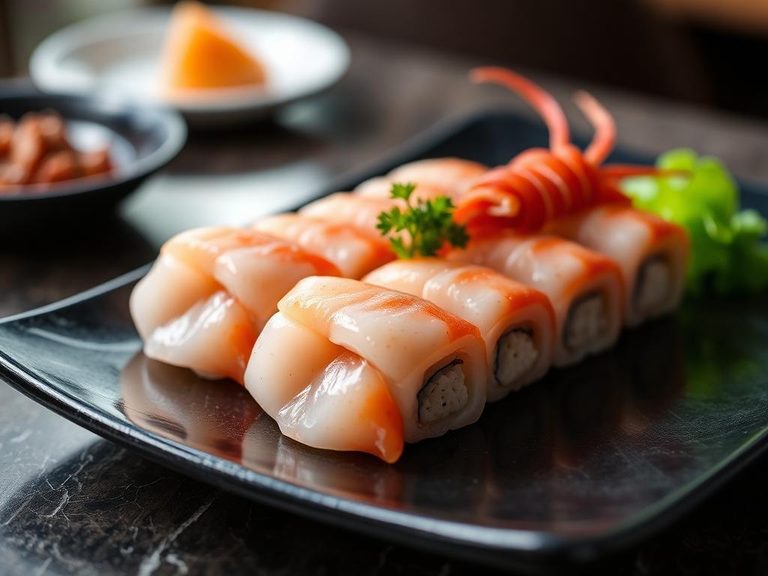
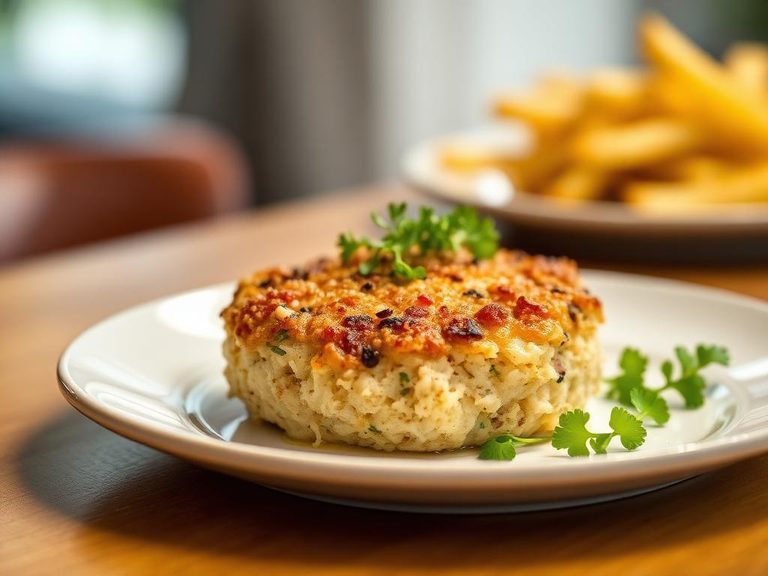
🍽️ Popular dishes
🌍 Where it's eaten
💡 Did you know?
The Alaska king crab isn't a true crab at all; it's more closely related to hermit crabs and is classified in the family Lithodidae, or stone crabs.
Full nutrition (USDA data · scales with serving)
| Water | 79.6 g |
| Energy | 84.0 kcal |
| Energy | 351 kj |
| Protein | 18.3 g |
| Total lipid (fat) | 0.60 g |
| Ash | 1.8 g |
| Carbohydrate, by difference | 0.00 g |
| Fiber, total dietary | 0.00 g |
| Calcium, Ca | 46.0 mg |
| Iron, Fe | 0.59 mg |
| Magnesium, Mg | 49.0 mg |
| Phosphorus, P | 219 mg |
| Potassium, K | 204 mg |
| Sodium, Na | 836 mg |
| Zinc, Zn | 6.0 mg |
| Copper, Cu | 0.92 mg |
| Manganese, Mn | 0.04 mg |
| Selenium, Se | 36.4 ug |
| Vitamin C, total ascorbic acid | 7.0 mg |
| Thiamin | 0.04 mg |
| Riboflavin | 0.04 mg |
| Niacin | 1.1 mg |
| Pantothenic acid | 0.35 mg |
| Vitamin B-6 | 0.15 mg |
| Folate, total | 44.0 ug |
| Folic acid | 0.00 ug |
| Folate, food | 44.0 ug |
| Folate, DFE | 44.0 ug |
| Vitamin B-12 | 9.0 ug |
| Vitamin A, RAE | 7.0 ug |
| Retinol | 7.0 ug |
| Vitamin A, IU | 24.0 iu |
Fat & fatty acid profile (per 100g)
| Fatty acids, total saturated | 0.09 g |
| Fatty acids, total monounsaturated | 0.08 g |
| Fatty acids, total polyunsaturated | 0.13 g |
| Cholesterol | 42.0 mg |
Amino acid profile (per 100g)
| Tryptophan | 0.26 g |
| Threonine | 0.74 g |
| Isoleucine | 0.89 g |
| Leucine | 1.5 g |
| Lysine | 1.6 g |
| Methionine | 0.52 g |
| Cystine | 0.20 g |
| Phenylalanine | 0.77 g |
| Tyrosine | 0.61 g |
| Valine | 0.86 g |
| Arginine | 1.6 g |
| Histidine | 0.37 g |
| Alanine | 1.0 g |
| Aspartic acid | 1.9 g |
| Glutamic acid | 3.1 g |
| Glycine | 1.1 g |
| Proline | 0.60 g |
| Serine | 0.72 g |
FAQ
How do you cook raw Alaska king crab?
The most common method is steaming or boiling the legs for 5-8 minutes until the shell turns bright red and the meat is opaque. Grilling or roasting with butter and garlic are also popular, and the meat can be picked and used in other recipes.
Is raw king crab safe to eat?
While some high-grade crab can be served raw (as in sashimi), it must be impeccably fresh and handled under strict safety protocols. For home cooking, it is strongly recommended to cook king crab to an internal temperature of 145°F (63°C) to eliminate any potential pathogens.
Why is Alaska king crab so expensive?
The high cost is due to extreme scarcity and danger. The harvest takes place in the brutal, remote Bering Sea during a short, regulated season, making it one of the most perilous commercial fishing jobs in the world.
Nutrient density (calculated · NRF9.3)
Nutrient Rich Foods index: beneficial nutrients (protein, fiber, vitamins, minerals) minus saturated fat, added sugar & sodium, per 100 kcal.
NRF9.3 index — Fulgoni, Keast & Drewnowski, 2009. Computed from USDA nutrients.
Weight-loss friendliness (composite index)
Energy density 0.84 kcal/g · 87% calories from protein · 0.0 g fiber · 0.0 g sugar per 100 g.
Composite of energy density (Rolls et al., 1999), protein & fiber satiety, minus sugar. A calculated heuristic — ranks satiety-per-calorie, not a clinical measure.
Dietary load (calculated from USDA values)
Potential renal acid load. Positive = acid-forming, negative = alkaline-forming.
Sodium-to-potassium ratio: 4.10 (lower is better — aim for ≤ 1)
Sodium:potassium per WHO potassium guidance. Computed from USDA nutrients.