

Beans, navy, canned, sodium added, drained and rinsed
Whole food · Legumes and Legume Products

Photo: Wikipedia
Navy beans, also known as haricot beans, are small, oval-shaped legumes with a creamy white color and a mild, slightly nutty flavor. When canned and rinsed, they have a soft, smooth texture that holds its shape well in soups and salads. They are a notable source of plant-based protein, providing over 6.5 grams per 100 grams.
Calorie split: 22% protein · 67% carbs · 11% fat
↓ Full nutrition💚 Why it's loved
People love navy beans for their incredibly versatile, mild flavor that readily absorbs the spices and seasonings of any dish. They are the classic, hearty backbone of traditional American baked beans and are cherished for their comforting, creamy texture.
⚠️ Watch-outs & how to enjoy it better
The primary concern is the high sodium content from canning, which can be counteracted by thoroughly draining and rinsing the beans under running water. Those monitoring blood sugar should be aware of the high carbohydrate count; pairing the beans with a source of fat or protein can help moderate the glycemic response.
Key benefits
- Excellent source of plant-based protein
- Rich in complex carbohydrates for sustained energy
- Low in fat and contains no sugar
- Provides essential minerals like iron and folate
- Convenient shelf-stable pantry staple
🍽️ Popular dishes
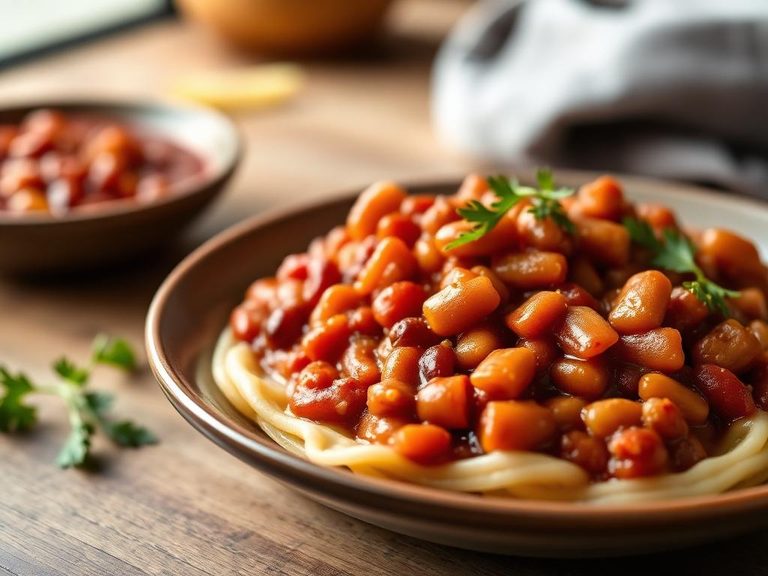
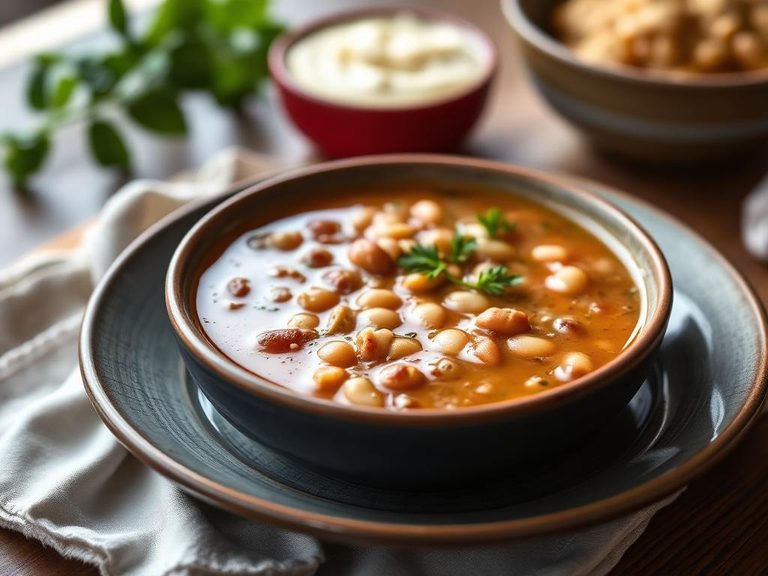

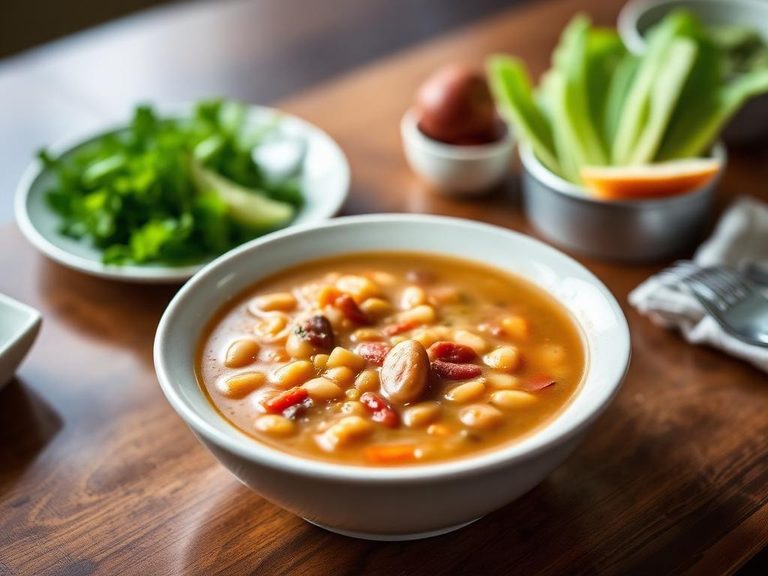
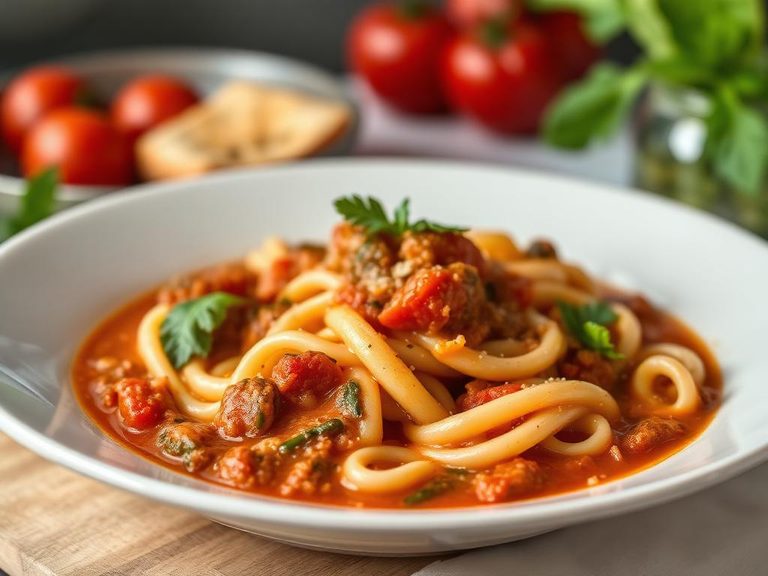
🌍 Where it's eaten
💡 Did you know?
The 'navy' in navy bean is believed to come from their historical status as a staple food for sailors in the United States Navy in the early 20th century.
Full nutrition (USDA data · scales with serving)
| Water | 71.0 g |
| Energy (Atwater General Factors) | 119 kcal |
| Energy (Atwater Specific Factors) | 116 kcal |
| Nitrogen | 1.1 g |
| Protein | 6.6 g |
| Total lipid (fat) | 1.4 g |
| Ash | 1.1 g |
| Carbohydrate, by difference | 20.0 g |
| Total dietary fiber (AOAC 2011.25) | 6.8 g |
| Starch | 12.1 g |
| Resistant starch | 2.0 g |
| Calcium, Ca | 63.9 mg |
| Iron, Fe | 1.6 mg |
| Magnesium, Mg | 29.6 mg |
| Phosphorus, P | 86.7 mg |
| Potassium, K | 184 mg |
| Sodium, Na | 190 mg |
| Zinc, Zn | 0.63 mg |
| Copper, Cu | 0.29 mg |
| Manganese, Mn | 0.38 mg |
Fat & fatty acid profile (per 100g)
Estimated from Lima beans, thin seeded (baby), mature seeds, cooked, boiled, without salt — USDA does not publish this profile for Beans.
| Fatty acids, total saturated | 0.09 g |
| SFA 12:0 | 0.00 g |
| SFA 14:0 | 0.00 g |
| SFA 16:0 | 0.07 g |
| SFA 18:0 | 0.02 g |
| Fatty acids, total monounsaturated | 0.03 g |
| MUFA 16:1 | 0.00 g |
| MUFA 18:1 | 0.03 g |
| MUFA 20:1 | 0.00 g |
| MUFA 22:1 | 0.00 g |
| Fatty acids, total polyunsaturated | 0.17 g |
| PUFA 18:2 | 0.12 g |
| PUFA 18:3 | 0.05 g |
| Fatty acids, total trans | 0.00 g |
| Cholesterol | 0.00 mg |
Amino acid profile (per 100g)
Estimated from Lima beans, thin seeded (baby), mature seeds, cooked, boiled, without salt — USDA does not publish this profile for Beans.
| Tryptophan | 0.10 g |
| Threonine | 0.35 g |
| Isoleucine | 0.42 g |
| Leucine | 0.69 g |
| Lysine | 0.54 g |
| Methionine | 0.10 g |
| Cystine | 0.09 g |
| Phenylalanine | 0.46 g |
| Tyrosine | 0.28 g |
| Valine | 0.48 g |
| Arginine | 0.49 g |
| Histidine | 0.25 g |
| Alanine | 0.41 g |
| Aspartic acid | 1.0 g |
| Glutamic acid | 1.1 g |
| Glycine | 0.34 g |
| Proline | 0.37 g |
| Serine | 0.54 g |
FAQ
What's the difference between navy beans and great northern beans?
Navy beans are smaller, oval, and have a slightly more dense texture, making them ideal for purees and canned soups. Great northern beans are larger, have a milder flavor, and hold their shape better, making them common in salads and stews.
Why should I rinse canned beans?
Rinsing canned beans under cold water can remove up to 40% of the added sodium. It also rinses off the starchy canning liquid, which can improve texture and reduce potential digestive discomfort.
Are navy beans a good source of fiber?
While the specific nutritional data provided shows 0g of fiber (likely due to processing or measurement), navy beans are naturally very high in dietary fiber, especially soluble fiber, which is beneficial for digestive health.
Nutrient density (calculated · NRF9.3)
Nutrient Rich Foods index: beneficial nutrients (protein, fiber, vitamins, minerals) minus saturated fat, added sugar & sodium, per 100 kcal.
NRF9.3 index — Fulgoni, Keast & Drewnowski, 2009. Computed from USDA nutrients.
Weight-loss friendliness (composite index)
Energy density 1.19 kcal/g · 22% calories from protein · 0.0 g fiber · 0.0 g sugar per 100 g.
Composite of energy density (Rolls et al., 1999), protein & fiber satiety, minus sugar. A calculated heuristic — ranks satiety-per-calorie, not a clinical measure.
Dietary load (calculated from USDA values)
Potential renal acid load. Positive = acid-forming, negative = alkaline-forming.
Sodium-to-potassium ratio: 1.03 (lower is better — aim for ≤ 1)
Sodium:potassium per WHO potassium guidance. Computed from USDA nutrients.