

Basbousa
Common food

Photo: Wikipedia
Basbousa is a semolina cake soaked in fragrant sugar syrup, often scented with rose or orange blossom water. It has a tender, moist crumb with a slightly grainy texture from the semolina, and a sweet, floral finish. Per 100g, it provides a quick energy boost with 43.76g of carbs, primarily from sugar and semolina.
Calorie split: 7% protein · 62% carbs · 32% fat
↓ Full nutrition💚 Why it's loved
People love basbousa for its comforting, sweet, and floral flavor profile, and its satisfyingly moist yet slightly crumbly texture. It's a beloved dessert that evokes a sense of tradition and home cooking across the Middle East and Mediterranean.
⚠️ Watch-outs & how to enjoy it better
Its high sugar content (nearly 30g per 100g) can cause rapid blood sugar spikes, making it unsuitable for those managing diabetes or insulin resistance. To enjoy it more healthily, pair a small slice with a source of protein or fat (like Greek yogurt or nuts) to slow sugar absorption, and practice strict portion control. Also, be mindful if you have a gluten sensitivity, as semolina is wheat-based.
Key benefits
- Provides quick energy from carbohydrates
- Contains small amounts of protein and iron from semolina
- Often includes coconut, adding dietary fiber and minerals
- A traditional celebratory treat in many cultures
- Simple to prepare with common pantry ingredients
🍽️ Popular dishes
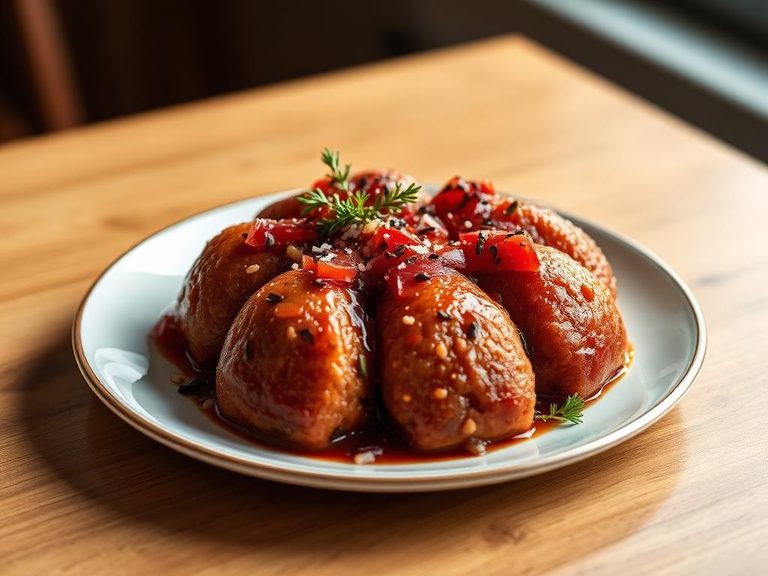
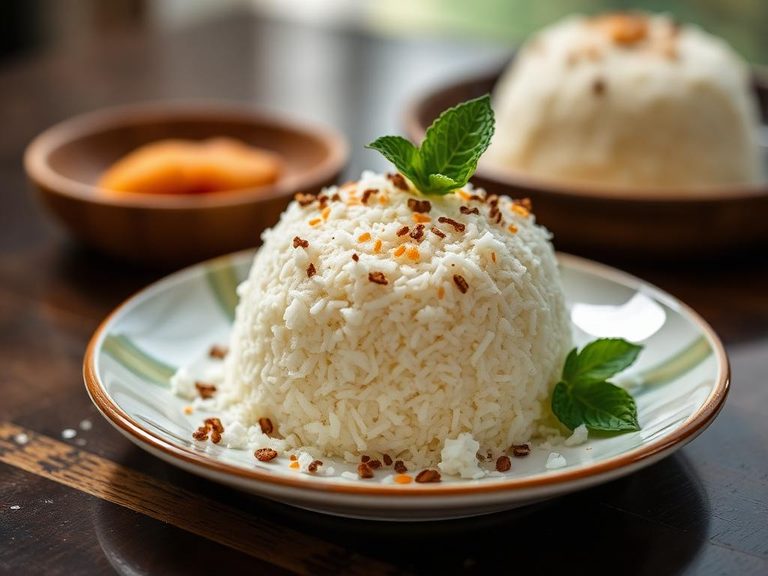
🌍 Where it's eaten
💡 Did you know?
The name 'basbousa' is believed to derive from the Arabic word for 'a gentle pat,' referring to the way the batter is patted into the pan before baking.
Full nutrition (USDA data · scales with serving)
| Water | 40.5 g |
| Energy | 282 kcal |
| Protein | 4.8 g |
| Total lipid (fat) | 9.9 g |
| Carbohydrate, by difference | 43.8 g |
| Fiber, total dietary | 0.80 g |
| Total Sugars | 29.8 g |
| Calcium, Ca | 119 mg |
| Iron, Fe | 1.2 mg |
| Magnesium, Mg | 21.0 mg |
| Phosphorus, P | 108 mg |
| Potassium, K | 148 mg |
| Sodium, Na | 81.0 mg |
| Zinc, Zn | 0.58 mg |
| Copper, Cu | 0.07 mg |
| Selenium, Se | 4.4 ug |
| Vitamin C, total ascorbic acid | 0.20 mg |
| Thiamin | 0.15 mg |
| Riboflavin | 0.20 mg |
| Niacin | 1.2 mg |
| Vitamin B-6 | 0.03 mg |
| Folate, total | 24.0 ug |
| Folic acid | 17.0 ug |
| Folate, food | 7.0 ug |
| Folate, DFE | 35.0 ug |
| Choline, total | 9.0 mg |
| Vitamin B-12 | 0.14 ug |
| Vitamin B-12, added | 0.00 ug |
| Vitamin A, RAE | 12.0 ug |
| Retinol | 12.0 ug |
| Carotene, beta | 1.0 ug |
| Carotene, alpha | 0.00 ug |
| Cryptoxanthin, beta | 0.00 ug |
| Lycopene | 0.00 ug |
| Lutein + zeaxanthin | 3.0 ug |
| Vitamin E (alpha-tocopherol) | 1.3 mg |
| Vitamin E, added | 0.00 mg |
| Vitamin D (D2 + D3) | 0.10 ug |
| Vitamin K (phylloquinone) | 3.9 ug |
| Alcohol, ethyl | 0.00 g |
| Caffeine | 0.00 mg |
| Theobromine | 0.00 mg |
Fat & fatty acid profile (per 100g)
| Fatty acids, total saturated | 2.4 g |
| SFA 4:0 | 0.02 g |
| SFA 6:0 | 0.01 g |
| SFA 8:0 | 0.01 g |
| SFA 10:0 | 0.02 g |
| SFA 12:0 | 0.03 g |
| SFA 14:0 | 0.09 g |
| SFA 16:0 | 1.2 g |
| SFA 18:0 | 0.92 g |
| Fatty acids, total monounsaturated | 4.2 g |
| MUFA 16:1 | 0.03 g |
| MUFA 18:1 | 4.1 g |
| MUFA 20:1 | 0.01 g |
| MUFA 22:1 | 0.00 g |
| Fatty acids, total polyunsaturated | 2.5 g |
| PUFA 18:2 | 2.4 g |
| PUFA 18:3 | 0.14 g |
| PUFA 18:4 | 0.00 g |
| PUFA 20:4 | 0.00 g |
| PUFA 20:5 n-3 (EPA) | 0.00 g |
| PUFA 22:5 n-3 (DPA) | 0.00 g |
| PUFA 22:6 n-3 (DHA) | 0.00 g |
| Cholesterol | 3.0 mg |
FAQ
What is the difference between basbousa and revani?
They are very similar semolina cakes soaked in syrup. The primary difference is regional naming and sometimes the specific spices or garnish used. Revani is more common in Turkish and Greek cuisines, while basbousa is the common term in Arabic-speaking regions.
Why is my basbousa dry or crumbly?
This is often due to overbaking or not using enough fat (like oil or ghee) in the batter. Ensure your oven temperature is accurate, and pour the cooled syrup over the hot cake immediately after baking for maximum absorption.
Can I make basbousa without yogurt?
Yes, you can substitute yogurt with milk, buttermilk, or even coconut milk. Yogurt adds moisture and a slight tang that balances the sweetness, so the texture and flavor may be slightly different.
Nutrient density (calculated · NRF9.3)
Nutrient Rich Foods index: beneficial nutrients (protein, fiber, vitamins, minerals) minus saturated fat, added sugar & sodium, per 100 kcal.
NRF9.3 index — Fulgoni, Keast & Drewnowski, 2009. Computed from USDA nutrients.
Weight-loss friendliness (composite index)
Energy density 2.82 kcal/g · 7% calories from protein · 0.8 g fiber · 29.8 g sugar per 100 g.
Composite of energy density (Rolls et al., 1999), protein & fiber satiety, minus sugar. A calculated heuristic — ranks satiety-per-calorie, not a clinical measure.
Dietary load (calculated from USDA values)
Potential renal acid load. Positive = acid-forming, negative = alkaline-forming.
Sodium-to-potassium ratio: 0.55 (lower is better — aim for ≤ 1)
Sodium:potassium per WHO potassium guidance. Computed from USDA nutrients.