

Almond butter, creamy
Whole food · Nut and Seed Products

Photo: Wikipedia
Creamy almond butter is a smooth, rich paste made from finely ground roasted almonds, offering a deep, nutty flavor with a velvety, spreadable texture. It's a calorie-dense powerhouse, delivering over 53g of healthy monounsaturated fats and nearly 21g of plant-based protein per 100g, making it a staple for energy and satiety.
Calorie split: 13% protein · 13% carbs · 74% fat
↓ Full nutrition💚 Why it's loved
People adore its luxuriously smooth, rich, and subtly sweet nutty flavor, which elevates everything from toast to smoothies. Its incredible versatility—working in both sweet and savory dishes—makes it a beloved pantry staple across many cultures.
⚠️ Watch-outs & how to enjoy it better
Its high calorie and fat content can be a concern for strict portion control, and as a tree nut, it is a common and serious allergen. To enjoy mindfully, stick to a 1-2 tablespoon serving, and always check labels for added sugars or oils if you're managing intake.
Key benefits
- Excellent source of heart-healthy monounsaturated fats.
- High in plant-based protein for muscle maintenance and satiety.
- Provides dietary fiber to support digestive health.
- Rich in Vitamin E, a powerful antioxidant.
- Contains essential minerals like magnesium and manganese.
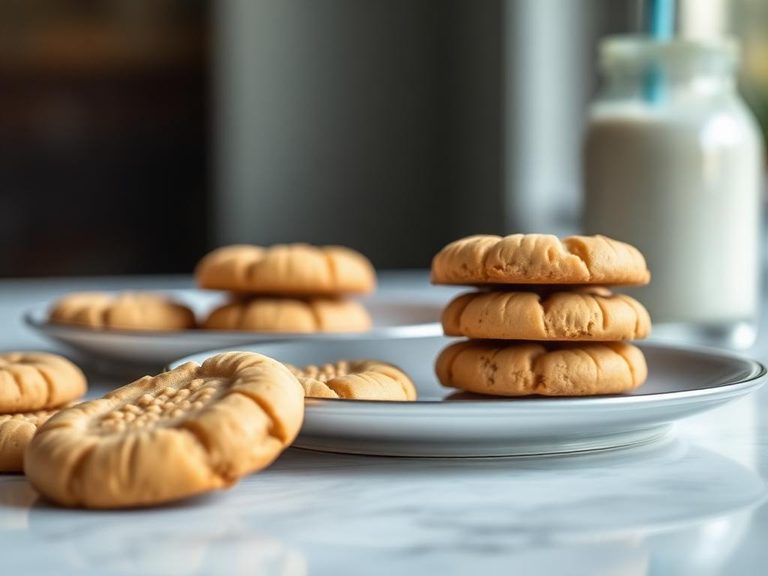
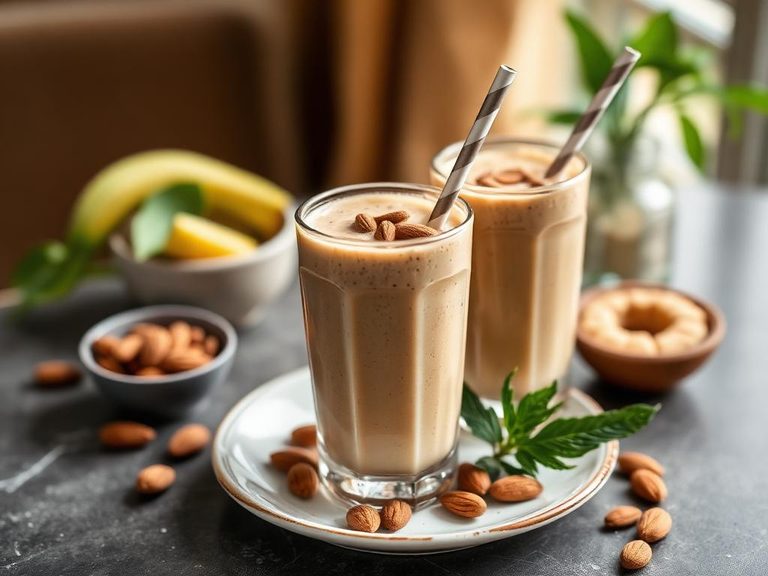
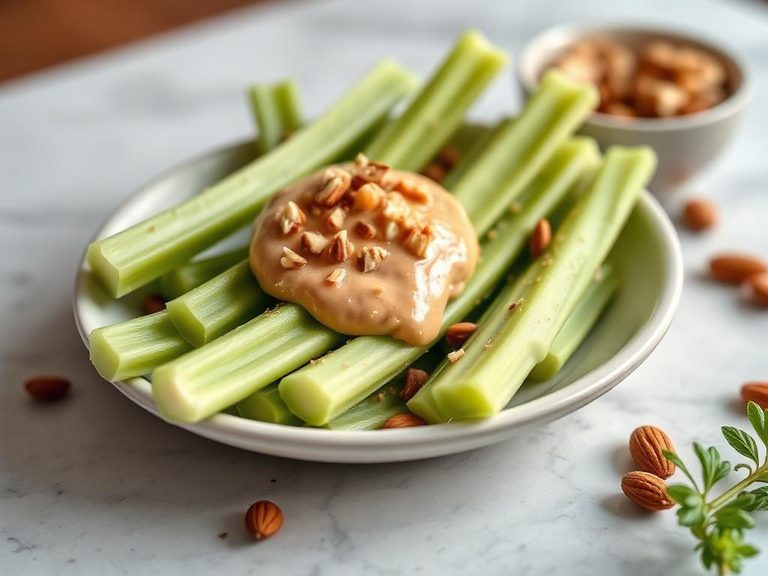
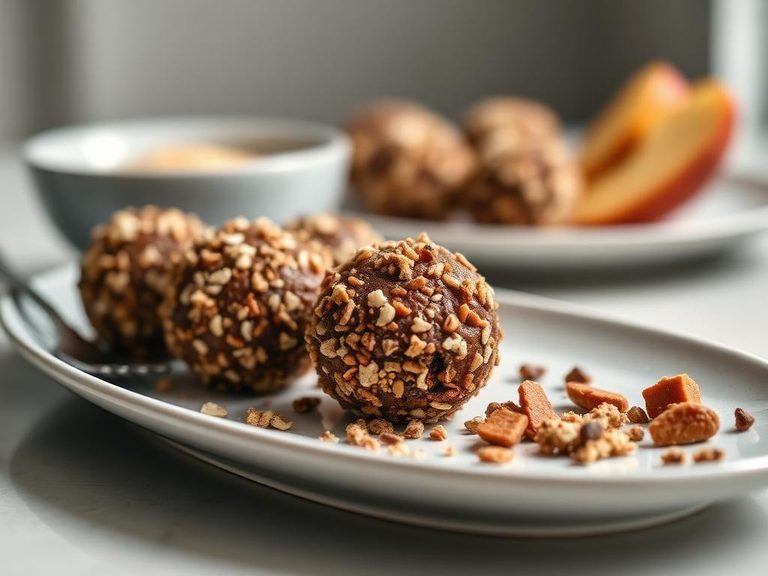
🍽️ Popular dishes
🌍 Where it's eaten
💡 Did you know?
It takes approximately 1,000 almonds—about 3 pounds of whole nuts—to produce a single 16-ounce jar of creamy almond butter.
Full nutrition (USDA data · scales with serving)
| Water | 1.8 g |
| Energy (Atwater General Factors) | 645 kcal |
| Energy (Atwater Specific Factors) | 603 kcal |
| Nitrogen | 4.0 g |
| Protein | 20.8 g |
| Total lipid (fat) | 53.0 g |
| Ash | 3.2 g |
| Carbohydrate, by difference | 21.2 g |
| Fiber, total dietary | 9.7 g |
| Calcium, Ca | 264 mg |
| Iron, Fe | 4.1 mg |
| Magnesium, Mg | 268 mg |
| Phosphorus, P | 507 mg |
| Potassium, K | 745 mg |
| Sodium, Na | 1.00 mg |
| Zinc, Zn | 3.2 mg |
| Copper, Cu | 0.97 mg |
| Manganese, Mn | 2.1 mg |
| Selenium, Se | 0.79 ug |
| Thiamin | 0.09 mg |
| Niacin | 3.9 mg |
| Vitamin B-6 | 0.08 mg |
| Biotin | 57.3 ug |
| Folate, total | 42.5 ug |
| Vitamin E (alpha-tocopherol) | 16.7 mg |
| Vitamin K (phylloquinone) | 0.00 ug |
| Daidzein | 0.00 mg |
| Genistein | 0.08 mg |
| Daidzin | 0.03 mg |
| Genistin | 0.00 mg |
| Glycitin | 0.17 mg |
Fat & fatty acid profile (per 100g)
| Fatty acids, total saturated | 4.3 g |
| SFA 16:0 | 3.3 g |
| SFA 18:0 | 0.82 g |
| Fatty acids, total monounsaturated | 34.7 g |
| MUFA 16:1 c | 0.25 g |
| MUFA 18:1 c | 34.3 g |
| Fatty acids, total polyunsaturated | 12.6 g |
| PUFA 18:2 n-6 c,c | 12.6 g |
Amino acid profile (per 100g)
| Tryptophan | 0.20 g |
| Threonine | 0.78 g |
| Isoleucine | 0.93 g |
| Leucine | 1.8 g |
| Lysine | 0.65 g |
| Methionine | 0.19 g |
| Phenylalanine | 1.4 g |
| Tyrosine | 0.76 g |
| Valine | 1.1 g |
| Arginine | 2.8 g |
| Histidine | 0.64 g |
| Alanine | 1.2 g |
| Aspartic acid | 3.0 g |
| Glutamic acid | 7.4 g |
| Glycine | 1.6 g |
| Proline | 1.1 g |
| Serine | 1.1 g |
| Hydroxyproline | 0.04 g |
| Cysteine | 0.45 g |
FAQ
Is almond butter healthier than peanut butter?
Both are nutritious. Almond butter is slightly higher in fiber, calcium, and Vitamin E, while peanut butter offers more protein and B vitamins. The 'healthier' choice depends on your specific nutritional needs and preferences.
Why does the oil separate in natural almond butter?
This is normal! Without stabilizers, the natural oils from the almonds rise to the top. Simply stir it well before use, or store the jar upside down to redistribute the oil.
Can I use almond butter in baking as a 1:1 substitute for peanut butter?
Often yes, but with adjustments. Almond butter has a milder flavor and can be slightly oilier, which may affect texture. It's best to follow a recipe specifically designed for almond butter for optimal results.
Nutrient density (calculated · NRF9.3)
Nutrient Rich Foods index: beneficial nutrients (protein, fiber, vitamins, minerals) minus saturated fat, added sugar & sodium, per 100 kcal.
NRF9.3 index — Fulgoni, Keast & Drewnowski, 2009. Computed from USDA nutrients.
Weight-loss friendliness (composite index)
Energy density 6.45 kcal/g · 13% calories from protein · 9.7 g fiber · 0.0 g sugar per 100 g.
Composite of energy density (Rolls et al., 1999), protein & fiber satiety, minus sugar. A calculated heuristic — ranks satiety-per-calorie, not a clinical measure.
Dietary load (calculated from USDA values)
Potential renal acid load. Positive = acid-forming, negative = alkaline-forming.
Sodium-to-potassium ratio: 0.00 (lower is better — aim for ≤ 1)
Sodium:potassium per WHO potassium guidance. Computed from USDA nutrients.