

Water convolvulus,raw
Whole food · Vegetables and Vegetable Products

Photo: Wikipedia
Water convolvulus, also known as water spinach or kangkong, is a leafy green aquatic vegetable with long, hollow stems and tender, arrow-shaped leaves. It has a fresh, mildly grassy flavor and a crisp, juicy texture that softens beautifully when cooked. Nutritionally, it's a low-calorie powerhouse, delivering a solid 2.6g of protein and 2.1g of fiber per 100g, making it excellent for adding volume and nutrients to meals without significant calories.
Calorie split: 42% protein · 51% carbs · 7% fat
↓ Full nutrition💚 Why it's loved
People love water convolvulus for its unique, satisfying crunch and ability to absorb the flavors of sauces, garlic, and chili in stir-fries. It's a beloved staple in many Asian cuisines, offering a quick, nutritious, and flavorful vegetable side that feels both comforting and fresh.
⚠️ Watch-outs & how to enjoy it better
The hollow stems can trap grit or sand, requiring thorough washing and soaking before cooking. As an aquatic plant, it can accumulate contaminants from water, so sourcing from clean, reputable farms is important. To counteract this, rinse the leaves and stems under running water, agitate them in a basin of water, and consider a quick blanch before stir-frying.
Key benefits
- Extremely low in calories (19 kcal per 100g)
- Good source of dietary fiber (2.1g per 100g)
- Provides a notable amount of plant-based protein (2.6g per 100g)
- Naturally very low in fat (0.2g per 100g)
- Contains no sugar, making it suitable for low-sugar diets
🍽️ Popular dishes
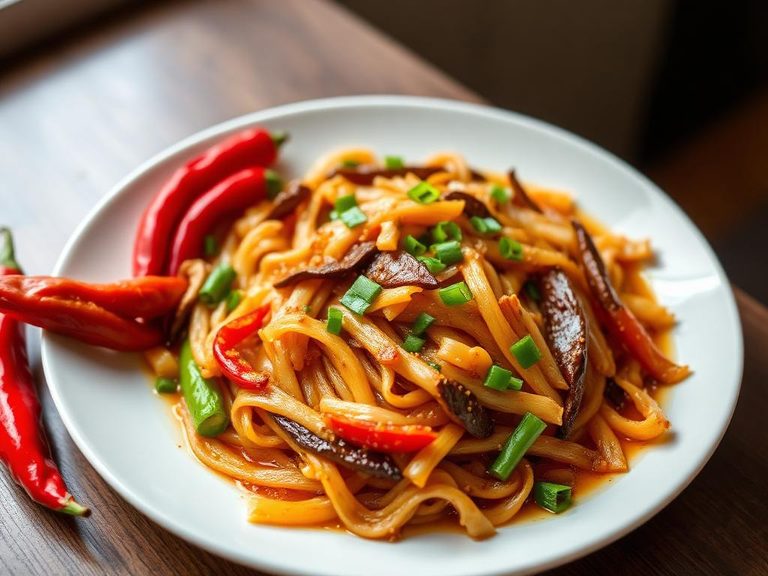
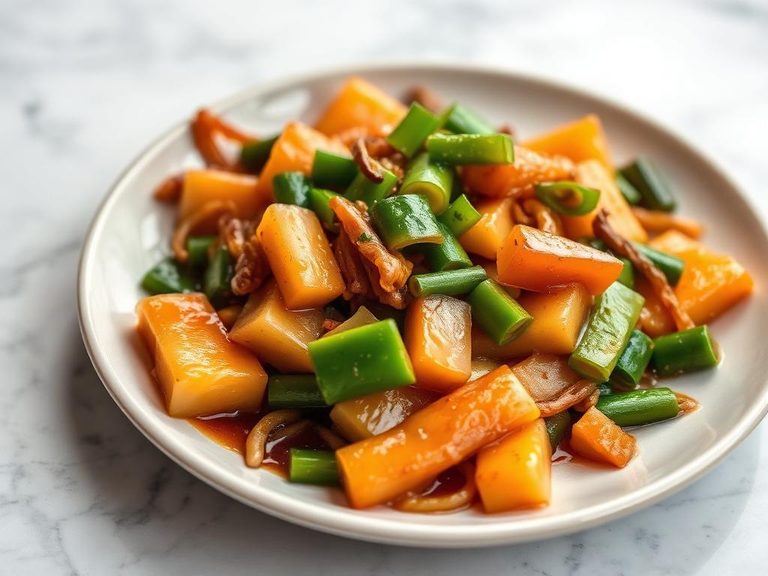
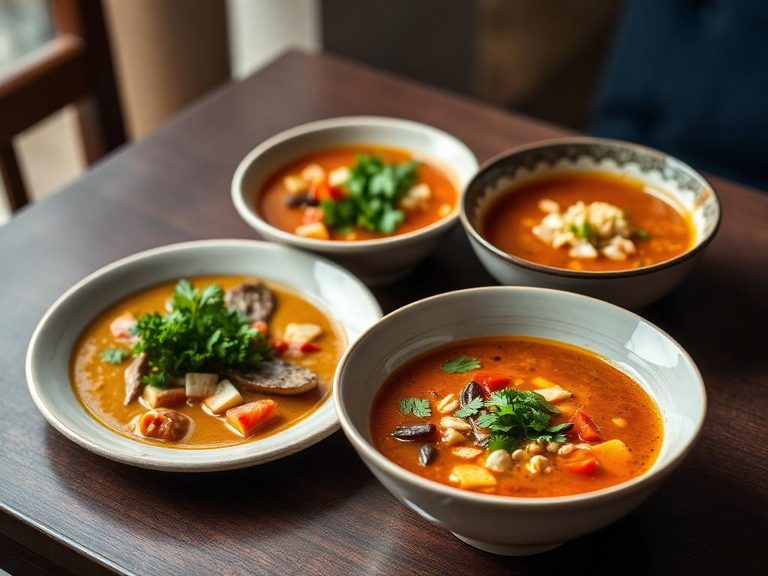
🌍 Where it's eaten
💡 Did you know?
Despite its name, water convolvulus isn't closely related to the sweet potato (which is in the morning glory family, Convolvulaceae); it's actually in the bindweed family, Convolvulaceae, but a different genus.
Full nutrition (USDA data · scales with serving)
| Water | 92.5 g |
| Energy | 19.0 kcal |
| Energy | 80.0 kj |
| Protein | 2.6 g |
| Total lipid (fat) | 0.20 g |
| Ash | 1.6 g |
| Carbohydrate, by difference | 3.1 g |
| Fiber, total dietary | 2.1 g |
| Calcium, Ca | 77.0 mg |
| Iron, Fe | 1.7 mg |
| Magnesium, Mg | 71.0 mg |
| Phosphorus, P | 39.0 mg |
| Potassium, K | 312 mg |
| Sodium, Na | 113 mg |
| Zinc, Zn | 0.18 mg |
| Copper, Cu | 0.02 mg |
| Manganese, Mn | 0.16 mg |
| Selenium, Se | 0.90 ug |
| Vitamin C, total ascorbic acid | 55.0 mg |
| Thiamin | 0.03 mg |
| Riboflavin | 0.10 mg |
| Niacin | 0.90 mg |
| Pantothenic acid | 0.14 mg |
| Vitamin B-6 | 0.10 mg |
| Folate, total | 57.0 ug |
| Folic acid | 0.00 ug |
| Folate, food | 57.0 ug |
| Folate, DFE | 57.0 ug |
| Vitamin B-12 | 0.00 ug |
| Vitamin A, RAE | 315 ug |
| Retinol | 0.00 ug |
| Vitamin A, IU | 6300 iu |
| Vitamin D (D2 + D3), International Units | 0.00 iu |
| Vitamin D (D2 + D3) | 0.00 ug |
Fat & fatty acid profile (per 100g)
| Fatty acids, total trans | 0.00 g |
| Cholesterol | 0.00 mg |
Amino acid profile (per 100g)
| Threonine | 0.14 g |
| Isoleucine | 0.10 g |
| Leucine | 0.15 g |
| Lysine | 0.11 g |
| Methionine | 0.04 g |
| Cystine | 0.03 g |
| Phenylalanine | 0.13 g |
| Tyrosine | 0.08 g |
| Valine | 0.14 g |
| Arginine | 0.15 g |
| Histidine | 0.05 g |
| Alanine | 0.11 g |
| Aspartic acid | 0.65 g |
| Glutamic acid | 0.25 g |
| Glycine | 0.10 g |
| Proline | 0.09 g |
| Serine | 0.12 g |
FAQ
What's the difference between water spinach and regular spinach?
Water spinach (kangkong) has long, hollow stems and a milder, less iron-rich flavor than regular spinach. It's more aquatic, has a crunchier texture, and is typically stir-fried rather than wilted.
Can I eat water convolvulus raw?
While possible, it's most commonly cooked. Eating it raw may pose a higher risk of bacterial contamination due to its aquatic growing environment, and cooking softens the fibrous stems.
How do I prepare it to remove sand and grit?
Separate the leaves and stems, then soak them in a large basin of cold water for 10-15 minutes. Swish them around to dislodge dirt, then rinse thoroughly under running water before cooking.
Nutrient density (calculated · NRF9.3)
Nutrient Rich Foods index: beneficial nutrients (protein, fiber, vitamins, minerals) minus saturated fat, added sugar & sodium, per 100 kcal.
NRF9.3 index — Fulgoni, Keast & Drewnowski, 2009. Computed from USDA nutrients.
Weight-loss friendliness (composite index)
Energy density 0.19 kcal/g · 55% calories from protein · 2.1 g fiber · 0.0 g sugar per 100 g.
Composite of energy density (Rolls et al., 1999), protein & fiber satiety, minus sugar. A calculated heuristic — ranks satiety-per-calorie, not a clinical measure.
Dietary load (calculated from USDA values)
Potential renal acid load. Positive = acid-forming, negative = alkaline-forming.
Sodium-to-potassium ratio: 0.36 (lower is better — aim for ≤ 1)
Sodium:potassium per WHO potassium guidance. Computed from USDA nutrients.