

Vinespinach, (basella), raw
Whole food · Vegetables and Vegetable Products

Photo: Wikipedia
Vinespinach, also known as Malabar spinach or Basella, is a lush, climbing vine with thick, glossy, heart-shaped leaves and a mild, slightly peppery flavor reminiscent of spinach but with a distinctive, succulent, mucilaginous texture. When raw, its leaves are crisp and refreshing, offering a subtle, earthy taste that's less iron-heavy than common spinach. Nutritionally, it's a low-calorie powerhouse, providing a good source of vitamins A and C, along with calcium and iron, all for just 19 calories per 100g.
Calorie split: 31% protein · 58% carbs · 11% fat
↓ Full nutrition💚 Why it's loved
People love it for its unique, silky texture that holds up beautifully in stews and curries without turning mushy, and for its mild flavor that readily absorbs surrounding spices. It's a cherished ingredient in many tropical cuisines, valued for its ability to thrive in hot, humid climates where other greens might wilt.
⚠️ Watch-outs & how to enjoy it better
Its mucilaginous (slightly slimy) texture, similar to okra, can be off-putting to some. The leaves contain oxalates, which can interfere with mineral absorption and may be a concern for individuals prone to kidney stones. To mitigate this, pair it with a source of fat (like coconut milk or oil) to aid nutrient absorption, and ensure it's part of a varied diet. Cooking methods like stir-frying or sautéing can also reduce the mucilage compared to boiling.
Key benefits
- Excellent source of vitamins A and C for immune and skin health.
- Contains plant-based calcium and iron.
- Very low in calories and naturally low in fat.
- Provides antioxidants like beta-carotene.
- Adds volume and nutrients to meals without significant calories.
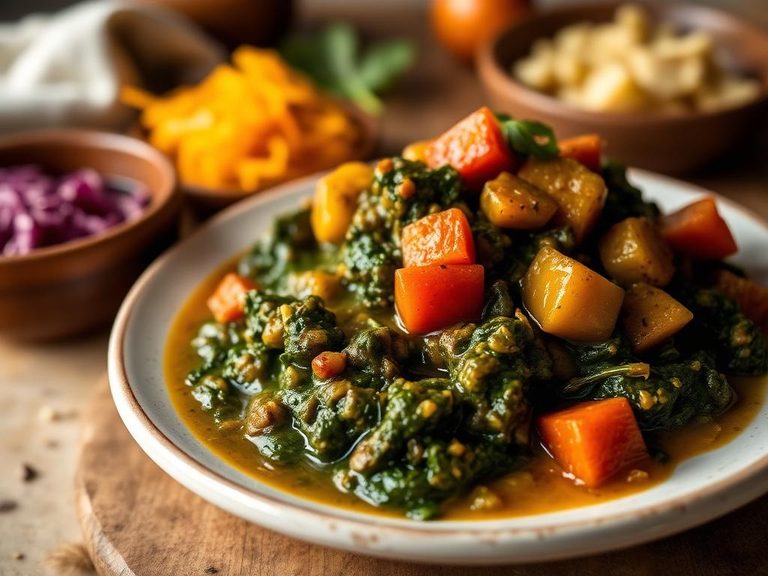
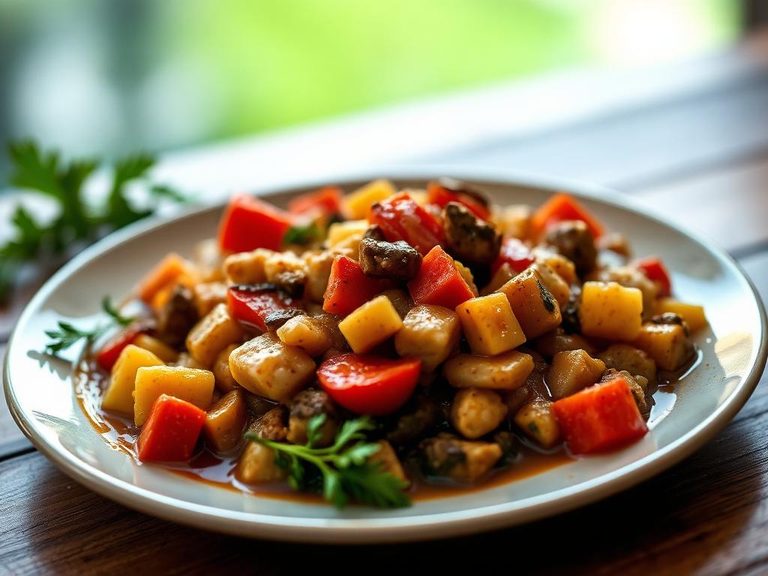
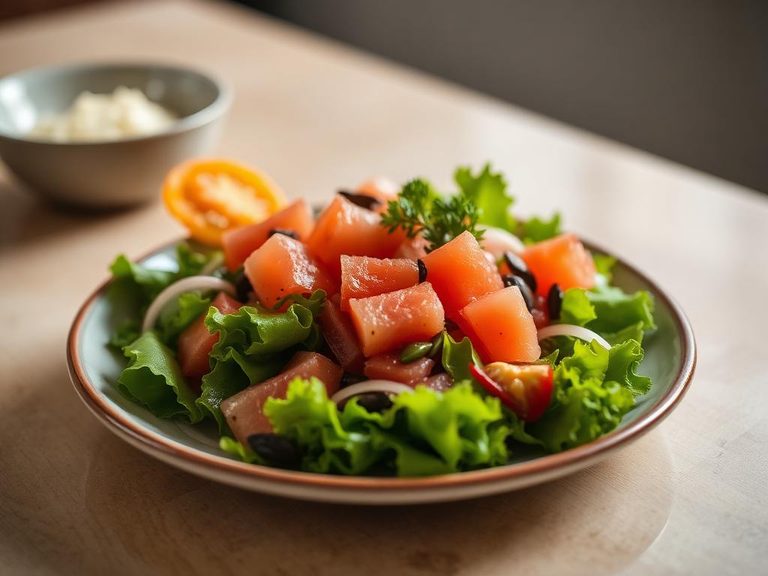
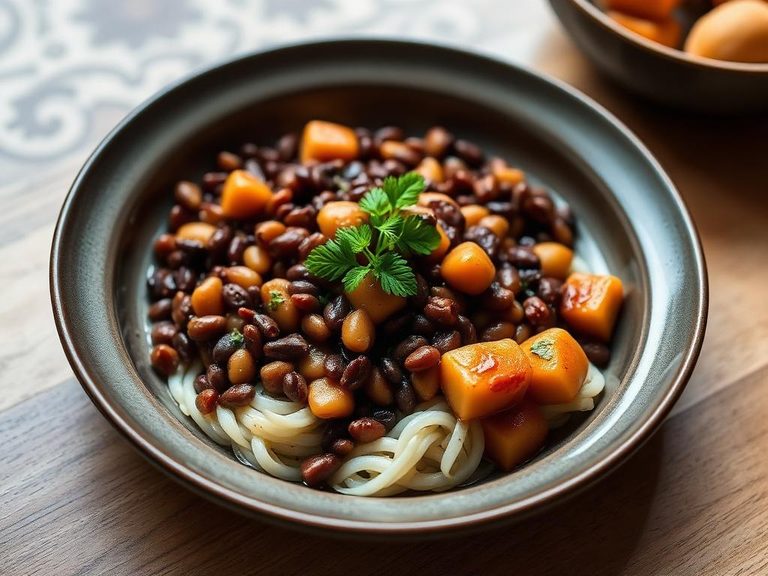
🍽️ Popular dishes
🌍 Where it's eaten
💡 Did you know?
Despite its common name, Malabar spinach is not a true spinach at all; it belongs to the Basellaceae family, making it more closely related to plants like Madeira vine.
Full nutrition (USDA data · scales with serving)
| Water | 93.1 g |
| Energy | 19.0 kcal |
| Energy | 79.0 kj |
| Protein | 1.8 g |
| Total lipid (fat) | 0.30 g |
| Ash | 1.4 g |
| Carbohydrate, by difference | 3.4 g |
| Calcium, Ca | 109 mg |
| Iron, Fe | 1.2 mg |
| Magnesium, Mg | 65.0 mg |
| Phosphorus, P | 52.0 mg |
| Potassium, K | 510 mg |
| Sodium, Na | 24.0 mg |
| Zinc, Zn | 0.43 mg |
| Copper, Cu | 0.11 mg |
| Manganese, Mn | 0.73 mg |
| Selenium, Se | 0.80 ug |
| Vitamin C, total ascorbic acid | 102 mg |
| Thiamin | 0.05 mg |
| Riboflavin | 0.15 mg |
| Niacin | 0.50 mg |
| Pantothenic acid | 0.05 mg |
| Vitamin B-6 | 0.24 mg |
| Folate, total | 140 ug |
| Folic acid | 0.00 ug |
| Folate, food | 140 ug |
| Folate, DFE | 140 ug |
| Vitamin B-12 | 0.00 ug |
| Vitamin A, RAE | 400 ug |
| Retinol | 0.00 ug |
| Vitamin A, IU | 8000 iu |
| Vitamin D (D2 + D3), International Units | 0.00 iu |
| Vitamin D (D2 + D3) | 0.00 ug |
Fat & fatty acid profile (per 100g)
| Fatty acids, total trans | 0.00 g |
| Cholesterol | 0.00 mg |
Amino acid profile (per 100g)
| Tryptophan | 0.03 g |
| Threonine | 0.06 g |
| Isoleucine | 0.05 g |
| Leucine | 0.10 g |
| Lysine | 0.09 g |
| Methionine | 0.02 g |
| Cystine | 0.03 g |
| Phenylalanine | 0.09 g |
| Tyrosine | 0.05 g |
| Valine | 0.07 g |
| Arginine | 0.07 g |
| Histidine | 0.04 g |
| Alanine | 0.07 g |
| Aspartic acid | 0.11 g |
| Glutamic acid | 0.28 g |
| Glycine | 0.07 g |
| Proline | 0.07 g |
| Serine | 0.06 g |
FAQ
Is Malabar spinach the same as regular spinach?
No. They are from entirely different plant families. Malabar spinach (Basella alba) is a heat-loving vine with thick, succulent leaves, while common spinach (Spinacia oleracea) is a cool-season crop with thinner leaves. Their textures and cooking properties are distinct.
How do I reduce the slimy texture?
High-heat cooking methods like stir-frying or sautéing help minimize the mucilaginous quality. Adding an acidic ingredient like tamarind, tomato, or vinegar towards the end of cooking can also help cut through it. Avoid over-boiling.
Can I eat it raw?
Yes, especially the young, tender leaves and shoots. They can be added to salads for a crisp, succulent bite. However, cooking is more common to soften the leaves and integrate flavors.
Nutrient density (calculated · NRF9.3)
Nutrient Rich Foods index: beneficial nutrients (protein, fiber, vitamins, minerals) minus saturated fat, added sugar & sodium, per 100 kcal.
NRF9.3 index — Fulgoni, Keast & Drewnowski, 2009. Computed from USDA nutrients.
Weight-loss friendliness (composite index)
Energy density 0.19 kcal/g · 38% calories from protein · 0.0 g fiber · 0.0 g sugar per 100 g.
Composite of energy density (Rolls et al., 1999), protein & fiber satiety, minus sugar. A calculated heuristic — ranks satiety-per-calorie, not a clinical measure.
Dietary load (calculated from USDA values)
Potential renal acid load. Positive = acid-forming, negative = alkaline-forming.
Sodium-to-potassium ratio: 0.05 (lower is better — aim for ≤ 1)
Sodium:potassium per WHO potassium guidance. Computed from USDA nutrients.