

Veal, variety meats and by-products, pancreas, cooked, braised
Whole food · Lamb, Veal, and Game Products

Photo: Wikipedia
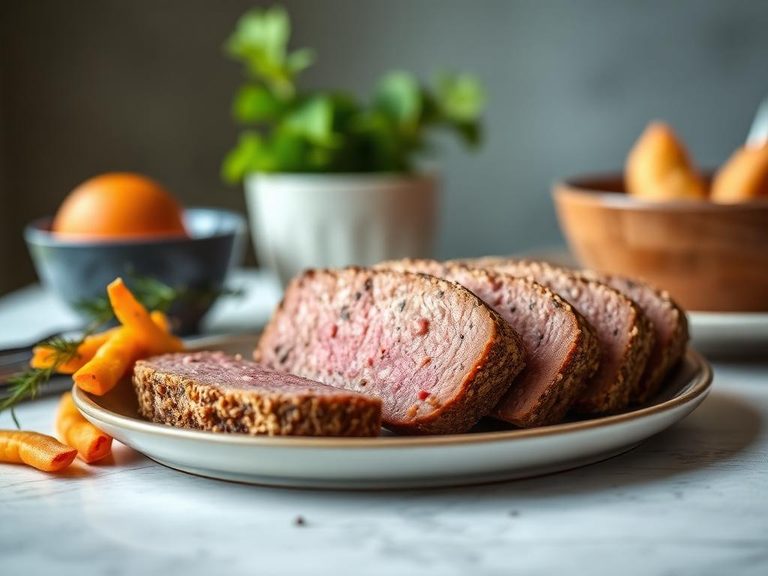
Veal pancreas is a rich, intensely flavored organ meat with a dense, slightly grainy texture that becomes tender and succulent when braised. It offers a potent, savory punch, often described as a more delicate, buttery version of beef liver. Nutritionally, it's a powerhouse of protein and healthy fats, providing a substantial energy boost with virtually no carbohydrates.
Calorie split: 47% protein · 0% carbs · 53% fat
↓ Full nutrition💚 Why it's loved
Food enthusiasts prize it for its deep, umami-rich flavor and melt-in-the-mouth texture when braised properly, often considering it a delicacy in traditional cuisines. Its ability to absorb complex sauces and spices makes it a versatile and luxurious ingredient in hearty, comforting dishes.
⚠️ Watch-outs & how to enjoy it better
Its strong, distinct flavor and organ meat texture can be off-putting to those unfamiliar with offal. It is also high in cholesterol, so individuals with specific cardiovascular concerns should consume it in moderation. To mitigate richness, pair it with acidic or fibrous sides like roasted vegetables or a tangy salad, and practice strict portion control.
Key benefits
- Exceptionally high in complete protein (29.1g per 100g) for muscle repair and satiety.
- Provides a concentrated source of energy from healthy fats (14.6g per 100g).
- Naturally free of carbohydrates, sugars, and fiber, making it suitable for low-carb diets.
- Rich in B vitamins, particularly B12, which is crucial for nerve function and red blood cell formation.
- Contains selenium, an important antioxidant mineral that supports immune function.
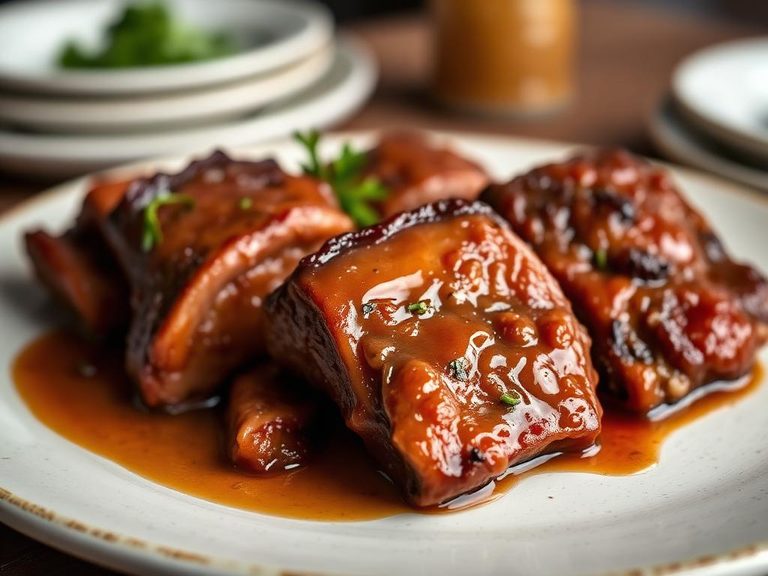
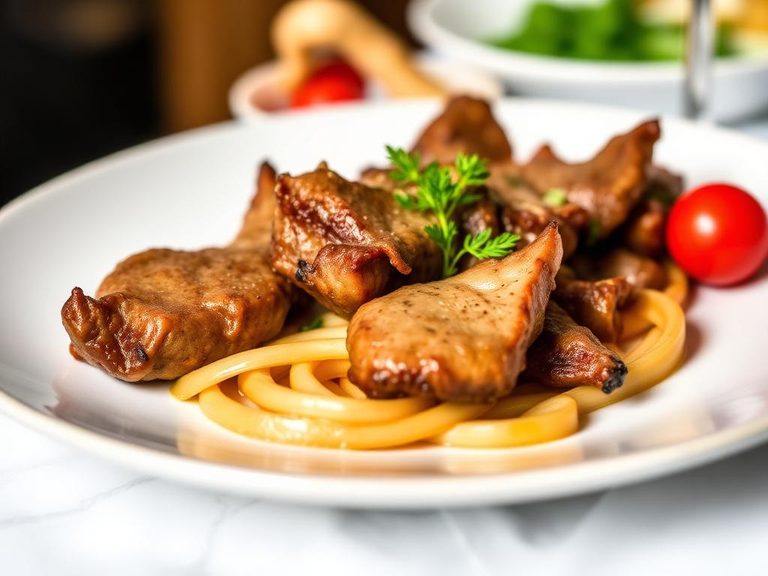
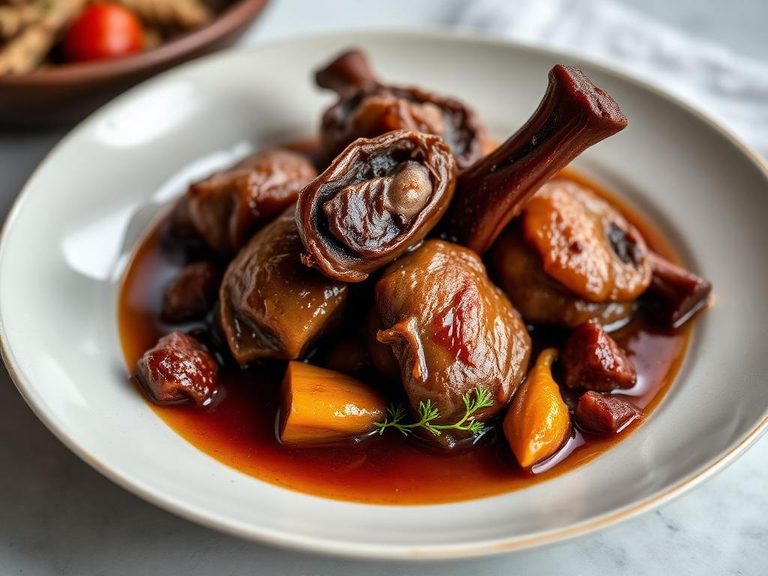
🍽️ Popular dishes
🌍 Where it's eaten
💡 Did you know?
The pancreas is the primary source of the digestive enzyme trypsin, which is used in meat tenderizers, making this organ meat a natural source of its own tenderizing agent.
Full nutrition (USDA data · scales with serving)
| Water | 55.7 g |
| Energy | 256 kcal |
| Energy | 1071 kj |
| Protein | 29.1 g |
| Total lipid (fat) | 14.6 g |
| Ash | 1.5 g |
| Carbohydrate, by difference | 0.00 g |
| Fiber, total dietary | 0.00 g |
| Calcium, Ca | 18.0 mg |
| Iron, Fe | 2.4 mg |
| Magnesium, Mg | 24.0 mg |
| Phosphorus, P | 512 mg |
| Potassium, K | 278 mg |
| Sodium, Na | 68.0 mg |
| Zinc, Zn | 5.2 mg |
| Copper, Cu | 0.10 mg |
| Manganese, Mn | 0.23 mg |
| Selenium, Se | 39.1 ug |
| Vitamin C, total ascorbic acid | 6.0 mg |
| Thiamin | 0.19 mg |
| Riboflavin | 0.51 mg |
| Niacin | 4.1 mg |
| Vitamin B-6 | 0.19 mg |
| Folate, total | 3.0 ug |
| Folic acid | 0.00 ug |
| Folate, food | 3.0 ug |
| Folate, DFE | 3.0 ug |
| Vitamin B-12 | 17.3 ug |
| Vitamin A, RAE | 0.00 ug |
| Retinol | 0.00 ug |
| Vitamin A, IU | 0.00 iu |
Fat & fatty acid profile (per 100g)
| Fatty acids, total saturated | 5.0 g |
| Fatty acids, total monounsaturated | 5.0 g |
| Fatty acids, total polyunsaturated | 2.7 g |
Amino acid profile (per 100g)
Estimated from Veal, Australian, rib, rib roast, separable lean only, raw — USDA does not publish this profile for Veal.
| Tryptophan | 0.22 g |
| Threonine | 0.95 g |
| Isoleucine | 1.1 g |
| Leucine | 1.7 g |
| Lysine | 1.8 g |
| Methionine | 0.51 g |
| Cystine | 0.24 g |
| Phenylalanine | 0.88 g |
| Tyrosine | 0.69 g |
| Valine | 1.2 g |
| Arginine | 1.3 g |
| Histidine | 0.79 g |
| Alanine | 1.3 g |
| Aspartic acid | 1.9 g |
| Glutamic acid | 3.4 g |
| Glycine | 1.1 g |
| Proline | 0.91 g |
| Serine | 0.81 g |
| Hydroxyproline | 0.11 g |
FAQ
Is veal pancreas the same as sweetbreads?
No, they are different. 'Sweetbreads' typically refer to the thymus gland or pancreas, but in culinary terms, it most often means the thymus. The pancreas is a distinct organ with a slightly different flavor and texture.
How do I prepare it to reduce the strong flavor?
Soaking the pancreas in milk or salted water for several hours before cooking can help mellow its flavor. Braising it slowly in a flavorful liquid like wine, stock, and aromatics is the best method to achieve tenderness and integrate complex flavors.
Is it safe to eat raw or undercooked?
No, like all organ meats, veal pancreas must be cooked thoroughly to a safe internal temperature to eliminate any potential pathogens. Braising is an ideal method as it cooks the meat completely.
Nutrient density (calculated · NRF9.3)
Nutrient Rich Foods index: beneficial nutrients (protein, fiber, vitamins, minerals) minus saturated fat, added sugar & sodium, per 100 kcal.
NRF9.3 index — Fulgoni, Keast & Drewnowski, 2009. Computed from USDA nutrients.
Weight-loss friendliness (composite index)
Energy density 2.56 kcal/g · 45% calories from protein · 0.0 g fiber · 0.0 g sugar per 100 g.
Composite of energy density (Rolls et al., 1999), protein & fiber satiety, minus sugar. A calculated heuristic — ranks satiety-per-calorie, not a clinical measure.
Dietary load (calculated from USDA values)
Potential renal acid load. Positive = acid-forming, negative = alkaline-forming.
Sodium-to-potassium ratio: 0.24 (lower is better — aim for ≤ 1)
Sodium:potassium per WHO potassium guidance. Computed from USDA nutrients.