

Syrups, malt
Whole food · Sweets

Photo: Wikipedia
Malt syrup is a thick, amber-colored liquid sweetener derived from sprouted barley, offering a rich, toasty, and slightly nutty flavor with a smooth, viscous texture. Nutritionally, it is almost pure carbohydrate, providing a dense source of energy with 318 kcal and 71.3g of sugar per 100g, while containing negligible protein and no fat or fiber.
Calorie split: 8% protein · 92% carbs · 0% fat
↓ Full nutrition💚 Why it's loved
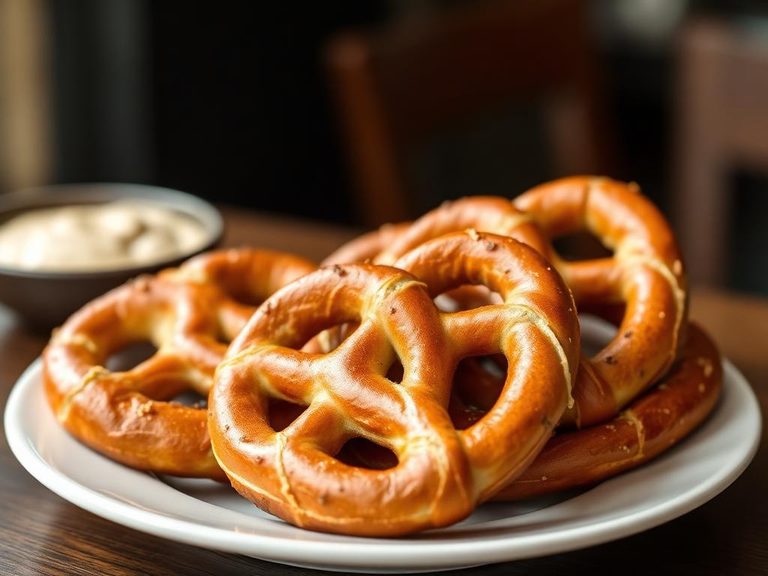
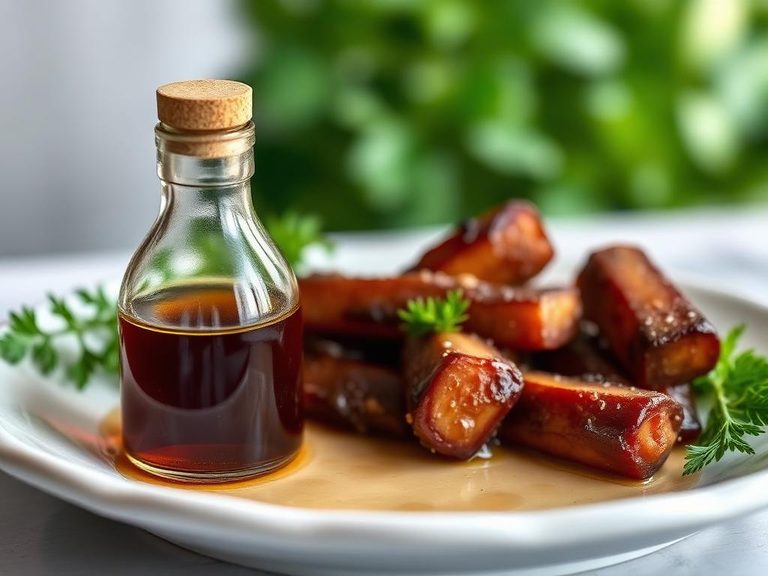
People love malt syrup for its unique, deep, and savory-sweet flavor that adds a distinctive 'bakery' aroma and taste to breads, cookies, and cereals. Its versatility in both sweet and savory cooking, from glazes to marinades, makes it a beloved pantry staple.
⚠️ Watch-outs & how to enjoy it better
Its very high sugar content (71.3g per 100g) can cause rapid blood-sugar spikes, making it unsuitable for those managing diabetes or insulin resistance. To counteract this, always pair it with protein (like nuts or yogurt) or fat (like butter) and practice strict portion control, using it more as a flavoring than a primary sweetener.
Key benefits
- Provides a quick, dense source of energy
- Adds complex, toasty flavor depth to baked goods
- Contains trace minerals like manganese and selenium from barley
- Acts as a natural humectant, helping baked goods retain moisture
- Can be used as a vegan alternative to honey in some recipes
🍽️ Popular dishes



🌍 Where it's eaten
💡 Did you know?
The malting process, which creates the sugars for this syrup, is the same fundamental first step used in brewing beer, making malt syrup a distant cousin to the wort used to create lager and ale.
Full nutrition (USDA data · scales with serving)
| Water | 21.1 g |
| Energy | 318 kcal |
| Energy | 1331 kj |
| Protein | 6.2 g |
| Total lipid (fat) | 0.00 g |
| Ash | 1.3 g |
| Carbohydrate, by difference | 71.3 g |
| Fiber, total dietary | 0.00 g |
| Total Sugars | 71.3 g |
| Calcium, Ca | 61.0 mg |
| Iron, Fe | 0.96 mg |
| Magnesium, Mg | 72.0 mg |
| Phosphorus, P | 236 mg |
| Potassium, K | 320 mg |
| Sodium, Na | 35.0 mg |
| Zinc, Zn | 0.14 mg |
| Copper, Cu | 0.20 mg |
| Manganese, Mn | 0.10 mg |
| Selenium, Se | 12.3 ug |
| Vitamin C, total ascorbic acid | 0.00 mg |
| Thiamin | 0.01 mg |
| Riboflavin | 0.39 mg |
| Niacin | 8.1 mg |
| Pantothenic acid | 0.17 mg |
| Vitamin B-6 | 0.50 mg |
| Folate, total | 12.0 ug |
| Folic acid | 0.00 ug |
| Folate, food | 12.0 ug |
| Folate, DFE | 12.0 ug |
| Vitamin B-12 | 0.00 ug |
| Vitamin B-12, added | 0.00 ug |
| Vitamin A, RAE | 0.00 ug |
| Retinol | 0.00 ug |
| Vitamin A, IU | 0.00 iu |
| Alcohol, ethyl | 0.00 g |
Fat & fatty acid profile (per 100g)
| Fatty acids, total saturated | 0.00 g |
| Fatty acids, total monounsaturated | 0.00 g |
| Fatty acids, total polyunsaturated | 0.00 g |
| Cholesterol | 0.00 mg |
Amino acid profile (per 100g)
| Tryptophan | 0.07 g |
| Threonine | 0.21 g |
| Isoleucine | 0.21 g |
| Leucine | 0.38 g |
| Lysine | 0.27 g |
| Methionine | 0.11 g |
| Cystine | 0.07 g |
| Phenylalanine | 0.26 g |
| Tyrosine | 0.17 g |
| Valine | 0.30 g |
| Arginine | 0.28 g |
| Histidine | 0.13 g |
| Alanine | 0.27 g |
| Aspartic acid | 0.56 g |
| Glutamic acid | 1.0 g |
| Glycine | 0.25 g |
| Proline | 0.46 g |
| Serine | 0.23 g |
FAQ
Is malt syrup the same as molasses?
No. Molasses is a byproduct of refining sugarcane or sugar beets, while malt syrup is derived from sprouted barley. They have different flavors—molasses is more robust and bitter, while malt is toasty and nutty.
Can I substitute malt syrup for honey or maple syrup?
You can, but it will change the flavor profile significantly, adding a distinct malty, bready note. It is also thicker and less sweet by volume than honey or maple syrup.
Is malt syrup gluten-free?
No. Since it is derived from barley, it contains gluten and is not suitable for individuals with celiac disease or gluten sensitivity.
Nutrient density (calculated · NRF9.3)
Nutrient Rich Foods index: beneficial nutrients (protein, fiber, vitamins, minerals) minus saturated fat, added sugar & sodium, per 100 kcal.
NRF9.3 index — Fulgoni, Keast & Drewnowski, 2009. Computed from USDA nutrients.
Weight-loss friendliness (composite index)
Energy density 3.18 kcal/g · 8% calories from protein · 0.0 g fiber · 71.3 g sugar per 100 g.
Composite of energy density (Rolls et al., 1999), protein & fiber satiety, minus sugar. A calculated heuristic — ranks satiety-per-calorie, not a clinical measure.
Dietary load (calculated from USDA values)
Potential renal acid load. Positive = acid-forming, negative = alkaline-forming.
Sodium-to-potassium ratio: 0.11 (lower is better — aim for ≤ 1)
Sodium:potassium per WHO potassium guidance. Computed from USDA nutrients.