

Squash, spaghetti, peeled, seeded, raw
Whole food · Vegetables and Vegetable Products
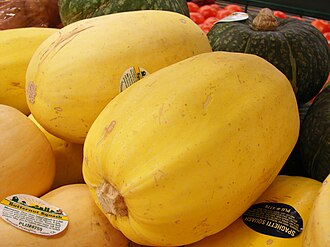
Photo: Wikipedia
Spaghetti squash is a winter squash variety whose flesh, when cooked, separates into long, translucent, noodle-like strands resembling spaghetti. Its flavor is mild, subtly sweet, and nutty, with a tender yet slightly al dente texture that absorbs sauces beautifully. Nutritionally, it is an exceptionally low-calorie, high-fiber food, making it a popular base for light, vegetable-forward meals.
Calorie split: 100% protein · 0% carbs · 0% fat
↓ Full nutrition💚 Why it's loved
People love spaghetti squash for its unique, fun texture that turns a simple vegetable into a satisfying, pasta-like base, allowing for creative, healthy twists on classic dishes. Its mild flavor makes it a fantastic canvas for a wide range of sauces, from rich tomato-based ragùs to simple garlic and olive oil.
⚠️ Watch-outs & how to enjoy it better
Some find its texture too watery or stringy compared to traditional pasta, and its mild flavor can be perceived as bland without robust seasoning. To counteract this, roast or sauté the strands after cooking to evaporate excess moisture and concentrate flavor; pair with flavorful sauces, herbs, and a protein like grilled chicken or beans to create a balanced, satisfying meal.
Key benefits
- Extremely low in calories (about 31 kcal per 100g cooked), aiding weight management.
- Good source of dietary fiber, supporting digestive health and satiety.
- Provides vitamins A and C, which are important for immune function and skin health.
- Naturally gluten-free, serving as a versatile pasta alternative.
- High water content contributes to hydration.
🍽️ Popular dishes
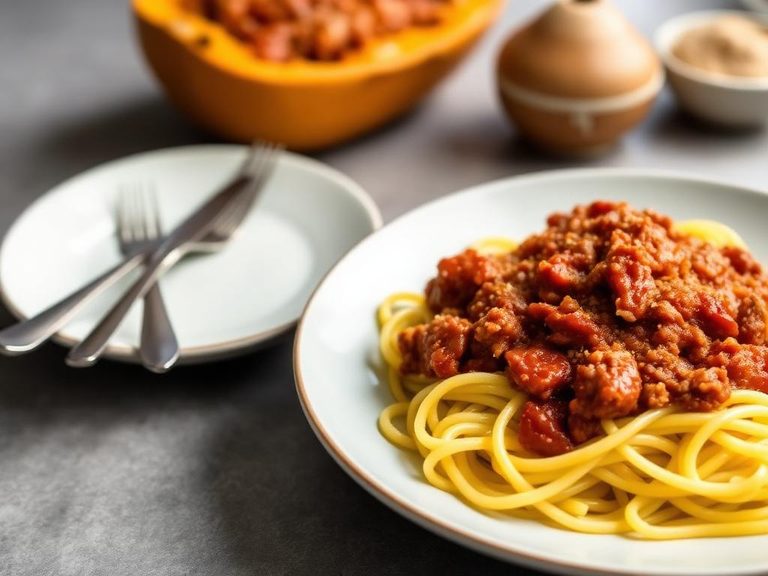 Spaghetti Squash with Meat Sauce (a low-carb alternative to spaghetti bolognese)
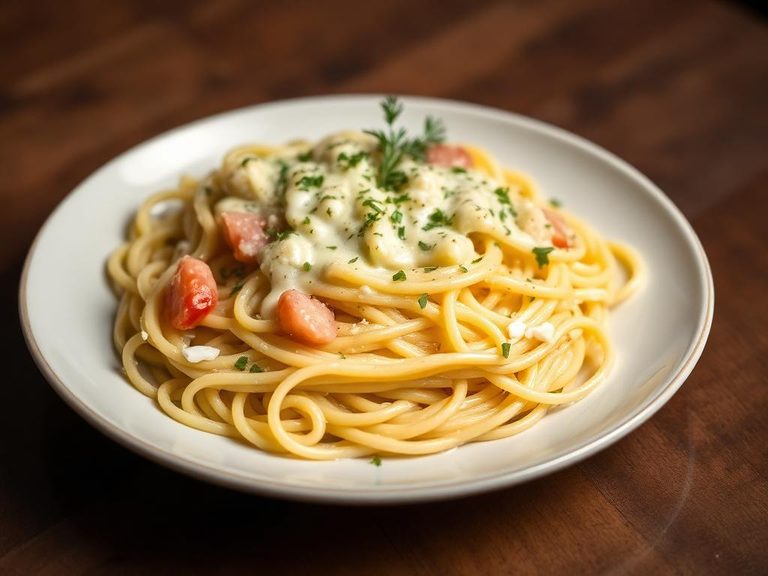 Spaghetti Squash Alfredo (creamy, cheesy, and vegetarian)
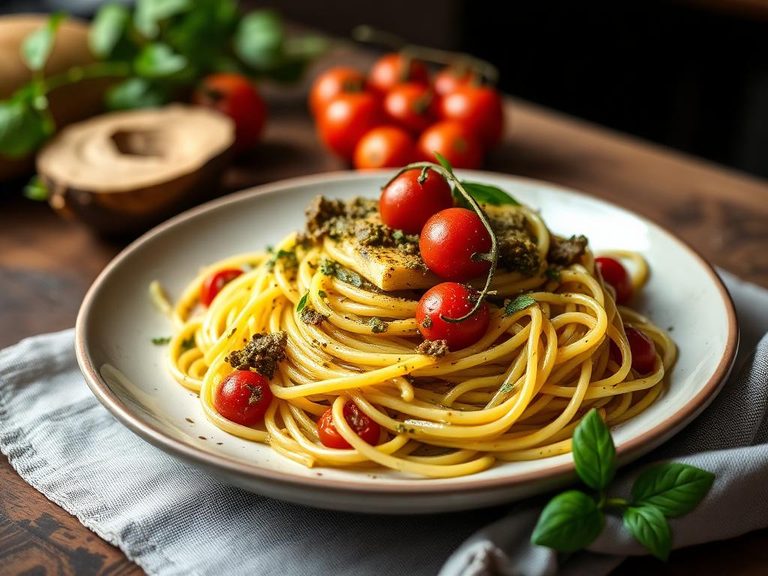 Spaghetti Squash with Pesto and Cherry Tomatoes
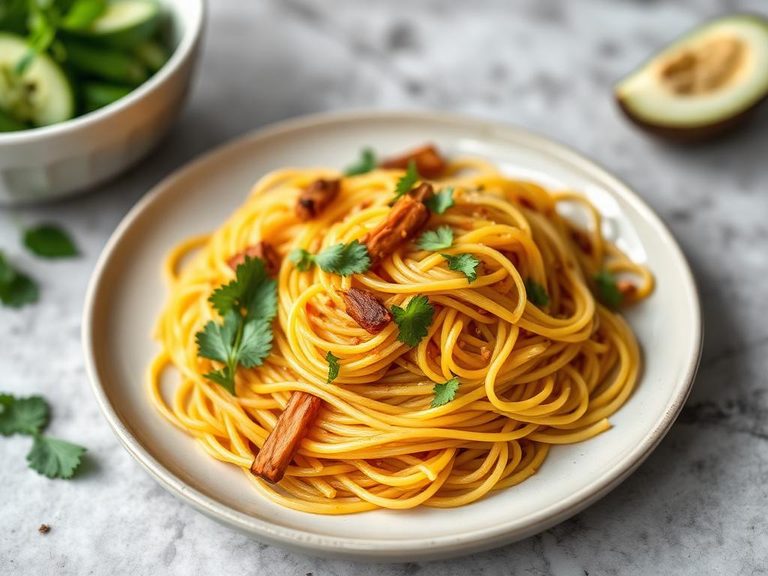 Spaghetti Squash 'Pad Thai' (an Asian-inspired stir-fry)
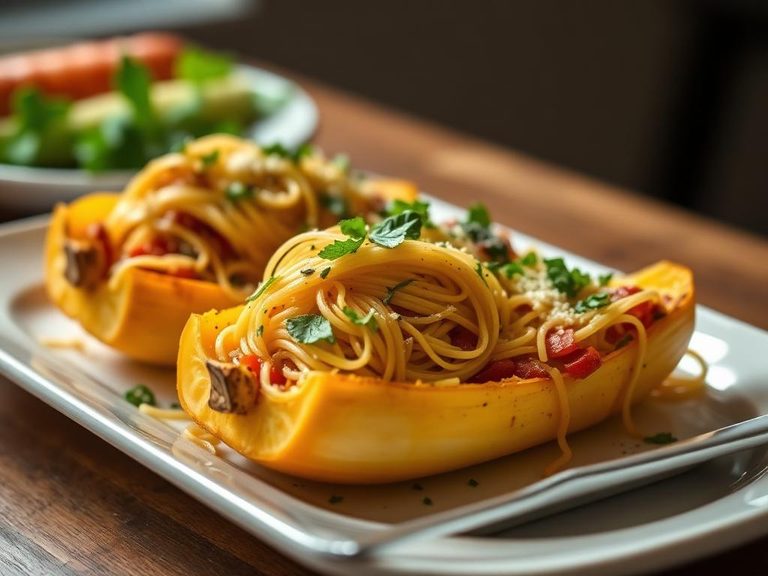 Spaghetti Squash Boats (stuffed with cheese, herbs, or other vegetables)
🌍 Where it's eaten
💡 Did you know?
The 'spaghetti' strands are not actually noodles; they are the fibrous, vascular bundles of the squash's flesh that separate when cooked, creating a natural, vegetable-based pasta substitute.
Full nutrition (USDA data · scales with serving)
| Water | 92.8 g |
| Nitrogen | 0.13 g |
| Protein | 0.79 g |
| Ash | 0.59 g |
| Fiber, total dietary | 1.4 g |
| Sugars, Total | 4.0 g |
| Sucrose | 1.2 g |
| Glucose | 1.5 g |
| Fructose | 1.3 g |
| Lactose | 0.03 g |
| Maltose | 0.03 g |
| Calcium, Ca | 16.6 mg |
| Iron, Fe | 0.03 mg |
| Magnesium, Mg | 13.3 mg |
| Phosphorus, P | 17.0 mg |
| Potassium, K | 267 mg |
| Sodium, Na | 0.31 mg |
| Zinc, Zn | 0.10 mg |
| Copper, Cu | 0.06 mg |
| Manganese, Mn | 0.09 mg |
| Vitamin C, total ascorbic acid | 5.6 mg |
| Vitamin B-6 | 0.10 mg |
| Biotin | 1.6 ug |
| Folate, total | 12.7 ug |
Fat & fatty acid profile (per 100g)
Estimated from Squash, winter, butternut, cooked, baked, with salt — USDA does not publish this profile for Squash.
| Fatty acids, total saturated | 0.02 g |
| SFA 12:0 | 0.00 g |
| SFA 14:0 | 0.00 g |
| SFA 16:0 | 0.02 g |
| SFA 18:0 | 0.00 g |
| Fatty acids, total monounsaturated | 0.01 g |
| MUFA 16:1 | 0.00 g |
| MUFA 18:1 | 0.01 g |
| Fatty acids, total polyunsaturated | 0.04 g |
| PUFA 18:2 | 0.01 g |
| PUFA 18:3 | 0.02 g |
| Fatty acids, total trans | 0.00 g |
| Cholesterol | 0.00 mg |
Amino acid profile (per 100g)
Estimated from Squash, winter, butternut, cooked, baked, with salt — USDA does not publish this profile for Squash.
| Tryptophan | 0.01 g |
| Threonine | 0.03 g |
| Isoleucine | 0.04 g |
| Leucine | 0.05 g |
| Lysine | 0.03 g |
| Methionine | 0.01 g |
| Cystine | 0.01 g |
| Phenylalanine | 0.04 g |
| Tyrosine | 0.03 g |
| Valine | 0.04 g |
| Arginine | 0.05 g |
| Histidine | 0.02 g |
| Alanine | 0.04 g |
| Aspartic acid | 0.10 g |
| Glutamic acid | 0.16 g |
| Glycine | 0.03 g |
| Proline | 0.03 g |
| Serine | 0.04 g |
FAQ
How do you cook spaghetti squash to get the best noodle-like texture?
Cut the squash in half lengthwise, scoop out the seeds, and roast cut-side down at 400°F (200°C) for 30-45 minutes until tender. Then, use a fork to scrape the flesh into strands. Avoid overcooking, which can make it mushy.
Is spaghetti squash a good substitute for pasta for people with diabetes?
Yes, it's an excellent low-carb, high-fiber alternative that won't spike blood sugar as much as traditional pasta. Pair it with protein and healthy fats for a balanced meal.
Can you eat spaghetti squash raw?
While technically edible raw, it's tough and not palatable. Cooking is essential to soften the flesh and develop its flavor and signature noodle-like texture.
Dietary load (calculated from USDA values)
Potential renal acid load. Positive = acid-forming, negative = alkaline-forming.
Sodium-to-potassium ratio: 0.00 (lower is better — aim for ≤ 1)
Sodium:potassium per WHO potassium guidance. Computed from USDA nutrients.