

Rose Hips, wild (Northern Plains Indians)
Whole food · American Indian/Alaska Native Foods

Photo: Wikipedia
Rose hips are the small, bright red, berry-like fruit of wild roses, packed with a tangy, floral flavor reminiscent of cranberry and hibiscus. Their texture is dry and slightly mealy when fresh, but they transform into a fragrant, jelly-like consistency when cooked. Nutritionally, they are a powerhouse of fiber and carbohydrates, offering a low-fat, vitamin-rich addition to wild foraging and traditional diets.
Calorie split: 4% protein · 94% carbs · 2% fat
↓ Full nutrition💚 Why it's loved
People love rose hips for their unique, tartly sweet flavor that bridges the gap between fruit and floral spice. Their versatility allows them to be used in everything from sweet jams and jellies to savory sauces and herbal teas, deeply connecting them to traditional and foraging cultures.
⚠️ Watch-outs & how to enjoy it better
The high fiber content can cause digestive discomfort if consumed in large quantities without adequate water. The tartness can also be intense for some palates. To counteract this, pair with a small amount of fat or protein (like nuts or yogurt) to slow digestion, and always start with small portions to assess tolerance.
Key benefits
- Extremely high in dietary fiber, supporting digestive health.
- Naturally rich in Vitamin C, a potent antioxidant.
- Very low in fat, making it a light, nutrient-dense food.
- Contains beneficial plant compounds like polyphenols.
- A traditional food source for many Indigenous cultures.
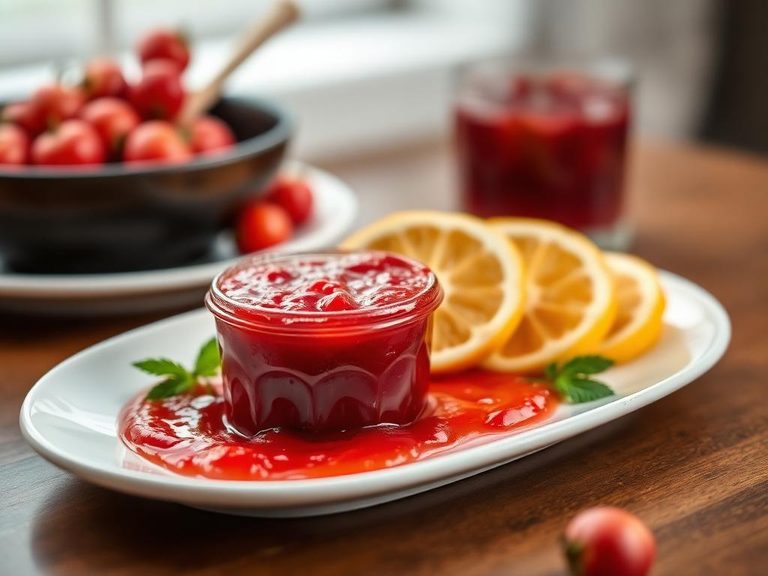
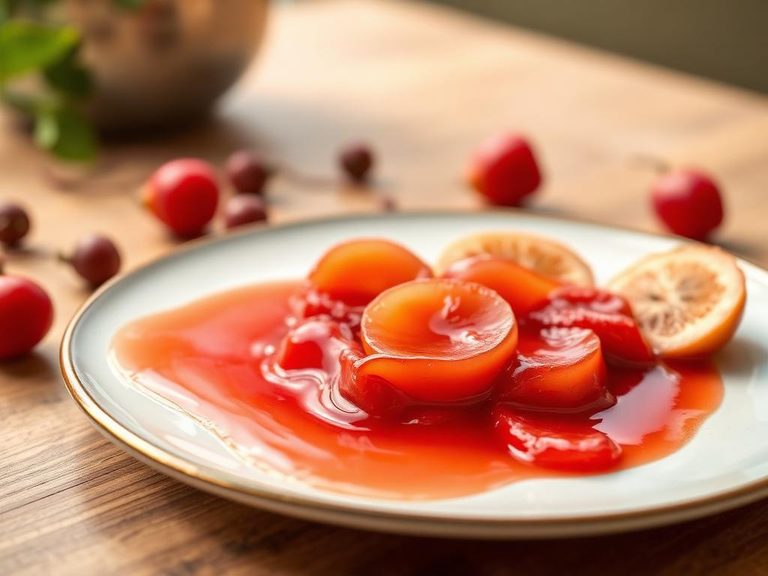
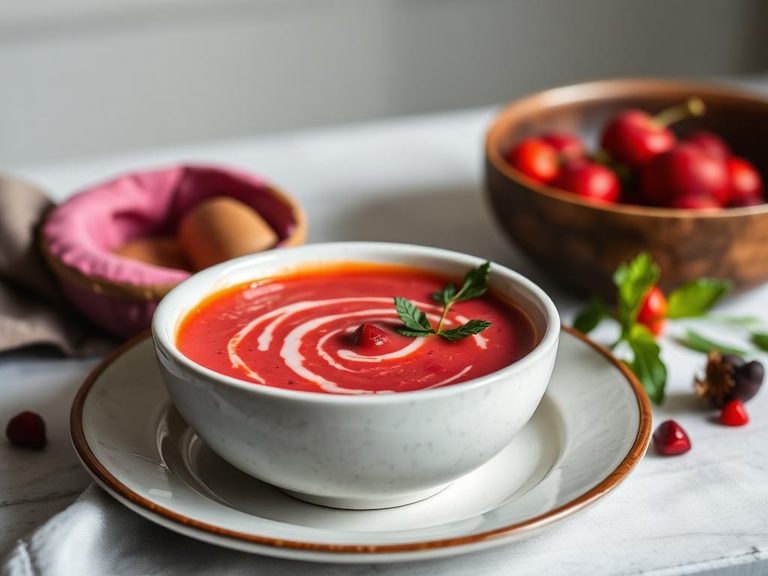
🍽️ Popular dishes


🌍 Where it's eaten
💡 Did you know?
During World War II, the British government encouraged citizens to forage for rose hips to make syrup, as they contain more Vitamin C than oranges and were a vital source of the nutrient during rationing.
Full nutrition (USDA data · scales with serving)
| Water | 58.7 g |
| Energy | 162 kcal |
| Energy | 679 kj |
| Protein | 1.6 g |
| Total lipid (fat) | 0.34 g |
| Ash | 1.2 g |
| Carbohydrate, by difference | 38.2 g |
| Fiber, total dietary | 24.1 g |
| Total Sugars | 2.6 g |
| Sucrose | 0.07 g |
| Glucose | 1.3 g |
| Fructose | 1.2 g |
| Lactose | 0.00 g |
| Maltose | 0.00 g |
| Galactose | 0.00 g |
| Calcium, Ca | 169 mg |
| Iron, Fe | 1.1 mg |
| Magnesium, Mg | 69.0 mg |
| Phosphorus, P | 61.0 mg |
| Potassium, K | 429 mg |
| Sodium, Na | 4.0 mg |
| Zinc, Zn | 0.25 mg |
| Copper, Cu | 0.11 mg |
| Manganese, Mn | 1.0 mg |
| Vitamin C, total ascorbic acid | 426 mg |
| Thiamin | 0.02 mg |
| Riboflavin | 0.17 mg |
| Niacin | 1.3 mg |
| Pantothenic acid | 0.80 mg |
| Vitamin B-6 | 0.08 mg |
| Folate, total | 3.0 ug |
| Folate, food | 3.0 ug |
| Choline, total | 12.0 mg |
| Betaine | 2.9 mg |
| Vitamin A, RAE | 217 ug |
| Carotene, beta | 2350 ug |
| Carotene, alpha | 31.0 ug |
| Cryptoxanthin, beta | 483 ug |
| Vitamin A, IU | 4345 iu |
| Lycopene | 6800 ug |
| Lutein + zeaxanthin | 2001 ug |
| Vitamin E (alpha-tocopherol) | 5.8 mg |
| Tocopherol, beta | 0.05 mg |
| Tocopherol, gamma | 1.3 mg |
| Tocopherol, delta | 0.14 mg |
| Tocotrienol, alpha | 0.01 mg |
| Tocotrienol, beta | 0.00 mg |
| Tocotrienol, gamma | 0.07 mg |
| Tocotrienol, delta | 0.00 mg |
| Vitamin K (phylloquinone) | 25.9 ug |
| Vitamin K (Dihydrophylloquinone) | 0.00 ug |
| Vitamin K (Menaquinone-4) | 0.00 ug |
FAQ
Are rose hips the same as rose petals?
No, rose hips are the fruit of the rose plant that forms after the petals have fallen off. They are small, round, and typically red or orange, while rose petals are the fragrant, colorful parts of the flower.
Can I eat rose hips raw?
Yes, but they are often very tart and contain tiny hairs inside that can be irritating. Most people prefer to cook them or remove the seeds and hairs before eating.
What do rose hips taste like?
They have a unique flavor that is tart, tangy, and slightly sweet, often compared to cranberries or hibiscus, with a floral note.
Are rose hips safe for everyone?
Generally yes, but those with sensitive digestion should be cautious due to the high fiber content. Also, the tiny hairs inside can cause irritation if not removed.
Nutrient density (calculated · NRF9.3)
Nutrient Rich Foods index: beneficial nutrients (protein, fiber, vitamins, minerals) minus saturated fat, added sugar & sodium, per 100 kcal.
NRF9.3 index — Fulgoni, Keast & Drewnowski, 2009. Computed from USDA nutrients.
Weight-loss friendliness (composite index)
Energy density 1.62 kcal/g · 4% calories from protein · 24.1 g fiber · 2.6 g sugar per 100 g.
Composite of energy density (Rolls et al., 1999), protein & fiber satiety, minus sugar. A calculated heuristic — ranks satiety-per-calorie, not a clinical measure.
Dietary load (calculated from USDA values)
Potential renal acid load. Positive = acid-forming, negative = alkaline-forming.
Sodium-to-potassium ratio: 0.01 (lower is better — aim for ≤ 1)
Sodium:potassium per WHO potassium guidance. Computed from USDA nutrients.