

Fish, ling, cooked, dry heat
Whole food · Finfish and Shellfish Products
Ling, cooked by dry heat, is a lean, white-fleshed fish with a mild, slightly sweet flavor and a firm, flaky texture that holds up well to grilling or baking. It's a powerhouse of high-quality protein, delivering over 24 grams per 100 grams with virtually no fat or carbohydrates. This makes it an exceptionally clean and efficient source of muscle-building nutrients.
Calorie split: 93% protein · 0% carbs · 7% fat
↓ Full nutrition💚 Why it's loved
People love ling for its versatile, mild flavor that acts as a perfect canvas for herbs, spices, and sauces, and its firm texture that doesn't fall apart during cooking. It's a staple in home kitchens and restaurants for creating satisfying, healthy meals without a strong 'fishy' taste.
⚠️ Watch-outs & how to enjoy it better
As with many fish, ling can contain trace amounts of mercury, so pregnant women and young children should be mindful of portion sizes and frequency. Its very low fat content means it can dry out if overcooked; counteract this by using a meat thermometer (aim for 145°F/63°C), basting with oil or butter, or cooking en papillote (in parchment) to lock in moisture.
Key benefits
- Excellent source of lean, complete protein
- Very low in fat and calories
- Contains no carbohydrates or sugar
- Rich in essential nutrients like selenium and phosphorus
- Supports muscle maintenance and repair
🍽️ Popular dishes
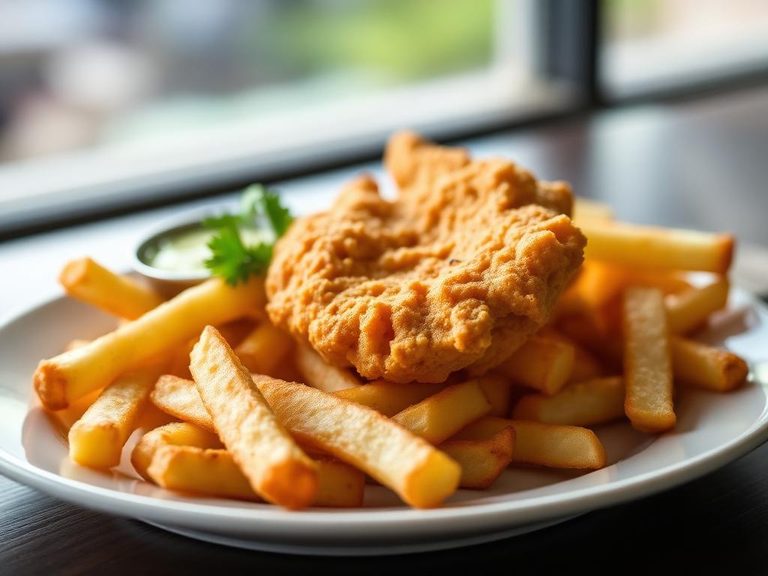
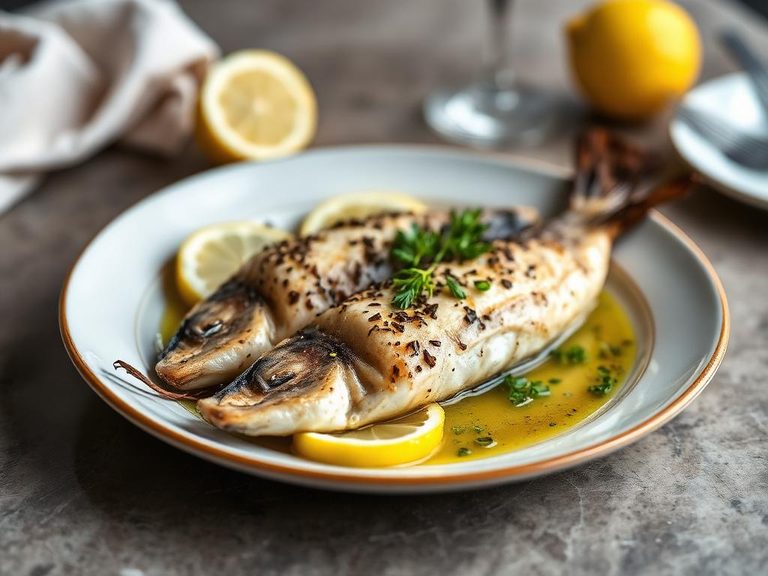
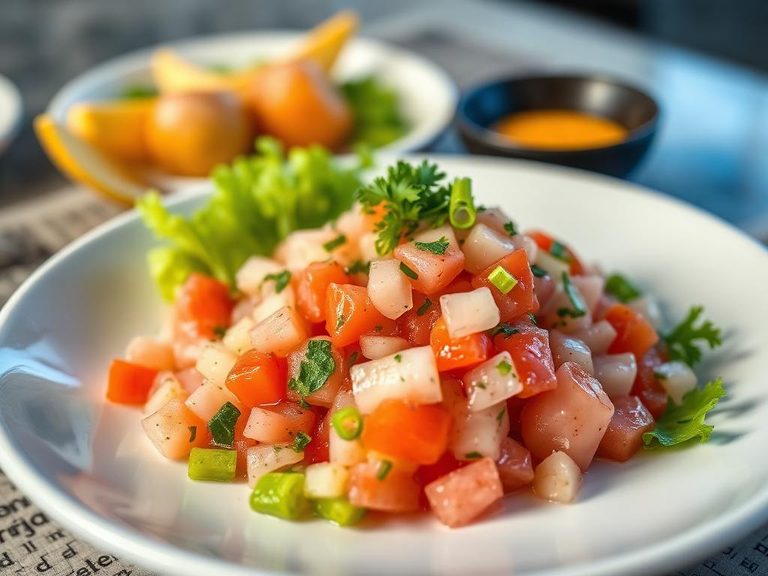
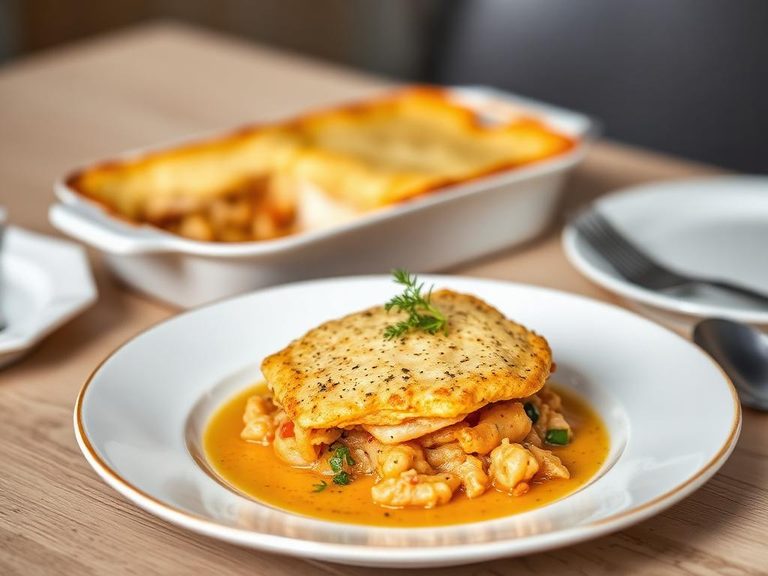
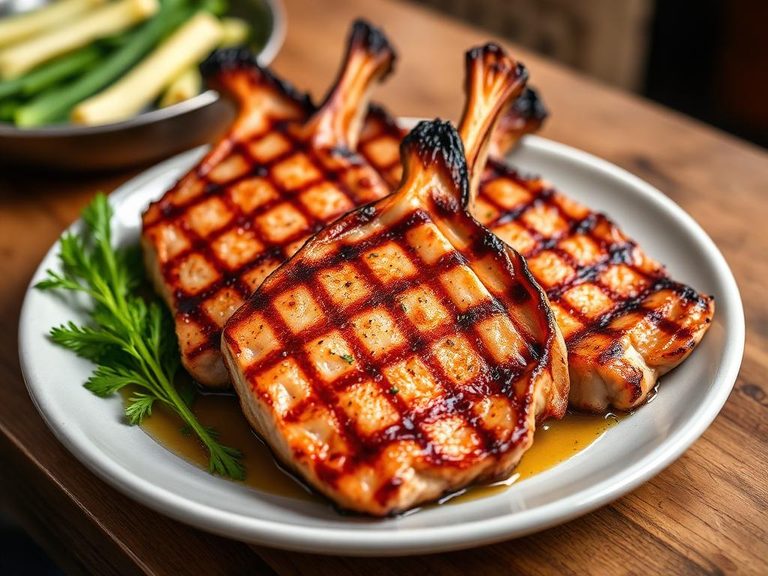
🌍 Where it's eaten
💡 Did you know?
Ling is one of the longest fish in the sea, capable of growing over 2 meters (6.5 feet) in length, yet it's often sold in manageable, boneless fillets.
Full nutrition (USDA data · scales with serving)
| Water | 73.9 g |
| Energy | 111 kcal |
| Energy | 464 kj |
| Protein | 24.4 g |
| Total lipid (fat) | 0.82 g |
| Ash | 1.8 g |
| Carbohydrate, by difference | 0.00 g |
| Fiber, total dietary | 0.00 g |
| Calcium, Ca | 44.0 mg |
| Iron, Fe | 0.83 mg |
| Magnesium, Mg | 81.0 mg |
| Phosphorus, P | 254 mg |
| Potassium, K | 486 mg |
| Sodium, Na | 173 mg |
| Zinc, Zn | 1.0 mg |
| Copper, Cu | 0.14 mg |
| Manganese, Mn | 0.04 mg |
| Selenium, Se | 46.8 ug |
| Vitamin C, total ascorbic acid | 0.00 mg |
| Thiamin | 0.13 mg |
| Riboflavin | 0.23 mg |
| Niacin | 2.8 mg |
| Pantothenic acid | 0.37 mg |
| Vitamin B-6 | 0.35 mg |
| Folate, total | 8.0 ug |
| Folic acid | 0.00 ug |
| Folate, food | 8.0 ug |
| Folate, DFE | 8.0 ug |
| Vitamin B-12 | 0.65 ug |
| Vitamin A, RAE | 35.0 ug |
| Retinol | 35.0 ug |
| Vitamin A, IU | 115 iu |
Fat & fatty acid profile (per 100g)
| Cholesterol | 51.0 mg |
Amino acid profile (per 100g)
| Tryptophan | 0.27 g |
| Threonine | 1.1 g |
| Isoleucine | 1.1 g |
| Leucine | 2.0 g |
| Lysine | 2.2 g |
| Methionine | 0.72 g |
| Cystine | 0.26 g |
| Phenylalanine | 0.95 g |
| Tyrosine | 0.82 g |
| Valine | 1.3 g |
| Arginine | 1.5 g |
| Histidine | 0.72 g |
| Alanine | 1.5 g |
| Aspartic acid | 2.5 g |
| Glutamic acid | 3.6 g |
| Glycine | 1.2 g |
| Proline | 0.86 g |
| Serine | 0.99 g |
FAQ
How is ling different from cod?
Ling has a firmer, denser texture and a slightly sweeter, more pronounced flavor than the milder, more delicate cod. It's also typically longer and more slender.
What's the best way to cook ling to keep it moist?
Dry-heat methods like baking, grilling, or pan-searing work well, but avoid overcooking. For guaranteed moisture, try poaching it in broth or cooking it in a parcel with vegetables and a splash of liquid.
Is ling a sustainable fish choice?
Sustainability varies by region and fishing method. Look for ling certified by organizations like the Marine Stewardship Council (MSC) or check local seafood guides for the most up-to-date recommendations.
Nutrient density (calculated · NRF9.3)
Nutrient Rich Foods index: beneficial nutrients (protein, fiber, vitamins, minerals) minus saturated fat, added sugar & sodium, per 100 kcal.
NRF9.3 index — Fulgoni, Keast & Drewnowski, 2009. Computed from USDA nutrients.
Weight-loss friendliness (composite index)
Energy density 1.11 kcal/g · 88% calories from protein · 0.0 g fiber · 0.0 g sugar per 100 g.
Composite of energy density (Rolls et al., 1999), protein & fiber satiety, minus sugar. A calculated heuristic — ranks satiety-per-calorie, not a clinical measure.
Dietary load (calculated from USDA values)
Potential renal acid load. Positive = acid-forming, negative = alkaline-forming.
Sodium-to-potassium ratio: 0.36 (lower is better — aim for ≤ 1)
Sodium:potassium per WHO potassium guidance. Computed from USDA nutrients.