

Cheese, pasteurized process cheese food or product, American, singles
Whole food · Dairy and Egg Products
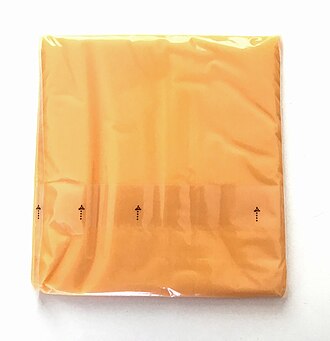
Photo: Wikipedia
A processed dairy product engineered for perfect meltability and a mild, salty, creamy flavor, American singles are the quintessential sandwich cheese. Its smooth, pliable texture and uniform orange hue make it instantly recognizable, while its nutritional profile is dominated by fat and protein with virtually no carbs or fiber.
Calorie split: 20% protein · 11% carbs · 69% fat
↓ Full nutrition💚 Why it's loved
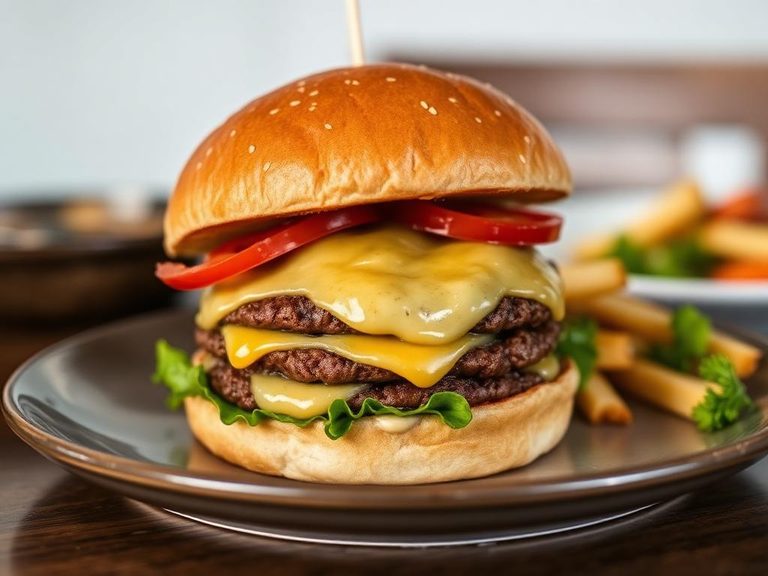
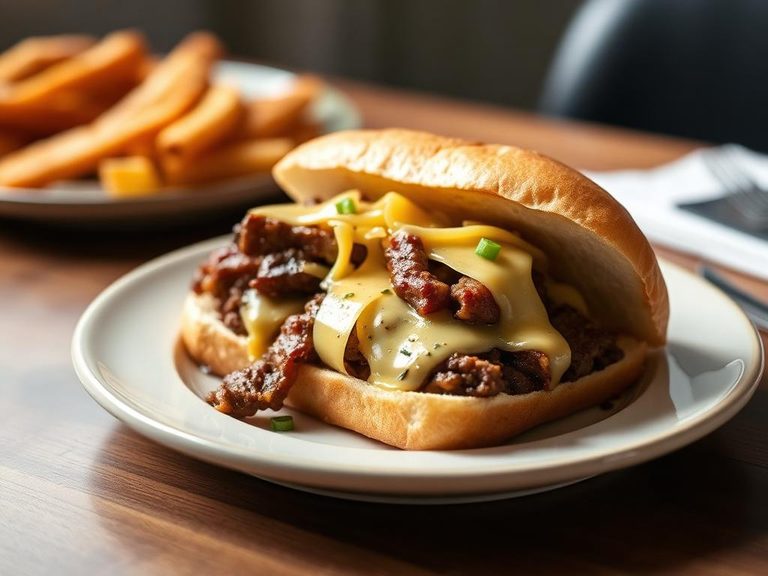
People love it for its nostalgic, comforting flavor and unparalleled melting properties that turn a simple grilled cheese or burger into a gooey, satisfying experience. Its convenience and consistent taste make it a staple in American households and fast-food culture.
⚠️ Watch-outs & how to enjoy it better
High in sodium and saturated fat, which can be a concern for heart health and blood pressure, and it often contains emulsifying salts that some prefer to avoid. To mitigate, pair it with fiber-rich vegetables or whole-grain bread, and practice portion control by using just one slice per meal.
Key benefits
- Excellent source of calcium for bone health
- High in protein (15.5g per 100g) for muscle maintenance
- Melts smoothly without separating, ideal for cooking
- Long shelf life and convenient single-serve packaging
- Provides vitamin A and phosphorus
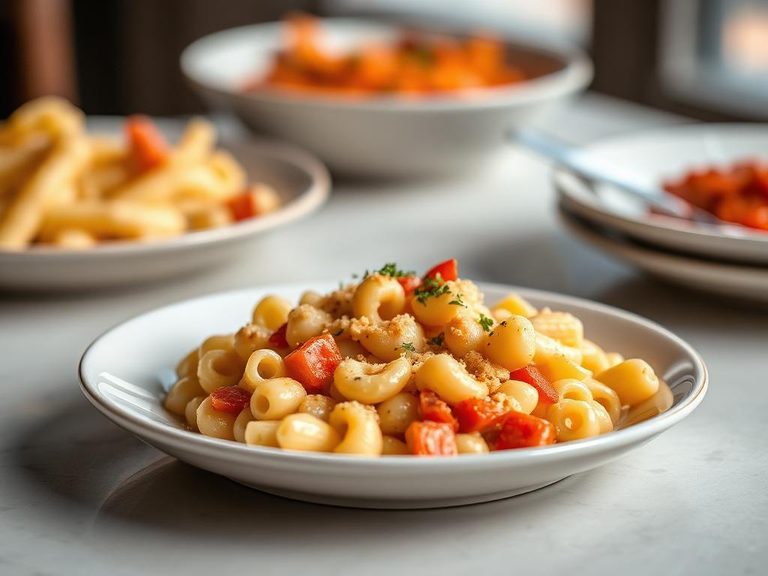
🍽️ Popular dishes


🌍 Where it's eaten
💡 Did you know?
American cheese was originally developed in 1916 by James L. Kraft, who patented a process to make cheese that wouldn't spoil, revolutionizing the dairy industry and becoming a staple in military rations during World War I.
Full nutrition (USDA data · scales with serving)
| Water | 44.8 g |
| Energy (Atwater General Factors) | 310 kcal |
| Energy (Atwater Specific Factors) | 308 kcal |
| Nitrogen | 2.4 g |
| Protein | 15.6 g |
| Total lipid (fat) | 23.9 g |
| Ash | 7.6 g |
| Carbohydrate, by difference | 8.2 g |
| Calcium, Ca | 1498 mg |
| Iron, Fe | 1.3 mg |
| Magnesium, Mg | 34.6 mg |
| Phosphorus, P | 880 mg |
| Potassium, K | 212 mg |
| Sodium, Na | 1420 mg |
| Zinc, Zn | 2.4 mg |
| Copper, Cu | 0.00 mg |
| Manganese, Mn | 0.07 mg |
| Iodine, I | 52.5 ug |
| Retinol | 156 ug |
| Vitamin D (D2 + D3), International Units | 177 iu |
| Vitamin D (D2 + D3) | 4.4 ug |
| Vitamin D2 (ergocalciferol) | 0.00 ug |
| Vitamin D3 (cholecalciferol) | 4.4 ug |
Fat & fatty acid profile (per 100g)
| Fatty acids, total saturated | 13.7 g |
| SFA 12:0 | 0.72 g |
| SFA 14:0 | 2.2 g |
| SFA 16:0 | 6.5 g |
| SFA 18:0 | 2.1 g |
| Fatty acids, total monounsaturated | 4.9 g |
| PUFA 18:2 | 0.56 g |
| Cholesterol | 73.2 mg |
Amino acid profile (per 100g)
Estimated from Cheese, cottage, with vegetables — USDA does not publish this profile for Cheese.
| Tryptophan | 0.13 g |
| Threonine | 0.53 g |
| Isoleucine | 0.70 g |
| Leucine | 1.2 g |
| Lysine | 0.97 g |
| Methionine | 0.36 g |
| Cystine | 0.11 g |
| Phenylalanine | 0.65 g |
| Tyrosine | 0.64 g |
| Valine | 0.74 g |
| Arginine | 0.55 g |
| Histidine | 0.40 g |
| Alanine | 0.62 g |
| Aspartic acid | 0.82 g |
| Glutamic acid | 2.6 g |
| Glycine | 0.27 g |
| Proline | 1.4 g |
| Serine | 0.67 g |
FAQ
Is American cheese real cheese?
It is a 'pasteurized process cheese food' or 'product,' meaning it's made from real cheese but blended with other ingredients like emulsifiers and milk solids to achieve its smooth texture and meltability.
Why does it melt so well?
The emulsifying salts (like sodium citrate) prevent the fat and protein from separating, creating a smooth, creamy melt that doesn't become oily or stringy.
Is it high in sodium?
Yes, it can contain 300-400mg of sodium per 100g, so those monitoring salt intake should consume it in moderation.
Nutrient density (calculated · NRF9.3)
Nutrient Rich Foods index: beneficial nutrients (protein, fiber, vitamins, minerals) minus saturated fat, added sugar & sodium, per 100 kcal.
NRF9.3 index — Fulgoni, Keast & Drewnowski, 2009. Computed from USDA nutrients.
Weight-loss friendliness (composite index)
Energy density 3.10 kcal/g · 20% calories from protein · 0.0 g fiber · 0.0 g sugar per 100 g.
Composite of energy density (Rolls et al., 1999), protein & fiber satiety, minus sugar. A calculated heuristic — ranks satiety-per-calorie, not a clinical measure.
Dietary load (calculated from USDA values)
Potential renal acid load. Positive = acid-forming, negative = alkaline-forming.
Sodium-to-potassium ratio: 6.70 (lower is better — aim for ≤ 1)
Sodium:potassium per WHO potassium guidance. Computed from USDA nutrients.