

Water convolvulus, cooked, boiled, drained, with salt
Whole food · Vegetables and Vegetable Products

Photo: Wikipedia
Water convolvulus, also known as water spinach or kangkong, is a leafy green aquatic vegetable with hollow stems and tender, arrow-shaped leaves. When boiled and drained, it develops a pleasantly crisp, slightly crunchy texture and a mild, subtly sweet, earthy flavor. Nutritionally, it is exceptionally low in calories (just 20 kcal per 100g) while providing a good source of dietary fiber and plant-based protein.
Calorie split: 33% protein · 59% carbs · 9% fat
↓ Full nutrition💚 Why it's loved
People love it for its satisfying crunch that holds up well in stir-fries and its ability to absorb the flavors of garlic, chili, and savory sauces. It's a beloved staple in many Asian cuisines, representing a quick, nutritious, and affordable vegetable side.
⚠️ Watch-outs & how to enjoy it better
The high oxalate content can contribute to kidney stone formation in susceptible individuals. To counteract this, avoid consuming it raw, and consider pairing it with calcium-rich foods like tofu or shrimp, which can help bind oxalates. Additionally, boiling and draining it (as in this preparation) helps reduce oxalate levels.
Key benefits
- Very low in calories and fat, aiding weight management.
- Good source of dietary fiber for digestive health.
- Provides plant-based protein for muscle maintenance.
- Contains vitamins A and C, which support immune function.
- Rich in minerals like iron and calcium.
🍽️ Popular dishes
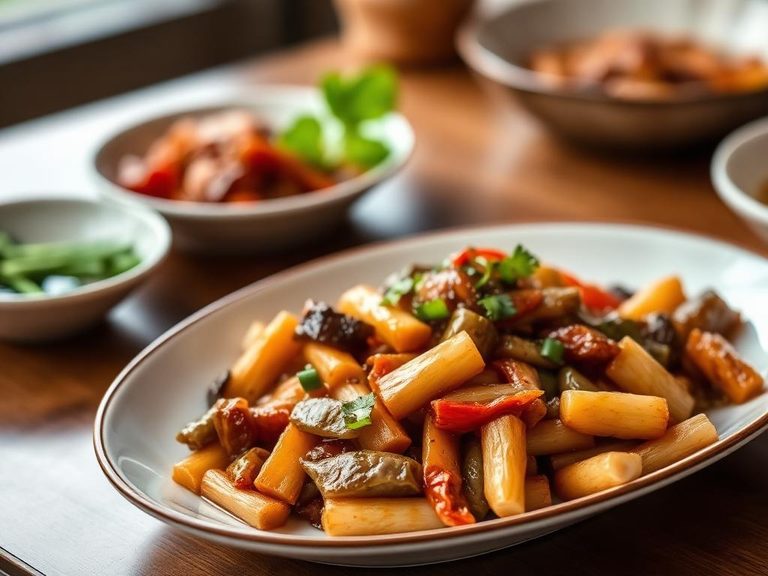
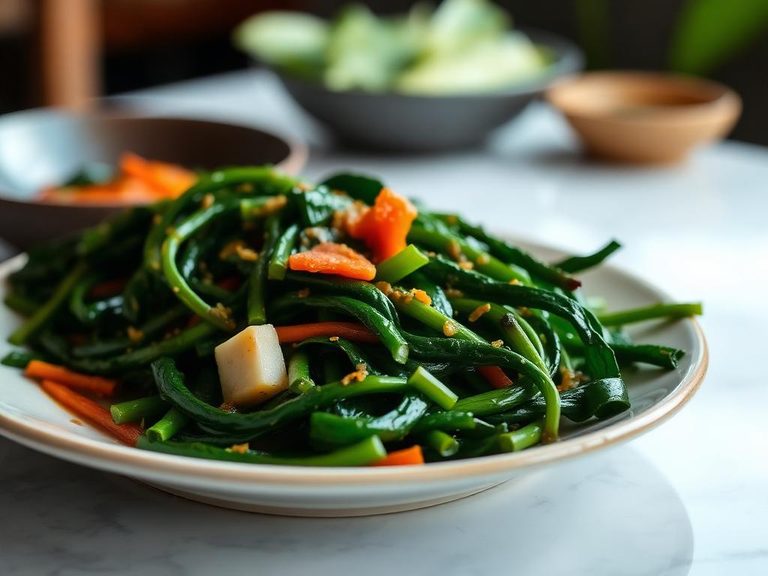
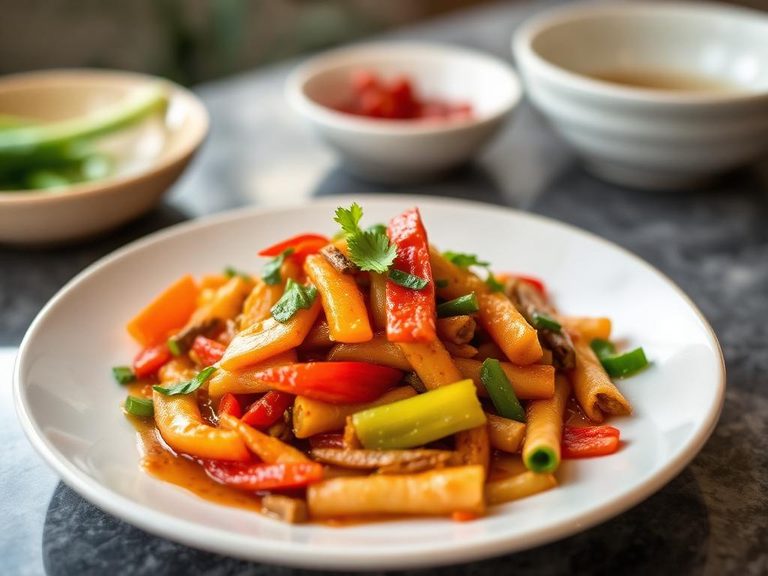
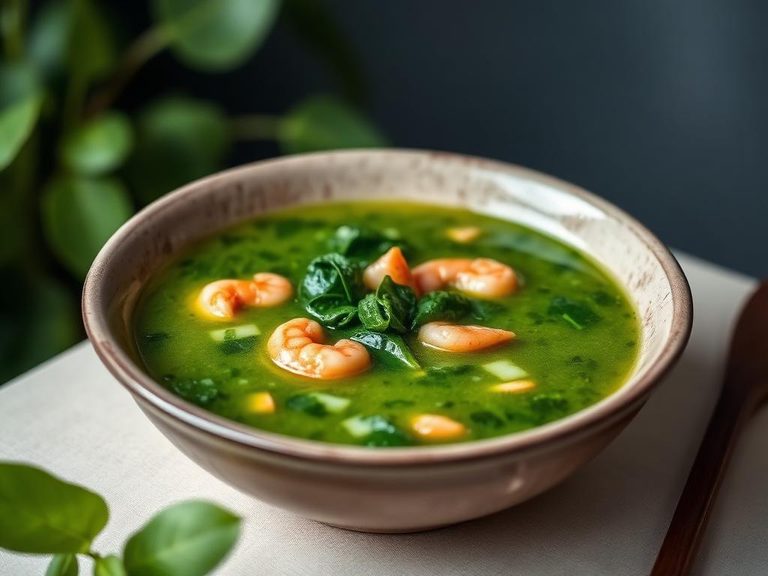
🌍 Where it's eaten
💡 Did you know?
Water convolvulus is so adept at growing in water that it's sometimes used in aquaponics systems to help filter and clean the water for fish.
Full nutrition (USDA data · scales with serving)
| Water | 92.9 g |
| Energy | 20.0 kcal |
| Energy | 85.0 kj |
| Protein | 2.1 g |
| Total lipid (fat) | 0.24 g |
| Ash | 1.1 g |
| Carbohydrate, by difference | 3.7 g |
| Fiber, total dietary | 1.9 g |
| Calcium, Ca | 54.0 mg |
| Iron, Fe | 1.3 mg |
| Magnesium, Mg | 30.0 mg |
| Phosphorus, P | 42.0 mg |
| Potassium, K | 284 mg |
| Sodium, Na | 358 mg |
| Zinc, Zn | 0.16 mg |
| Copper, Cu | 0.02 mg |
| Manganese, Mn | 0.14 mg |
| Selenium, Se | 0.90 ug |
| Vitamin C, total ascorbic acid | 16.0 mg |
| Thiamin | 0.05 mg |
| Riboflavin | 0.08 mg |
| Niacin | 0.50 mg |
| Pantothenic acid | 0.13 mg |
| Vitamin B-6 | 0.08 mg |
| Folate, total | 35.0 ug |
| Folic acid | 0.00 ug |
| Folate, food | 35.0 ug |
| Folate, DFE | 35.0 ug |
| Vitamin B-12 | 0.00 ug |
| Vitamin A, RAE | 260 ug |
| Retinol | 0.00 ug |
| Vitamin A, IU | 5200 iu |
| Vitamin D (D2 + D3), International Units | 0.00 iu |
| Vitamin D (D2 + D3) | 0.00 ug |
Fat & fatty acid profile (per 100g)
| Fatty acids, total trans | 0.00 g |
| Cholesterol | 0.00 mg |
Amino acid profile (per 100g)
| Threonine | 0.11 g |
| Isoleucine | 0.08 g |
| Leucine | 0.12 g |
| Lysine | 0.09 g |
| Methionine | 0.04 g |
| Cystine | 0.02 g |
| Phenylalanine | 0.10 g |
| Tyrosine | 0.06 g |
| Valine | 0.11 g |
| Arginine | 0.12 g |
| Histidine | 0.04 g |
| Alanine | 0.09 g |
| Aspartic acid | 0.52 g |
| Glutamic acid | 0.20 g |
| Glycine | 0.08 g |
| Proline | 0.07 g |
| Serine | 0.10 g |
FAQ
What's the difference between water spinach and regular spinach?
Water spinach has hollow stems and a milder, less mineral taste than common spinach. It's more commonly stir-fried or used in soups, whereas spinach is often eaten raw or wilted.
Is it safe to eat raw?
It's generally not recommended due to a risk of bacterial contamination from its aquatic growing environment and high oxalate content. Cooking, especially boiling, is the safest and most common preparation method.
How do I choose fresh water spinach?
Look for vibrant green leaves and crisp, hollow stems without yellowing, wilting, or sliminess. The stems should snap easily when bent.
Nutrient density (calculated · NRF9.3)
Nutrient Rich Foods index: beneficial nutrients (protein, fiber, vitamins, minerals) minus saturated fat, added sugar & sodium, per 100 kcal.
NRF9.3 index — Fulgoni, Keast & Drewnowski, 2009. Computed from USDA nutrients.
Weight-loss friendliness (composite index)
Energy density 0.20 kcal/g · 42% calories from protein · 1.9 g fiber · 0.0 g sugar per 100 g.
Composite of energy density (Rolls et al., 1999), protein & fiber satiety, minus sugar. A calculated heuristic — ranks satiety-per-calorie, not a clinical measure.
Dietary load (calculated from USDA values)
Potential renal acid load. Positive = acid-forming, negative = alkaline-forming.
Sodium-to-potassium ratio: 1.26 (lower is better — aim for ≤ 1)
Sodium:potassium per WHO potassium guidance. Computed from USDA nutrients.