

Tostada shells, corn
Whole food · Baked Products
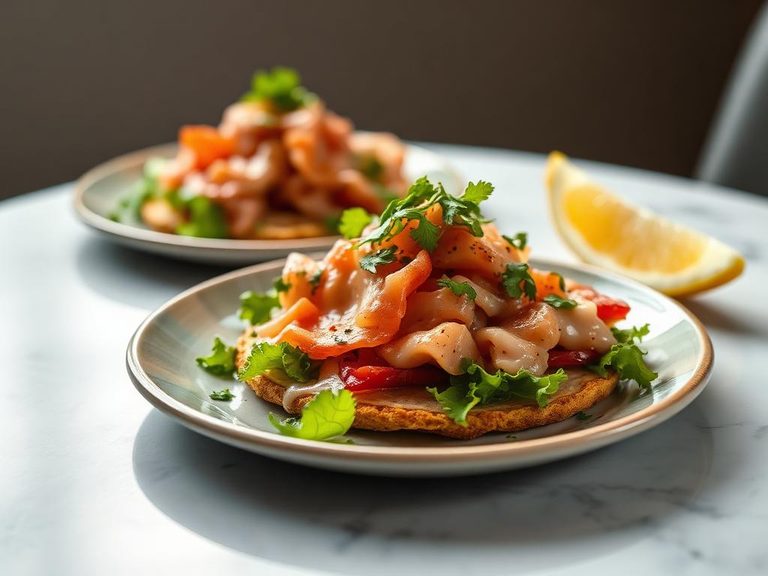
A crispy, golden disc made from ground corn masa, the tostada shell is the crunchy foundation of a beloved Mexican dish. Its texture is shatteringly crisp with a toasty, earthy corn flavor that provides the perfect canvas for savory toppings. Nutritionally, it's a dense source of carbohydrates and fats, offering quick energy but requiring mindful pairing for balance.
Calorie split: 5% protein · 52% carbs · 43% fat
↓ Full nutrition💚 Why it's loved
People love the tostada shell for its essential role in building a perfect bite, offering a satisfying crunch that contrasts with soft, flavorful toppings. It's a versatile and iconic piece of Mexican culinary culture, enabling endless customization from simple beans to complex ceviche.
⚠️ Watch-outs & how to enjoy it better
The high carbohydrate and fat content can contribute to blood sugar spikes and excess calorie intake if not balanced. The frying process can also add significant sodium and oils. To counteract this, pair tostadas with lean protein (like grilled chicken or beans), plenty of fresh vegetables, and healthy fats (like avocado) to slow digestion and increase satiety. Opt for baked versions when possible and practice portion control.
Key benefits
- Provides a satisfying, crunchy texture base for meals
- Good source of dietary fiber from whole corn masa
- Offers a convenient, ready-to-use vehicle for proteins and vegetables
- Naturally gluten-free when made from 100% corn
- A staple in traditional Mexican cuisine for centuries
🍽️ Popular dishes
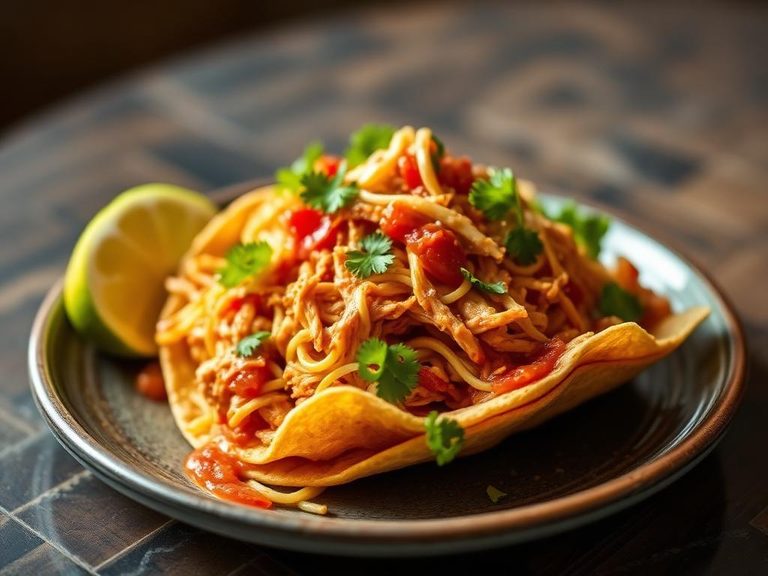
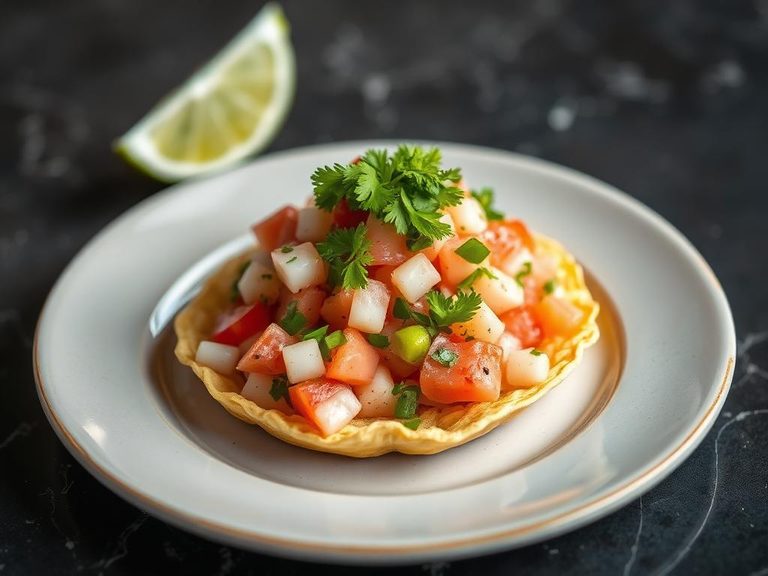
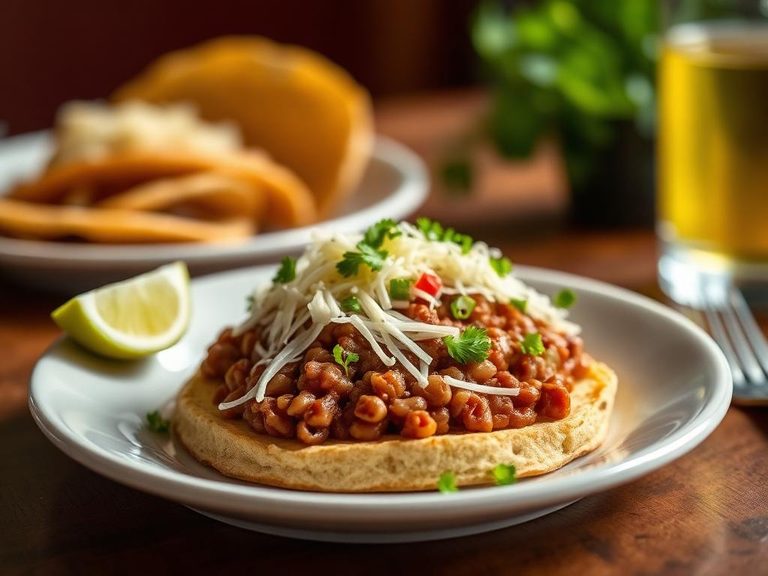
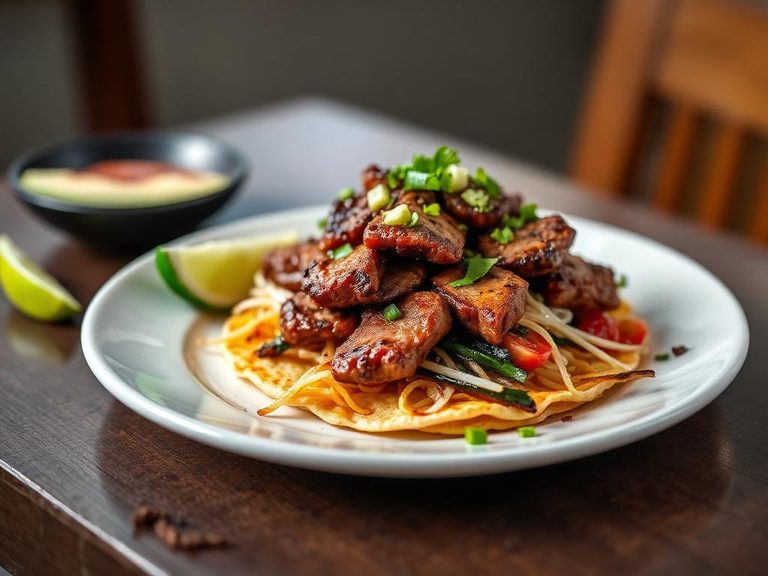
🌍 Where it's eaten
💡 Did you know?
The word 'tostada' comes from the Spanish word for 'toasted,' but traditional corn tostadas are actually fried, not toasted, to achieve their signature crispness.
Full nutrition (USDA data · scales with serving)
| Water | 3.3 g |
| Energy | 474 kcal |
| Energy | 1983 kj |
| Protein | 6.2 g |
| Total lipid (fat) | 23.4 g |
| Ash | 2.7 g |
| Carbohydrate, by difference | 64.4 g |
| Fiber, total dietary | 5.8 g |
| Starch | 55.4 g |
| Calcium, Ca | 76.0 mg |
| Iron, Fe | 1.5 mg |
| Magnesium, Mg | 76.0 mg |
| Phosphorus, P | 203 mg |
| Potassium, K | 237 mg |
| Sodium, Na | 657 mg |
| Zinc, Zn | 1.2 mg |
| Copper, Cu | 0.15 mg |
| Manganese, Mn | 0.36 mg |
| Selenium, Se | 2.2 ug |
| Thiamin | 0.35 mg |
| Riboflavin | 0.09 mg |
| Niacin | 1.6 mg |
| Pantothenic acid | 0.19 mg |
| Vitamin B-6 | 0.36 mg |
Fat & fatty acid profile (per 100g)
| Fatty acids, total saturated | 7.0 g |
| SFA 8:0 | 0.01 g |
| SFA 10:0 | 0.00 g |
| SFA 12:0 | 0.03 g |
| SFA 14:0 | 0.13 g |
| SFA 15:0 | 0.01 g |
| SFA 16:0 | 6.0 g |
| SFA 17:0 | 0.02 g |
| SFA 18:0 | 0.73 g |
| SFA 20:0 | 0.09 g |
| SFA 22:0 | 0.03 g |
| Fatty acids, total monounsaturated | 7.2 g |
| MUFA 14:1 | 0.00 g |
| MUFA 15:1 | 0.00 g |
| MUFA 16:1 | 0.05 g |
| MUFA 17:1 | 0.00 g |
| MUFA 18:1 | 7.1 g |
| MUFA 20:1 | 0.05 g |
| Fatty acids, total polyunsaturated | 8.3 g |
| PUFA 18:2 | 8.0 g |
| PUFA 18:3 | 0.12 g |
| PUFA 18:3 n-3 c,c,c (ALA) | 0.12 g |
| PUFA 18:3 n-6 c,c,c | 0.00 g |
| PUFA 20:2 n-6 c,c | 0.01 g |
| PUFA 20:3 | 0.00 g |
| PUFA 20:4 | 0.00 g |
| Fatty acids, total trans | 0.16 g |
| Fatty acids, total trans-monoenoic | 0.03 g |
| TFA 18:1 t | 0.03 g |
| TFA 18:2 t,t | 0.13 g |
| Fatty acids, total trans-polyenoic | 0.13 g |
FAQ
What is the difference between a tostada shell and a tortilla chip?
A tostada shell is a whole, flat, round corn tortilla that has been fried or baked until crisp, designed to hold toppings. A tortilla chip is typically a tortilla that has been cut into wedges before frying, meant for dipping.
Can I make tostada shells at home without frying?
Yes. Brush corn tortillas lightly with oil and bake them at 375°F (190°C) for 10-15 minutes, flipping halfway, until golden and crisp. This reduces the fat content significantly.
Why do my tostada shells get soggy so quickly?
The moisture from toppings (like salsa, beans, or lettuce) quickly softens the crisp shell. To delay sogginess, add wet ingredients just before serving and consider layering a barrier like refried beans or a leaf of lettuce directly on the shell.
Nutrient density (calculated · NRF9.3)
Nutrient Rich Foods index: beneficial nutrients (protein, fiber, vitamins, minerals) minus saturated fat, added sugar & sodium, per 100 kcal.
NRF9.3 index — Fulgoni, Keast & Drewnowski, 2009. Computed from USDA nutrients.
Weight-loss friendliness (composite index)
Energy density 4.74 kcal/g · 5% calories from protein · 5.8 g fiber · 0.0 g sugar per 100 g.
Composite of energy density (Rolls et al., 1999), protein & fiber satiety, minus sugar. A calculated heuristic — ranks satiety-per-calorie, not a clinical measure.
Dietary load (calculated from USDA values)
Potential renal acid load. Positive = acid-forming, negative = alkaline-forming.
Sodium-to-potassium ratio: 2.77 (lower is better — aim for ≤ 1)
Sodium:potassium per WHO potassium guidance. Computed from USDA nutrients.