

Ice creams, strawberry
Whole food · Sweets
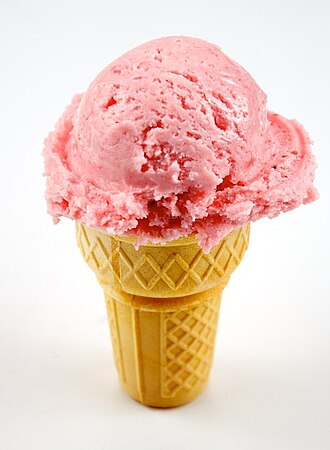
Photo: Wikipedia
Strawberry ice cream is a classic frozen dessert blending the sweet, tangy flavor of ripe strawberries with a rich, creamy dairy base. Its texture is typically smooth and scoopable, offering a refreshing and indulgent experience. Nutritionally, it provides a quick energy boost from carbohydrates, with a modest amount of fat contributing to its satisfying mouthfeel.
Calorie split: 6% protein · 56% carbs · 38% fat
↓ Full nutrition💚 Why it's loved
People love strawberry ice cream for its perfect balance of sweet and tart flavors, evoking nostalgic summer memories. Its creamy texture and vibrant color make it a universally appealing and versatile dessert base.
⚠️ Watch-outs & how to enjoy it better
The high sugar and refined carbohydrate content can lead to blood sugar spikes, making it less suitable for those managing diabetes or watching calorie intake. To enjoy it more mindfully, opt for a smaller portion (like a single scoop) and pair it with a source of protein or healthy fat, such as a handful of nuts, to help stabilize blood sugar response.
Key benefits
- Provides quick energy from carbohydrates
- Contains calcium from dairy for bone health
- Offers a small amount of protein
- Can be a source of antioxidants from strawberries
- Enjoyed as a refreshing treat in warm weather
🍽️ Popular dishes
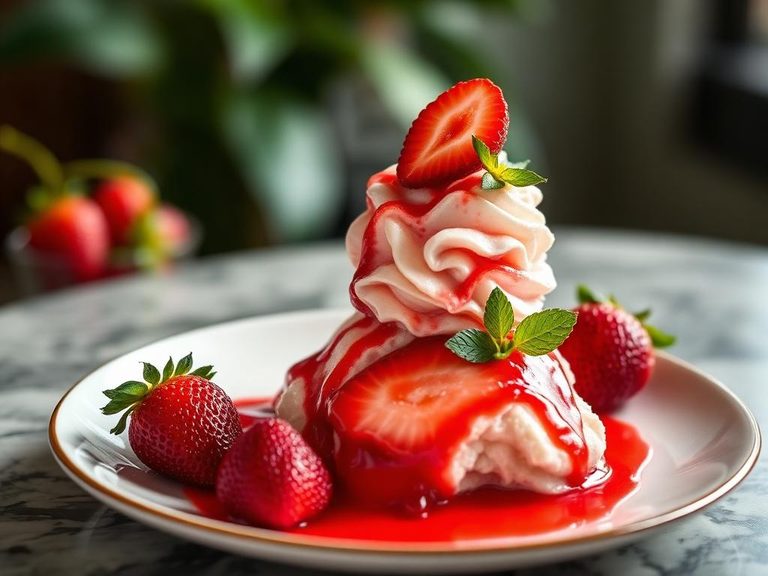

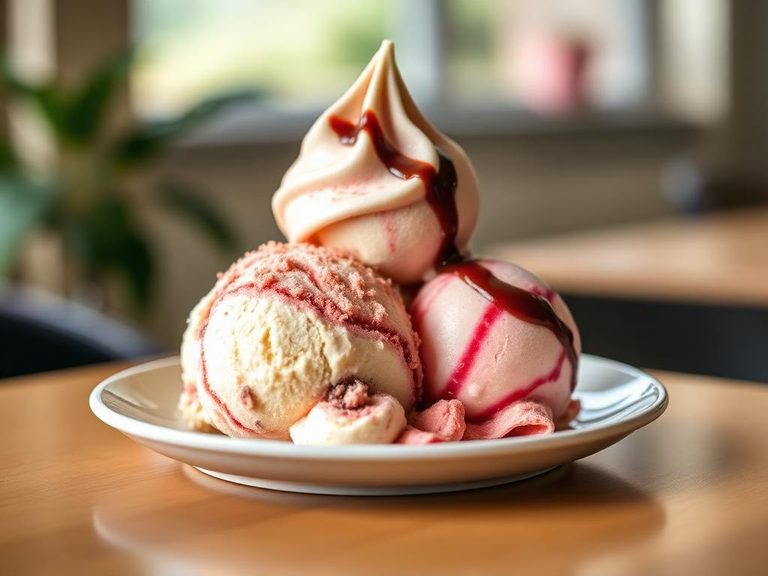
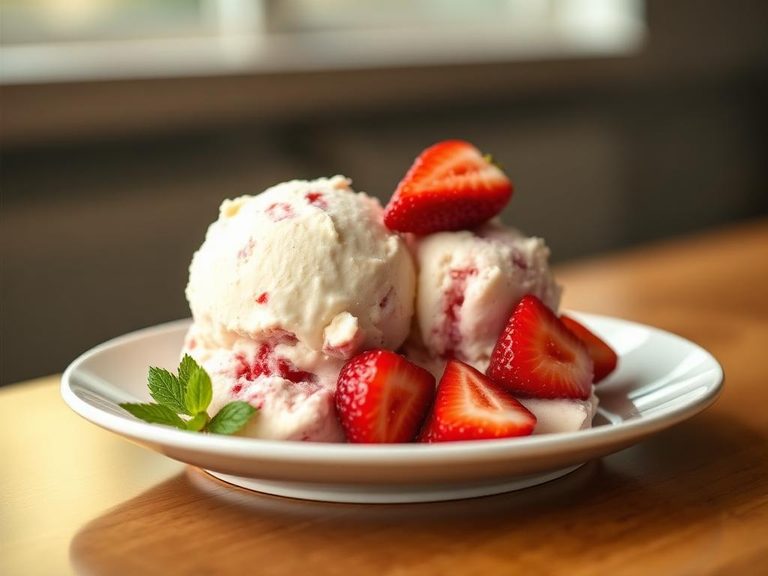


🌍 Where it's eaten
💡 Did you know?
Strawberry ice cream was reportedly a favorite dessert of First Lady Dolley Madison, who served it at White House dinners in the early 19th century.
Full nutrition (USDA data · scales with serving)
| Water | 60.0 g |
| Energy | 192 kcal |
| Energy | 803 kj |
| Protein | 3.2 g |
| Total lipid (fat) | 8.4 g |
| Ash | 0.70 g |
| Carbohydrate, by difference | 27.6 g |
| Fiber, total dietary | 0.90 g |
| Lactose | 4.4 g |
| Calcium, Ca | 120 mg |
| Iron, Fe | 0.21 mg |
| Magnesium, Mg | 14.0 mg |
| Phosphorus, P | 100 mg |
| Potassium, K | 188 mg |
| Sodium, Na | 60.0 mg |
| Zinc, Zn | 0.34 mg |
| Copper, Cu | 0.04 mg |
| Manganese, Mn | 0.08 mg |
| Selenium, Se | 1.9 ug |
| Vitamin C, total ascorbic acid | 7.7 mg |
| Thiamin | 0.04 mg |
| Riboflavin | 0.26 mg |
| Niacin | 0.17 mg |
| Pantothenic acid | 0.72 mg |
| Vitamin B-6 | 0.05 mg |
| Folate, total | 12.0 ug |
| Folic acid | 0.00 ug |
| Folate, food | 12.0 ug |
| Folate, DFE | 12.0 ug |
| Vitamin B-12 | 0.30 ug |
| Vitamin A, RAE | 96.0 ug |
| Retinol | 96.0 ug |
| Vitamin A, IU | 320 iu |
| Alcohol, ethyl | 0.00 g |
| Caffeine | 0.00 mg |
| Theobromine | 0.00 mg |
Fat & fatty acid profile (per 100g)
| Fatty acids, total saturated | 5.2 g |
| Cholesterol | 29.0 mg |
Amino acid profile (per 100g)
Estimated from Ice creams, vanilla, rich — USDA does not publish this profile for Ice creams.
| Tryptophan | 0.04 g |
| Threonine | 0.14 g |
| Isoleucine | 0.18 g |
| Leucine | 0.30 g |
| Lysine | 0.25 g |
| Methionine | 0.08 g |
| Cystine | 0.03 g |
| Phenylalanine | 0.15 g |
| Tyrosine | 0.14 g |
| Valine | 0.20 g |
| Arginine | 0.14 g |
| Histidine | 0.08 g |
| Alanine | 0.14 g |
| Glutamic acid | 0.65 g |
| Glycine | 0.15 g |
| Proline | 0.34 g |
| Serine | 0.17 g |
FAQ
Is strawberry ice cream made with real strawberries?
Most commercial versions use a combination of strawberry puree, juice, or flavoring along with sugar and dairy. Premium or artisanal brands often contain a higher percentage of real fruit.
How does the nutrition of strawberry ice cream compare to vanilla?
Strawberry ice cream typically has slightly fewer calories and fat than vanilla but may have similar or slightly higher sugar content due to the added fruit and sweeteners.
Can I make a healthier version at home?
Yes. You can blend frozen strawberries with Greek yogurt and a small amount of honey or maple syrup for a protein-rich, lower-sugar alternative that still delivers a creamy, strawberry-forward flavor.
Nutrient density (calculated · NRF9.3)
Nutrient Rich Foods index: beneficial nutrients (protein, fiber, vitamins, minerals) minus saturated fat, added sugar & sodium, per 100 kcal.
NRF9.3 index — Fulgoni, Keast & Drewnowski, 2009. Computed from USDA nutrients.
Weight-loss friendliness (composite index)
Energy density 1.92 kcal/g · 7% calories from protein · 0.9 g fiber · 0.0 g sugar per 100 g.
Composite of energy density (Rolls et al., 1999), protein & fiber satiety, minus sugar. A calculated heuristic — ranks satiety-per-calorie, not a clinical measure.
Dietary load (calculated from USDA values)
Potential renal acid load. Positive = acid-forming, negative = alkaline-forming.
Sodium-to-potassium ratio: 0.32 (lower is better — aim for ≤ 1)
Sodium:potassium per WHO potassium guidance. Computed from USDA nutrients.