

Fish, milkfish, cooked, dry heat
Whole food · Finfish and Shellfish Products

Photo: Wikipedia
Milkfish, or bangus, is a lean, white-fleshed fish prized for its mild, subtly sweet flavor and fine, flaky texture. When cooked with dry heat like grilling or pan-searing, its skin crisps beautifully while the flesh remains moist. It's a nutritional powerhouse, delivering over 26 grams of high-quality protein per 100 grams with virtually no carbohydrates.
Calorie split: 58% protein · 0% carbs · 42% fat
↓ Full nutrition💚 Why it's loved
People adore milkfish for its versatility and clean taste that absorbs marinades and spices wonderfully. It's a cultural staple in Southeast Asia, especially the Philippines, where it's a beloved comfort food for everyday meals and celebrations.
⚠️ Watch-outs & how to enjoy it better
The primary caution is the presence of numerous fine, Y-shaped bones, which can be a choking hazard, especially for children. To counteract this, purchase pre-filleted milkfish or meticulously debone it before cooking. Those watching sodium intake should be aware that milkfish is often preserved or sold as a salty dried fish; choose fresh or frozen versions and season lightly.
Key benefits
- Excellent source of complete protein for muscle maintenance.
- Very low in carbohydrates, suitable for keto and low-carb diets.
- Provides healthy fats, including omega-3 fatty acids.
- Naturally sugar-free and high in essential nutrients like selenium.
🍽️ Popular dishes
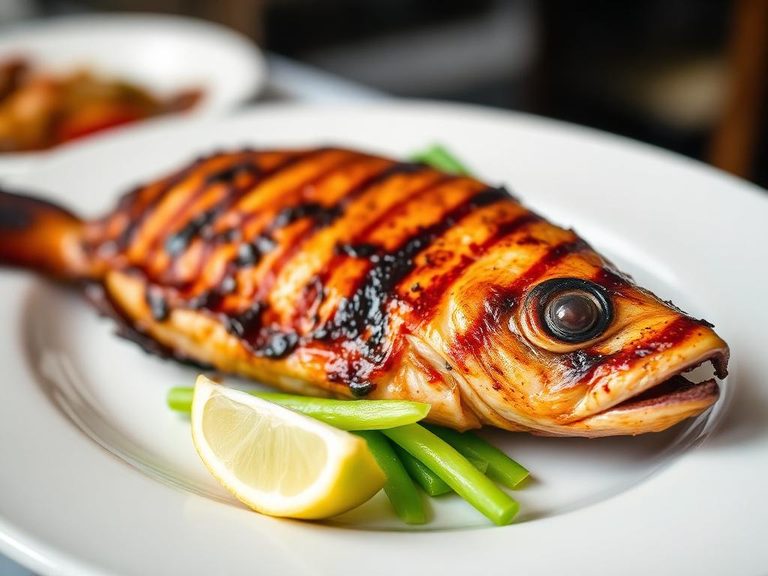
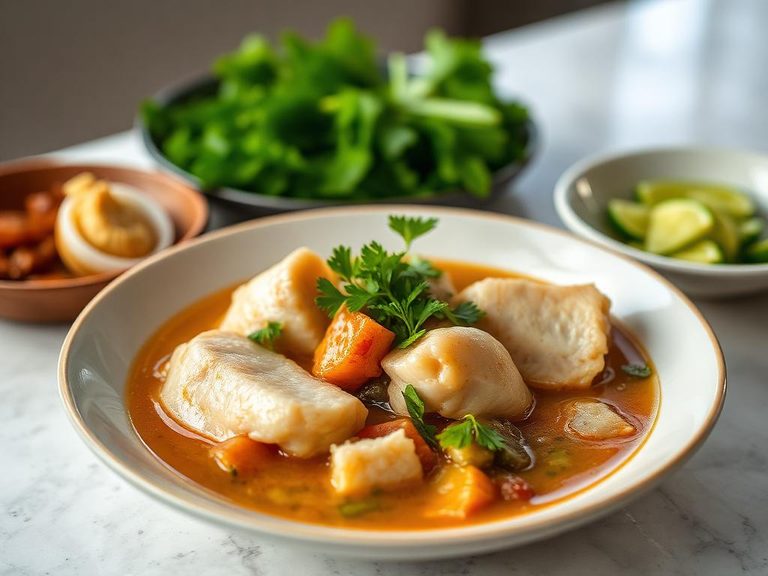
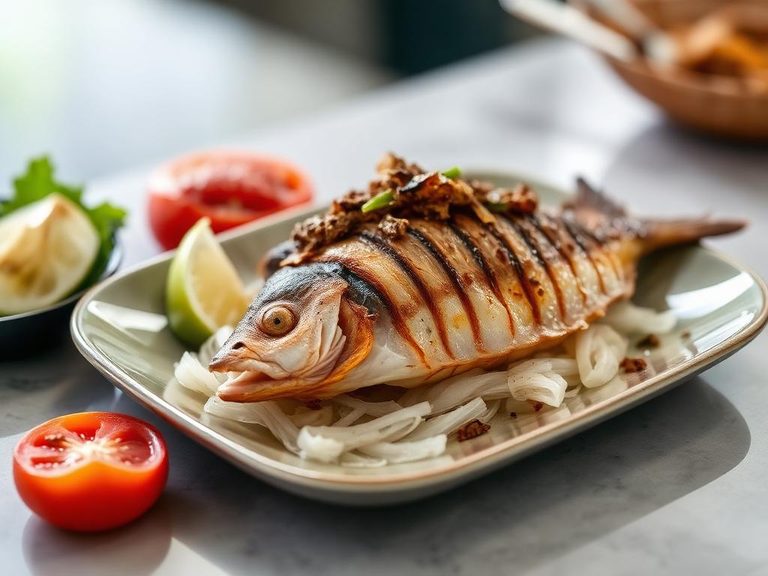
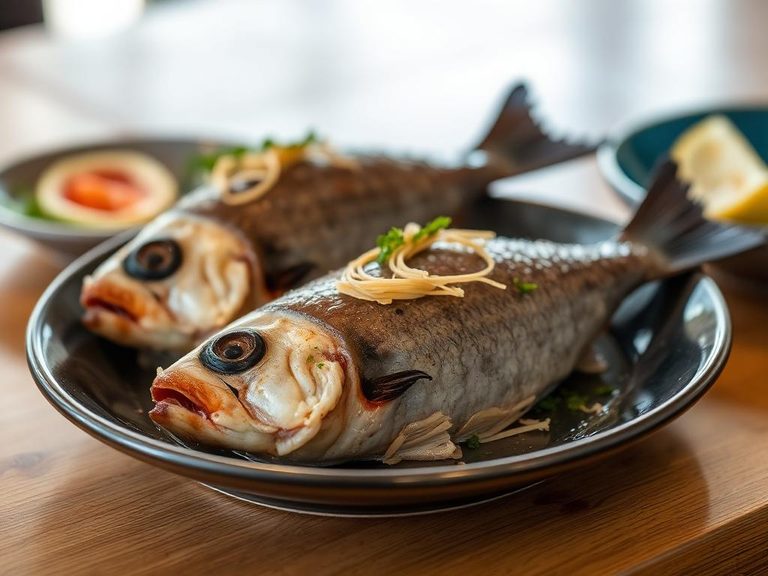
🌍 Where it's eaten
💡 Did you know?
The Philippines is the world's largest producer of milkfish, and the fish is so culturally significant that it's the national fish of the country.
Full nutrition (USDA data · scales with serving)
| Water | 62.6 g |
| Energy | 190 kcal |
| Energy | 795 kj |
| Protein | 26.3 g |
| Total lipid (fat) | 8.6 g |
| Ash | 1.5 g |
| Carbohydrate, by difference | 0.00 g |
| Fiber, total dietary | 0.00 g |
| Calcium, Ca | 65.0 mg |
| Iron, Fe | 0.41 mg |
| Magnesium, Mg | 38.0 mg |
| Phosphorus, P | 208 mg |
| Potassium, K | 374 mg |
| Sodium, Na | 92.0 mg |
| Zinc, Zn | 1.1 mg |
| Copper, Cu | 0.04 mg |
| Manganese, Mn | 0.03 mg |
| Selenium, Se | 16.2 ug |
| Vitamin C, total ascorbic acid | 0.00 mg |
| Thiamin | 0.02 mg |
| Riboflavin | 0.07 mg |
| Niacin | 8.3 mg |
| Pantothenic acid | 0.86 mg |
| Vitamin B-6 | 0.49 mg |
| Folate, total | 18.0 ug |
| Folic acid | 0.00 ug |
| Folate, food | 18.0 ug |
| Folate, DFE | 18.0 ug |
| Vitamin B-12 | 3.3 ug |
| Vitamin A, RAE | 33.0 ug |
| Retinol | 33.0 ug |
| Vitamin A, IU | 109 iu |
Fat & fatty acid profile (per 100g)
| Cholesterol | 67.0 mg |
Amino acid profile (per 100g)
| Tryptophan | 0.29 g |
| Threonine | 1.2 g |
| Isoleucine | 1.2 g |
| Leucine | 2.1 g |
| Lysine | 2.4 g |
| Methionine | 0.78 g |
| Cystine | 0.28 g |
| Phenylalanine | 1.0 g |
| Tyrosine | 0.89 g |
| Valine | 1.4 g |
| Arginine | 1.6 g |
| Histidine | 0.78 g |
| Alanine | 1.6 g |
| Aspartic acid | 2.7 g |
| Glutamic acid | 3.9 g |
| Glycine | 1.3 g |
| Proline | 0.93 g |
| Serine | 1.1 g |
FAQ
How do I remove the many bones from milkfish?
The most effective way is to buy it already filleted and deboned from a fishmonger. If you must debone it yourself, use fine-tipped tweezers or needle-nose pliers, working under good light to pull out the Y-shaped bones from the flesh after cooking.
Is milkfish the same as bangus?
Yes, 'bangus' is the common Filipino name for milkfish (Chanos chanos). The terms are interchangeable, with 'milkfish' being the widely recognized English name.
What's the best way to cook milkfish to keep it moist?
Dry-heat methods like grilling, broiling, or pan-searing are excellent. Marinating it beforehand adds flavor and moisture. Avoid overcooking; it's done when the flesh is opaque and flakes easily with a fork.
Nutrient density (calculated · NRF9.3)
Nutrient Rich Foods index: beneficial nutrients (protein, fiber, vitamins, minerals) minus saturated fat, added sugar & sodium, per 100 kcal.
NRF9.3 index — Fulgoni, Keast & Drewnowski, 2009. Computed from USDA nutrients.
Weight-loss friendliness (composite index)
Energy density 1.90 kcal/g · 55% calories from protein · 0.0 g fiber · 0.0 g sugar per 100 g.
Composite of energy density (Rolls et al., 1999), protein & fiber satiety, minus sugar. A calculated heuristic — ranks satiety-per-calorie, not a clinical measure.
Dietary load (calculated from USDA values)
Potential renal acid load. Positive = acid-forming, negative = alkaline-forming.
Sodium-to-potassium ratio: 0.25 (lower is better — aim for ≤ 1)
Sodium:potassium per WHO potassium guidance. Computed from USDA nutrients.