

Cereals, MALT-O-MEAL, Farina Hot Wheat Cereal, dry
Whole food · Breakfast Cereals
Malt-O-Meal Farina is a classic hot wheat cereal made from coarsely ground durum wheat, known for its smooth, porridge-like texture and subtly sweet, malty flavor. It cooks into a creamy, comforting bowl that's a staple of American breakfast tables, offering a hearty, warming start to the day. Nutritionally, it's a high-carb, low-fat energy source with a modest protein content, making it a filling, simple meal.
Calorie split: 12% protein · 87% carbs · 1% fat
↓ Full nutrition💚 Why it's loved
People love it for its nostalgic, comforting warmth and the simple, satisfying creaminess it develops when cooked. Its mild, slightly sweet flavor makes it a versatile canvas for toppings like brown sugar, butter, or fresh fruit.
⚠️ Watch-outs & how to enjoy it better
It is a high-glycemic food that can cause rapid blood-sugar spikes, which is a concern for those managing diabetes. To counteract this, pair it with a source of protein (like a hard-boiled egg) or healthy fat (like nuts or a pat of butter) and consider adding fiber-rich fruit. It also contains gluten, making it unsuitable for those with celiac disease or gluten sensitivity.
Key benefits
- Provides sustained energy from complex carbohydrates
- Low in fat and cholesterol-free
- Good source of dietary fiber for digestive health
- Contains iron and B vitamins for energy metabolism
- Quick and easy to prepare for a hot breakfast
🍽️ Popular dishes
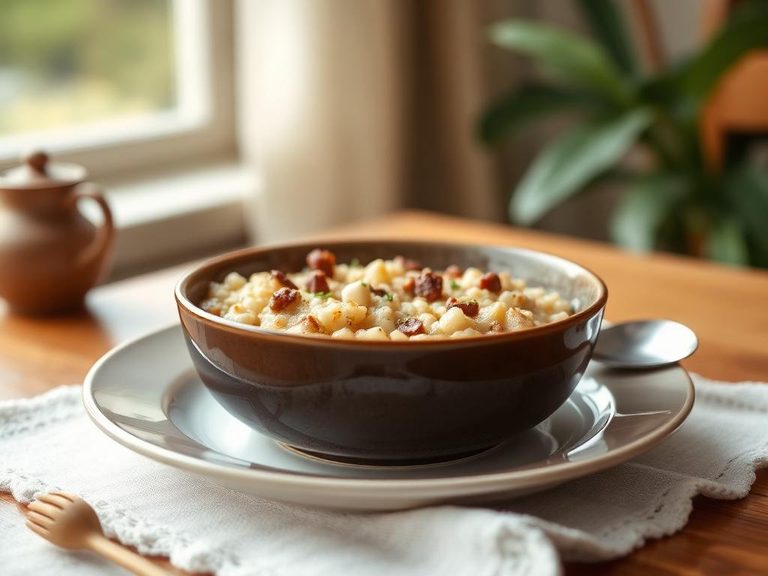
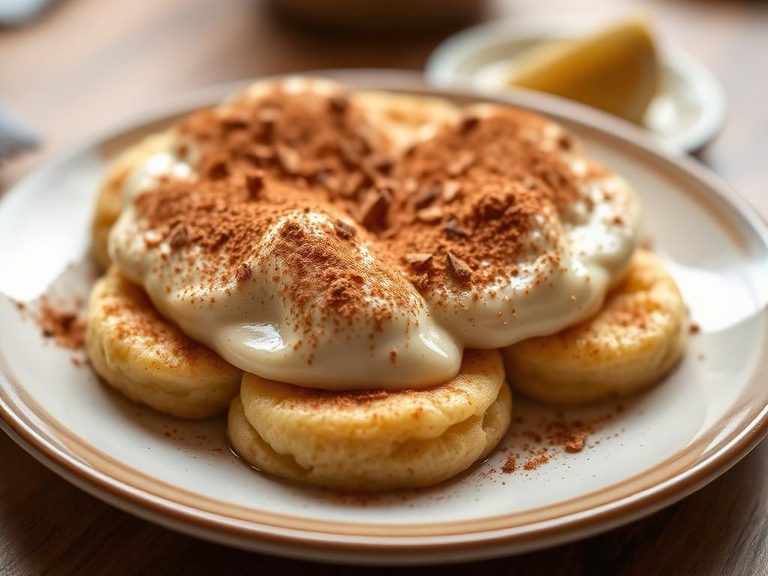

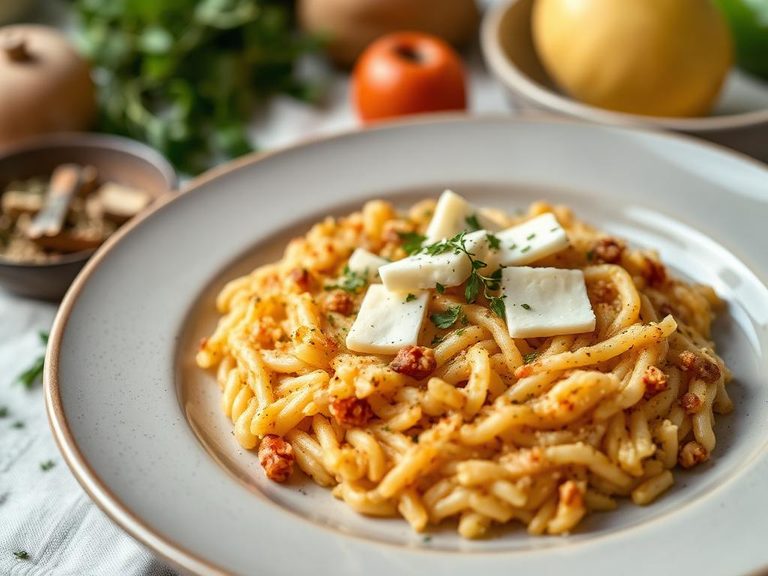

🌍 Where it's eaten
💡 Did you know?
Farina is derived from the Latin word 'farina' meaning 'meal' or 'flour,' and it's the same base ingredient used to make traditional Italian polenta, though processed differently.
Full nutrition (USDA data · scales with serving)
| Water | 9.7 g |
| Energy | 365 kcal |
| Energy | 1528 kj |
| Protein | 10.5 g |
| Total lipid (fat) | 0.49 g |
| Ash | 1.4 g |
| Carbohydrate, by difference | 77.2 g |
| Fiber, total dietary | 2.9 g |
| Total Sugars | 0.70 g |
| Calcium, Ca | 377 mg |
| Iron, Fe | 40.9 mg |
| Magnesium, Mg | 13.0 mg |
| Phosphorus, P | 109 mg |
| Potassium, K | 93.0 mg |
| Sodium, Na | 3.0 mg |
| Zinc, Zn | 0.51 mg |
| Vitamin C, total ascorbic acid | 0.00 mg |
| Thiamin | 1.2 mg |
| Riboflavin | 1.1 mg |
| Niacin | 19.8 mg |
| Vitamin B-6 | 2.0 mg |
| Vitamin B-12 | 0.00 ug |
| Vitamin A, IU | 0.00 iu |
| Vitamin E (alpha-tocopherol) | 0.00 mg |
| Vitamin D (D2 + D3), International Units | 0.00 iu |
| Vitamin D (D2 + D3) | 0.00 ug |
| Vitamin D3 (cholecalciferol) | 0.00 ug |
| Vitamin K (phylloquinone) | 0.00 ug |
| Caffeine | 0.00 mg |
Fat & fatty acid profile (per 100g)
| Fatty acids, total saturated | 0.07 g |
| Fatty acids, total monounsaturated | 0.05 g |
| Fatty acids, total polyunsaturated | 0.21 g |
| Cholesterol | 0.00 mg |
Amino acid profile (per 100g)
Estimated from Cereals ready-to-eat, POST, HONEY BUNCHES OF OATS, honey roasted — USDA does not publish this profile for Cereals.
| Tryptophan | 0.09 g |
| Threonine | 0.24 g |
| Isoleucine | 0.26 g |
| Leucine | 0.80 g |
| Lysine | 0.12 g |
| Methionine | 0.10 g |
| Cystine | 0.11 g |
| Phenylalanine | 0.39 g |
| Tyrosine | 0.21 g |
| Valine | 0.34 g |
| Arginine | 0.24 g |
| Histidine | 0.18 g |
| Alanine | 0.46 g |
| Aspartic acid | 0.48 g |
| Glutamic acid | 1.9 g |
| Glycine | 0.27 g |
| Proline | 0.49 g |
| Serine | 0.38 g |
FAQ
Is Malt-O-Meal Farina the same as cream of wheat?
They are very similar; both are hot wheat cereals made from ground wheat. Malt-O-Meal is a brand name, while Cream of Wheat is another popular brand. The texture and nutritional profile are comparable, though recipes may vary slightly.
Can I eat this if I'm gluten-free?
No, Malt-O-Meal Farina is made from wheat and contains gluten. It is not suitable for individuals with celiac disease or gluten sensitivity.
How do I prevent it from becoming too thick or lumpy?
To avoid lumps, slowly whisk the dry cereal into boiling water or milk, stirring constantly. If it becomes too thick after cooking, simply stir in a little more liquid (water or milk) to reach your desired consistency.
Nutrient density (calculated · NRF9.3)
Nutrient Rich Foods index: beneficial nutrients (protein, fiber, vitamins, minerals) minus saturated fat, added sugar & sodium, per 100 kcal.
NRF9.3 index — Fulgoni, Keast & Drewnowski, 2009. Computed from USDA nutrients.
Weight-loss friendliness (composite index)
Energy density 3.65 kcal/g · 11% calories from protein · 2.9 g fiber · 0.7 g sugar per 100 g.
Composite of energy density (Rolls et al., 1999), protein & fiber satiety, minus sugar. A calculated heuristic — ranks satiety-per-calorie, not a clinical measure.
Dietary load (calculated from USDA values)
Potential renal acid load. Positive = acid-forming, negative = alkaline-forming.
Sodium-to-potassium ratio: 0.03 (lower is better — aim for ≤ 1)
Sodium:potassium per WHO potassium guidance. Computed from USDA nutrients.