

Beans, great northern, canned, sodium added, drained and rinsed
Whole food · Legumes and Legume Products

Photo: Wikipedia
Great Northern beans are small, oval white beans with a delicate, slightly nutty flavor and a creamy, tender texture when cooked. Canned and rinsed, they offer a convenient, low-fat source of plant-based protein and carbohydrates, with a mild taste that absorbs surrounding flavors beautifully. Their soft, velvety mouthfeel makes them a staple in soups, stews, and salads, providing a hearty yet light nutritional boost.
Calorie split: 24% protein · 66% carbs · 10% fat
↓ Full nutrition💚 Why it's loved
People love Great Northern beans for their subtle, earthy taste and creamy texture that melds seamlessly into hearty dishes like soups and casseroles. Their versatility in both savory and mild preparations makes them a beloved staple in home cooking, especially in American and Mediterranean cuisines.
⚠️ Watch-outs & how to enjoy it better
The canned version can be high in sodium, which may concern those monitoring salt intake, and the lack of fiber (0g) might not support digestive health as well as other beans. To counteract this, rinse thoroughly to reduce sodium, pair with high-fiber foods like vegetables or whole grains, and opt for low-sodium varieties when available.
Key benefits
- High in plant-based protein (7g per 100g)
- Low in fat (1.266g per 100g)
- Good source of complex carbohydrates (19.329g per 100g)
- Convenient and quick to prepare when canned
- Mild flavor pairs well with many seasonings
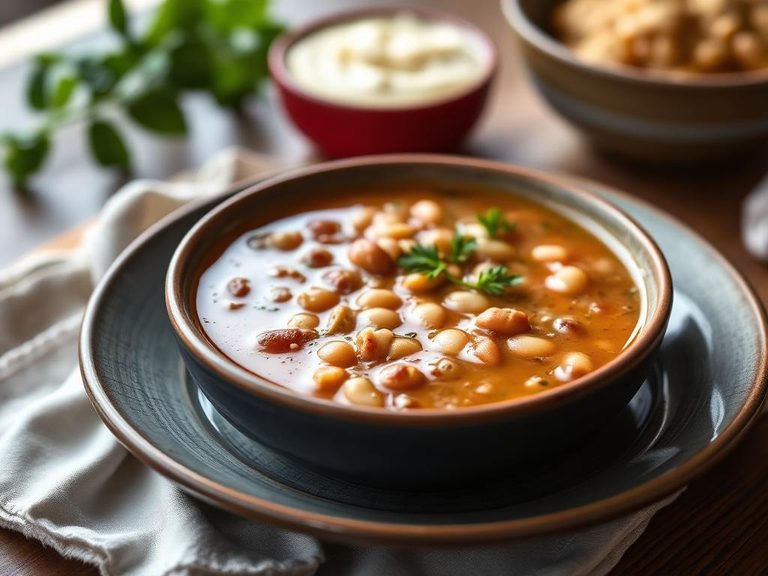
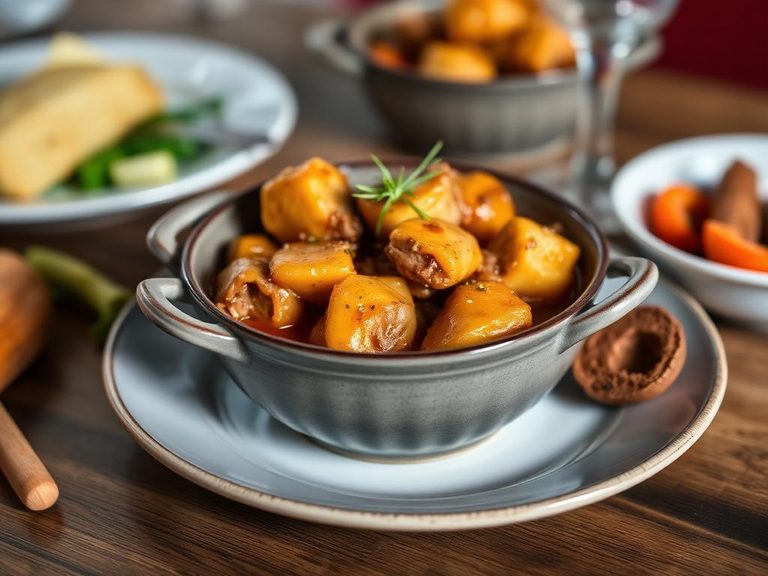
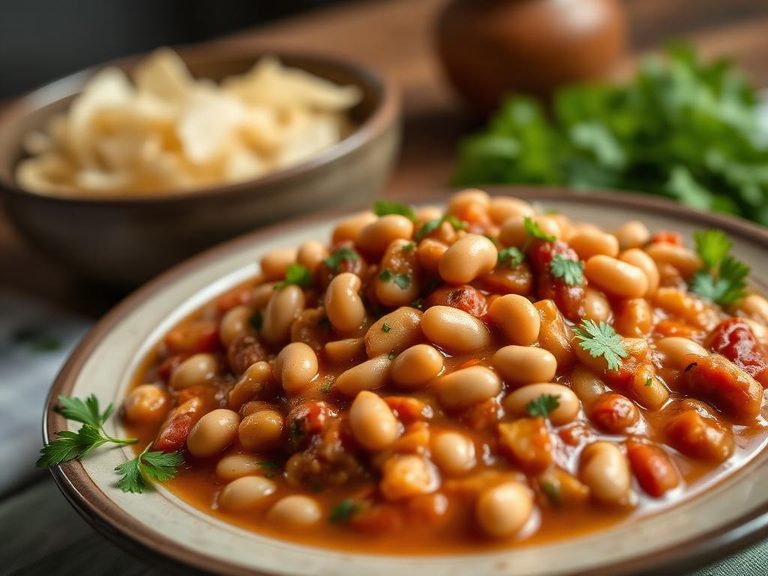
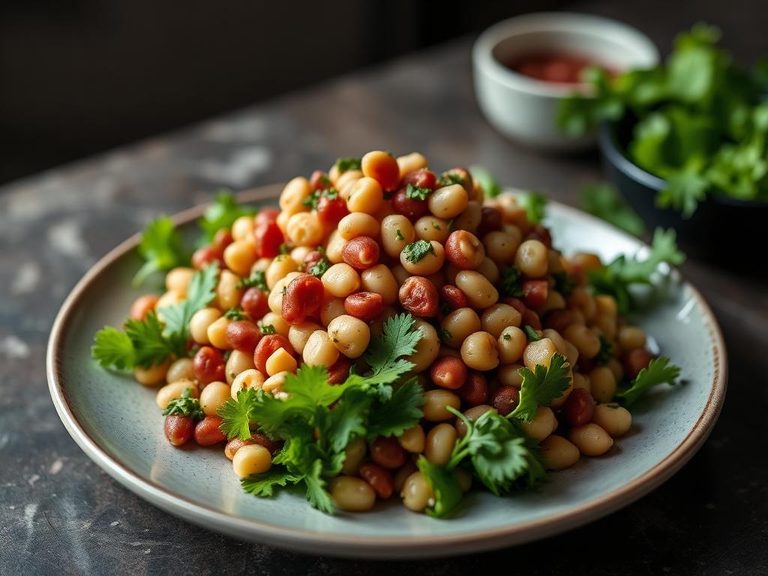
🍽️ Popular dishes
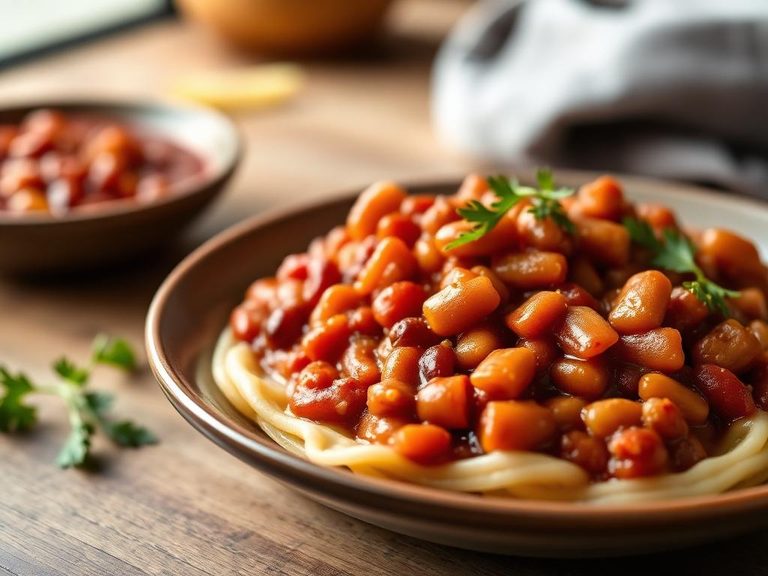
🌍 Where it's eaten
💡 Did you know?
Great Northern beans are a key ingredient in traditional French cassoulet, a slow-cooked casserole that originated in the Languedoc region and often includes sausage and duck confit.
Full nutrition (USDA data · scales with serving)
| Water | 71.2 g |
| Energy (Atwater General Factors) | 117 kcal |
| Energy (Atwater Specific Factors) | 114 kcal |
| Nitrogen | 1.1 g |
| Protein | 7.0 g |
| Total lipid (fat) | 1.3 g |
| Ash | 1.2 g |
| Carbohydrate, by difference | 19.3 g |
| Total dietary fiber (AOAC 2011.25) | 6.9 g |
| Starch | 11.7 g |
| Resistant starch | 2.0 g |
| Calcium, Ca | 67.2 mg |
| Iron, Fe | 1.4 mg |
| Magnesium, Mg | 29.3 mg |
| Phosphorus, P | 88.6 mg |
| Potassium, K | 213 mg |
| Sodium, Na | 223 mg |
| Zinc, Zn | 0.63 mg |
| Copper, Cu | 0.26 mg |
| Manganese, Mn | 0.46 mg |
Fat & fatty acid profile (per 100g)
Estimated from Lima beans, thin seeded (baby), mature seeds, cooked, boiled, without salt — USDA does not publish this profile for Beans.
| Fatty acids, total saturated | 0.09 g |
| SFA 12:0 | 0.00 g |
| SFA 14:0 | 0.00 g |
| SFA 16:0 | 0.07 g |
| SFA 18:0 | 0.02 g |
| Fatty acids, total monounsaturated | 0.03 g |
| MUFA 16:1 | 0.00 g |
| MUFA 18:1 | 0.03 g |
| MUFA 20:1 | 0.00 g |
| MUFA 22:1 | 0.00 g |
| Fatty acids, total polyunsaturated | 0.17 g |
| PUFA 18:2 | 0.12 g |
| PUFA 18:3 | 0.05 g |
| Fatty acids, total trans | 0.00 g |
| Cholesterol | 0.00 mg |
Amino acid profile (per 100g)
Estimated from Lima beans, thin seeded (baby), mature seeds, cooked, boiled, without salt — USDA does not publish this profile for Beans.
| Tryptophan | 0.10 g |
| Threonine | 0.35 g |
| Isoleucine | 0.42 g |
| Leucine | 0.69 g |
| Lysine | 0.54 g |
| Methionine | 0.10 g |
| Cystine | 0.09 g |
| Phenylalanine | 0.46 g |
| Tyrosine | 0.28 g |
| Valine | 0.48 g |
| Arginine | 0.49 g |
| Histidine | 0.25 g |
| Alanine | 0.41 g |
| Aspartic acid | 1.0 g |
| Glutamic acid | 1.1 g |
| Glycine | 0.34 g |
| Proline | 0.37 g |
| Serine | 0.54 g |
FAQ
What is the difference between Great Northern beans and other white beans?
Great Northern beans are smaller than cannellini beans but larger than navy beans, with a milder flavor and slightly firmer texture when cooked.
Are canned beans as nutritious as dried beans?
Yes, canned beans retain most of their nutrients, but they may have added sodium; rinsing them can reduce sodium content by up to 40%.
How can I reduce the sodium in canned beans?
Rinse the beans thoroughly under cold water for 1-2 minutes, or choose low-sodium or no-salt-added varieties.
Nutrient density (calculated · NRF9.3)
Nutrient Rich Foods index: beneficial nutrients (protein, fiber, vitamins, minerals) minus saturated fat, added sugar & sodium, per 100 kcal.
NRF9.3 index — Fulgoni, Keast & Drewnowski, 2009. Computed from USDA nutrients.
Weight-loss friendliness (composite index)
Energy density 1.17 kcal/g · 24% calories from protein · 0.0 g fiber · 0.0 g sugar per 100 g.
Composite of energy density (Rolls et al., 1999), protein & fiber satiety, minus sugar. A calculated heuristic — ranks satiety-per-calorie, not a clinical measure.
Dietary load (calculated from USDA values)
Potential renal acid load. Positive = acid-forming, negative = alkaline-forming.
Sodium-to-potassium ratio: 1.05 (lower is better — aim for ≤ 1)
Sodium:potassium per WHO potassium guidance. Computed from USDA nutrients.