

Tea, tundra, herb and laborador combination (Alaska Native)
Whole food · American Indian/Alaska Native Foods

Photo: Wikipedia
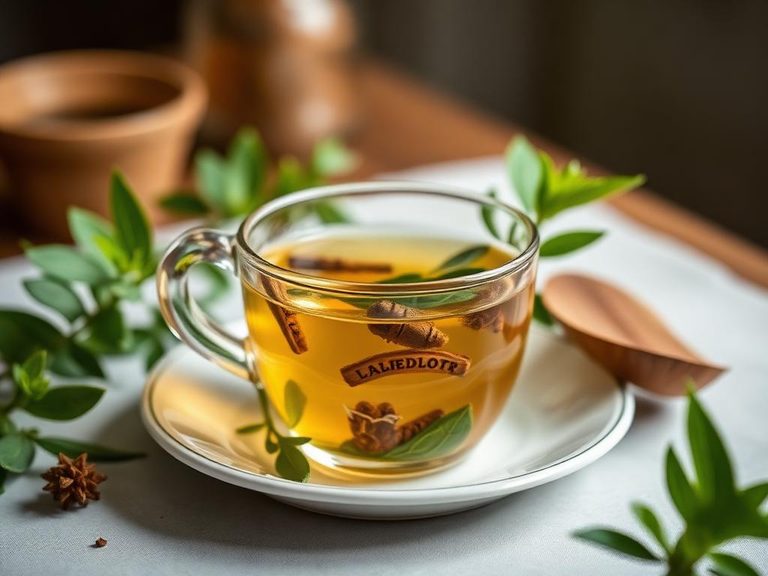
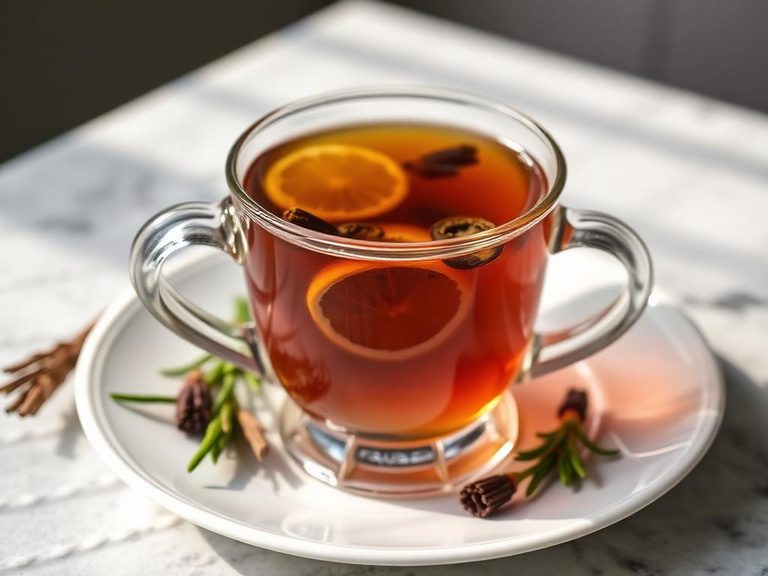
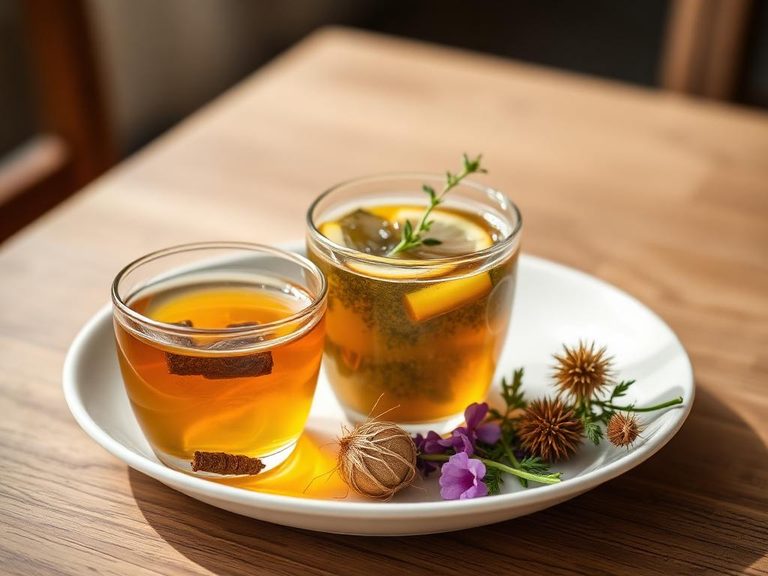
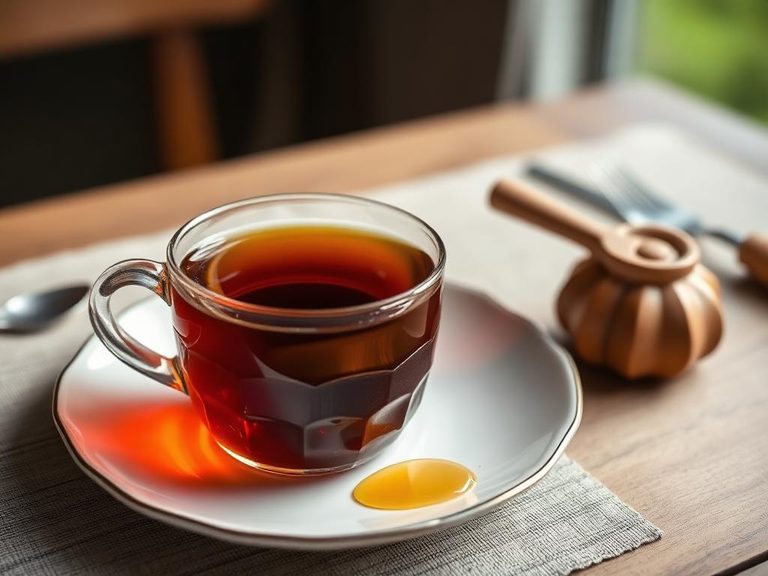
This is a traditional Alaska Native herbal tea, brewed from a blend of tundra plants like Labrador tea and other local herbs. It has a light, earthy, and slightly resinous flavor with a subtle floral note, and is typically enjoyed as a warm, aromatic infusion. Nutritionally, it is essentially calorie-free, providing hydration and trace plant compounds without any macronutrients.
Calorie split: 0% protein · 100% carbs · 0% fat
↓ Full nutrition💚 Why it's loved
People cherish it for its deep, earthy flavor that evokes the Alaskan wilderness and its role as a comforting, caffeine-free ritual. It is valued for its versatility as a standalone drink or as a base for sweetened or spiced variations.
⚠️ Watch-outs & how to enjoy it better
The strong, piney, or medicinal taste can be an acquired one for those unfamiliar with tundra botanicals. Some wild-harvested ingredients require proper identification and preparation to avoid potential toxicity, so sourcing from knowledgeable harvesters or reputable suppliers is essential.
Key benefits
- Naturally calorie-free beverage
- Source of traditional plant-based antioxidants
- Cultural and historical significance for Alaska Native peoples
- May support hydration and wellness routines
- Provides a connection to traditional ecological knowledge
🍽️ Popular dishes
🌍 Where it's eaten
💡 Did you know?
Labrador tea (Rhododendron groenlandicum) is a slow-growing evergreen shrub whose leaves were traditionally used by multiple Indigenous groups across the Arctic and subarctic, not just in Alaska.
Full nutrition (USDA data · scales with serving)
| Water | 99.7 g |
| Energy | 1.0 kcal |
| Energy | 3.0 kj |
| Protein | 0.00 g |
| Total lipid (fat) | 0.00 g |
| Ash | 0.10 g |
| Carbohydrate, by difference | 0.20 g |
| Calcium, Ca | 2.0 mg |
| Iron, Fe | 0.08 mg |
| Magnesium, Mg | 1.0 mg |
| Phosphorus, P | 0.00 mg |
| Potassium, K | 9.0 mg |
| Sodium, Na | 132 mg |
| Zinc, Zn | 0.04 mg |
| Copper, Cu | 0.02 mg |
| Manganese, Mn | 0.04 mg |
| Vitamin C, total ascorbic acid | 0.30 mg |
| Thiamin | 0.01 mg |
| Riboflavin | 0.00 mg |
| Niacin | 0.00 mg |
| Pantothenic acid | 0.01 mg |
| Vitamin B-6 | 0.00 mg |
| Folate, total | 1.0 ug |
| Folate, food | 1.0 ug |
| Vitamin B-12 | 0.00 ug |
| Vitamin A, IU | 0.00 iu |
Fat & fatty acid profile (per 100g)
| Fatty acids, total saturated | 0.00 g |
| Fatty acids, total monounsaturated | 0.00 g |
| Fatty acids, total polyunsaturated | 0.00 g |
| PUFA 18:2 | 0.00 g |
| PUFA 18:3 | 0.00 g |
| Cholesterol | 0.00 mg |
Amino acid profile (per 100g)
Estimated from Cookies, animal crackers (includes arrowroot, tea biscuits) — USDA does not publish this profile for Tea.
| Tryptophan | 0.10 g |
| Threonine | 0.19 g |
| Isoleucine | 0.26 g |
| Leucine | 0.47 g |
| Lysine | 0.24 g |
| Methionine | 0.12 g |
| Cystine | 0.15 g |
| Phenylalanine | 0.32 g |
| Tyrosine | 0.20 g |
| Valine | 0.30 g |
| Arginine | 0.26 g |
| Histidine | 0.14 g |
| Alanine | 0.21 g |
| Aspartic acid | 0.29 g |
| Glutamic acid | 2.3 g |
| Glycine | 0.23 g |
| Proline | 0.76 g |
| Serine | 0.36 g |
FAQ
Is this tea caffeinated?
No, traditional Alaska Native herbal teas made from tundra plants like Labrador tea are naturally caffeine-free.
Can I find this tea in stores?
It is primarily a wild-harvested or artisanal product. You may find it at specialty stores, from Alaska Native artisans, or through online retailers focused on indigenous foods.
How is it traditionally prepared?
The leaves are typically dried, then steeped in hot water for several minutes. Some traditions involve a brief rinse of the leaves before brewing.
Nutrient density (calculated · NRF9.3)
Nutrient Rich Foods index: beneficial nutrients (protein, fiber, vitamins, minerals) minus saturated fat, added sugar & sodium, per 100 kcal.
NRF9.3 index — Fulgoni, Keast & Drewnowski, 2009. Computed from USDA nutrients.
Weight-loss friendliness (composite index)
Energy density 0.01 kcal/g · 0% calories from protein · 0.0 g fiber · 0.0 g sugar per 100 g.
Composite of energy density (Rolls et al., 1999), protein & fiber satiety, minus sugar. A calculated heuristic — ranks satiety-per-calorie, not a clinical measure.
Dietary load (calculated from USDA values)
Potential renal acid load. Positive = acid-forming, negative = alkaline-forming.
Sodium-to-potassium ratio: 14.67 (lower is better — aim for ≤ 1)
Sodium:potassium per WHO potassium guidance. Computed from USDA nutrients.