

Oscar Mayer, Bologna (beef)
Whole food · Sausages and Luncheon Meats

Photo: Wikipedia
Oscar Mayer Bologna is a classic, finely ground, emulsified beef sausage with a distinctive pink hue and a smooth, springy texture that yields a soft, slightly smoky bite. Nutritionally, it's a calorie-dense, high-fat protein source, providing nearly 30 grams of fat per 100g, making it a significant energy contributor in a sandwich or snack.
Calorie split: 14% protein · 3% carbs · 83% fat
↓ Full nutrition💚 Why it's loved
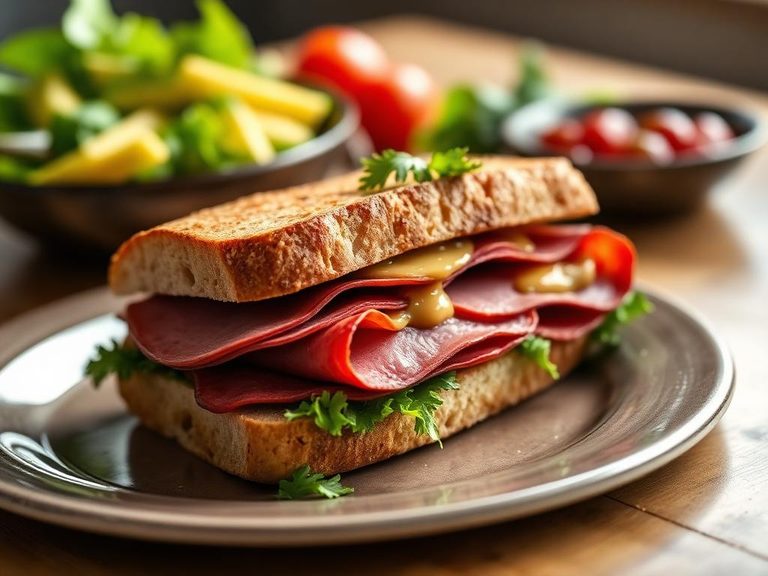
People love it for its nostalgic, mild, and savory flavor that pairs perfectly with mustard and white bread, embodying a quintessential American lunchbox staple. Its soft texture and ease of preparation make it a go-to for quick, satisfying sandwiches.
⚠️ Watch-outs & how to enjoy it better
Its high saturated fat and sodium content can be a concern for heart health, and it offers minimal fiber or micronutrients. To counteract, pair it with fiber-rich vegetables like lettuce, tomato, or onion, and choose whole-grain bread to add nutrients and slow digestion.
Key benefits
- High in protein for muscle maintenance.
- Provides quick energy from its fat content.
- Shelf-stable and convenient for packed lunches.
- A familiar, mild-flavored entry point for introducing processed meats.
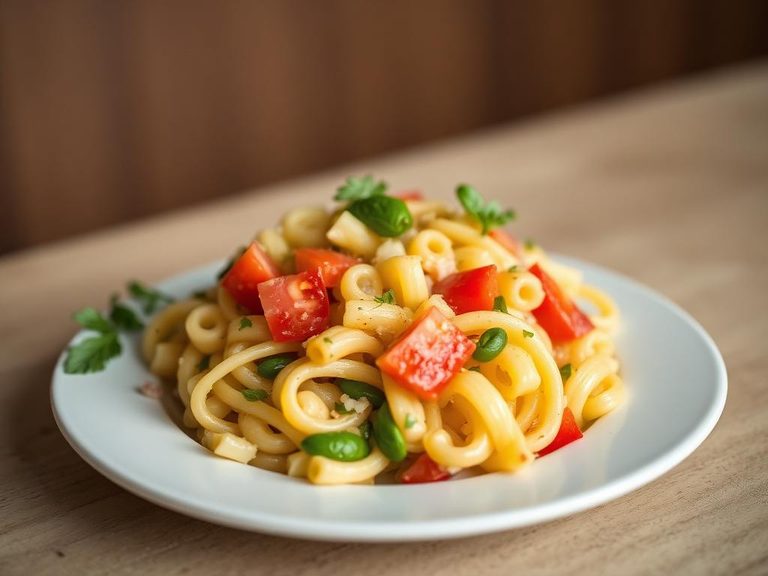
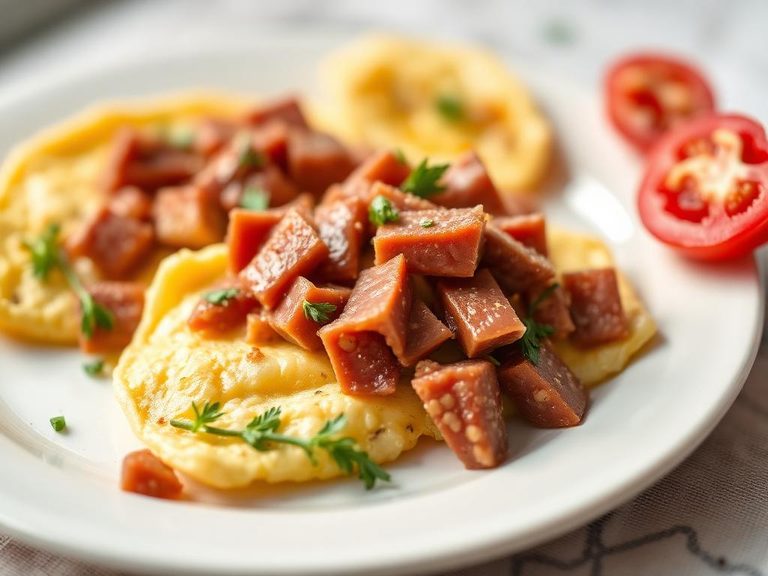
🍽️ Popular dishes



🌍 Where it's eaten
💡 Did you know?
The name 'bologna' derives from the Italian city of Bologna, where a similar sausage, mortadella, originated, though the American version is a distinct, more finely processed product.
Full nutrition (USDA data · scales with serving)
| Water | 54.1 g |
| Energy | 316 kcal |
| Energy | 1322 kj |
| Protein | 11.1 g |
| Total lipid (fat) | 29.1 g |
| Ash | 3.3 g |
| Carbohydrate, by difference | 2.5 g |
| Fiber, total dietary | 0.00 g |
| Total Sugars | 1.4 g |
| Calcium, Ca | 12.0 mg |
| Iron, Fe | 1.4 mg |
| Magnesium, Mg | 14.0 mg |
| Phosphorus, P | 109 mg |
| Potassium, K | 168 mg |
| Sodium, Na | 1179 mg |
| Zinc, Zn | 2.0 mg |
| Copper, Cu | 0.11 mg |
| Vitamin C, total ascorbic acid | 0.00 mg |
| Thiamin | 0.05 mg |
| Riboflavin | 0.11 mg |
| Niacin | 2.4 mg |
| Pantothenic acid | 0.28 mg |
| Vitamin B-6 | 0.17 mg |
| Folate, total | 13.0 ug |
| Folic acid | 0.00 ug |
| Folate, food | 13.0 ug |
| Folate, DFE | 13.0 ug |
| Vitamin B-12 | 1.4 ug |
| Vitamin A, RAE | 0.00 ug |
| Retinol | 0.00 ug |
| Carotene, beta | 0.00 ug |
| Carotene, alpha | 0.00 ug |
| Cryptoxanthin, beta | 0.00 ug |
| Vitamin A, IU | 0.00 iu |
| Lycopene | 0.00 ug |
| Lutein + zeaxanthin | 0.00 ug |
| Vitamin D (D2 + D3), International Units | 32.0 iu |
| Vitamin D (D2 + D3) | 0.80 ug |
| Alcohol, ethyl | 0.00 g |
| Caffeine | 0.00 mg |
| Theobromine | 0.00 mg |
Fat & fatty acid profile (per 100g)
| Fatty acids, total saturated | 12.8 g |
| SFA 12:0 | 0.02 g |
| SFA 14:0 | 0.98 g |
| SFA 16:0 | 7.5 g |
| SFA 18:0 | 4.3 g |
| Fatty acids, total monounsaturated | 15.2 g |
| MUFA 16:1 | 1.6 g |
| MUFA 18:1 | 13.6 g |
| Fatty acids, total polyunsaturated | 1.1 g |
| PUFA 18:2 | 0.86 g |
| PUFA 18:3 | 0.25 g |
| Cholesterol | 64.0 mg |
FAQ
Is Oscar Mayer Bologna cooked?
Yes, it is a pre-cooked, ready-to-eat product. It can be eaten cold or heated, such as when fried.
What's the difference between beef bologna and regular bologna?
Regular bologna is typically a blend of meats (beef, pork, chicken), while Oscar Mayer's 'Bologna (beef)' is made exclusively from beef.
Can I freeze bologna?
Yes, you can freeze it for up to 1-2 months. The texture may become slightly crumbly upon thawing, but it remains safe to eat.
Nutrient density (calculated · NRF9.3)
Nutrient Rich Foods index: beneficial nutrients (protein, fiber, vitamins, minerals) minus saturated fat, added sugar & sodium, per 100 kcal.
NRF9.3 index — Fulgoni, Keast & Drewnowski, 2009. Computed from USDA nutrients.
Weight-loss friendliness (composite index)
Energy density 3.16 kcal/g · 14% calories from protein · 0.0 g fiber · 1.4 g sugar per 100 g.
Composite of energy density (Rolls et al., 1999), protein & fiber satiety, minus sugar. A calculated heuristic — ranks satiety-per-calorie, not a clinical measure.
Dietary load (calculated from USDA values)
Potential renal acid load. Positive = acid-forming, negative = alkaline-forming.
Sodium-to-potassium ratio: 7.02 (lower is better — aim for ≤ 1)
Sodium:potassium per WHO potassium guidance. Computed from USDA nutrients.