

Rice, red, unenriched, dry, raw
Whole food · Cereal Grains and Pasta
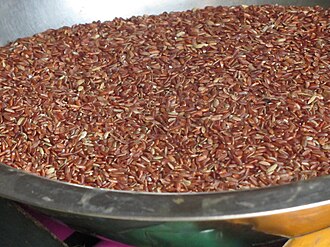
Photo: Wikipedia
Red rice is a whole-grain rice with a deep, nutty flavor and a pleasantly chewy texture. Its striking reddish-brown bran layer is packed with antioxidants, giving it a distinct earthy aroma. It offers a robust nutritional profile with significantly more fiber and protein than many refined white rice varieties.
Calorie split: 9% protein · 82% carbs · 8% fat
↓ Full nutrition💚 Why it's loved
People love its hearty, nutty taste and firm, chewy texture that holds up well in salads and pilafs. It's also celebrated for its vibrant color and cultural significance in many traditional cuisines.
⚠️ Watch-outs & how to enjoy it better
Its chewy texture and longer cooking time can be off-putting to those used to soft white rice. For individuals managing blood sugar, its carbohydrate content (76g per 100g dry) still requires portion control; pairing it with protein (like lentils or chicken) and healthy fats (like olive oil) can help moderate blood sugar response.
Key benefits
- Rich in antioxidants like anthocyanins from its red bran layer
- Good source of dietary fiber for digestive health and satiety
- Provides plant-based protein (8.56g per 100g dry)
- Contains essential minerals like iron and zinc
- Whole grain with a lower glycemic index than white rice
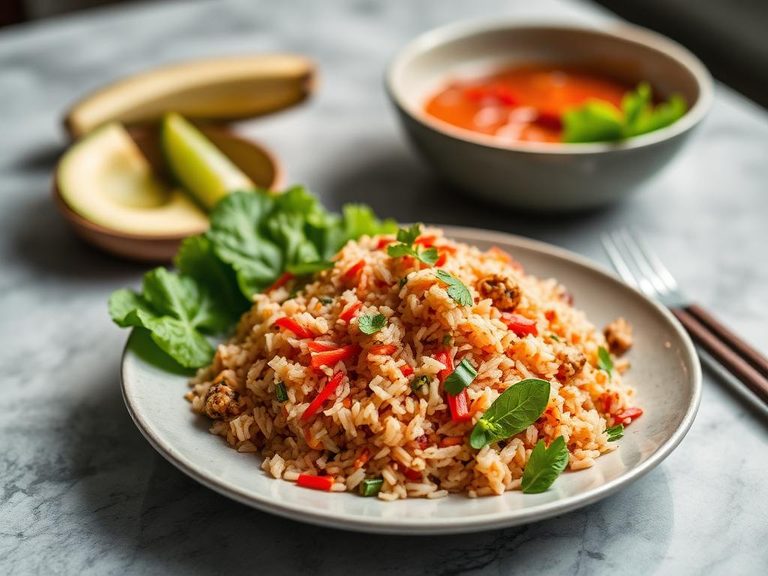
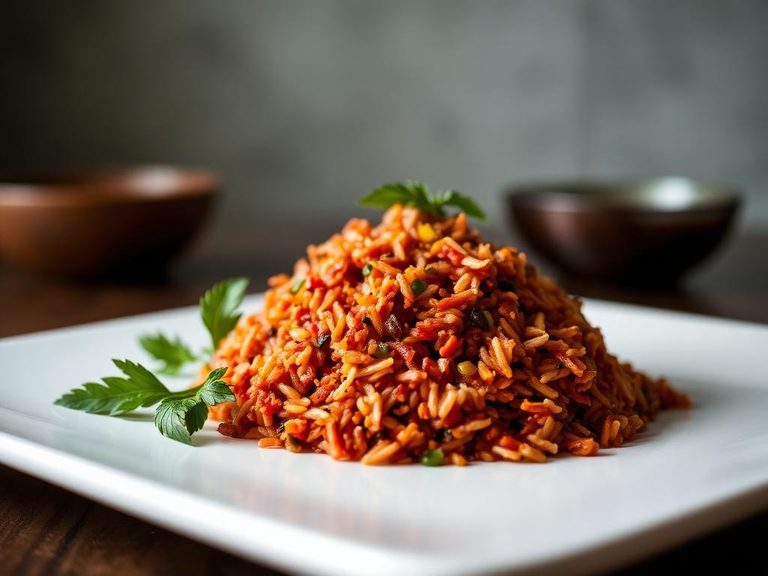
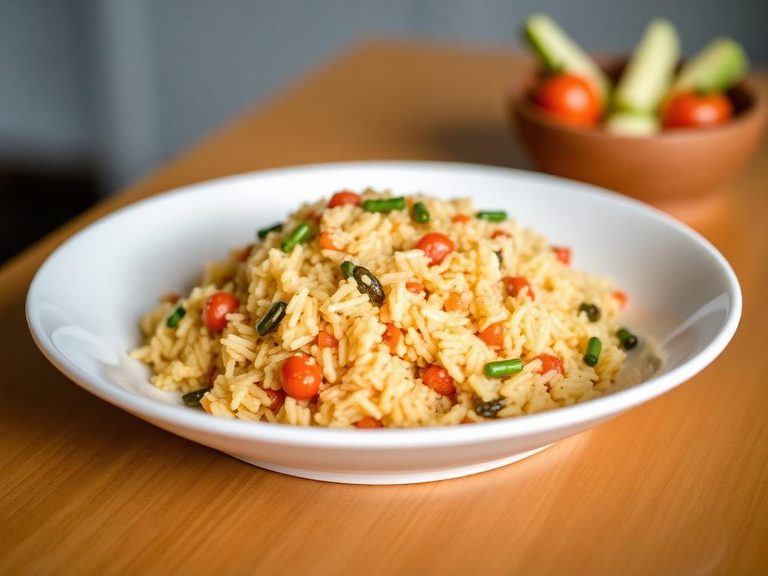
🍽️ Popular dishes
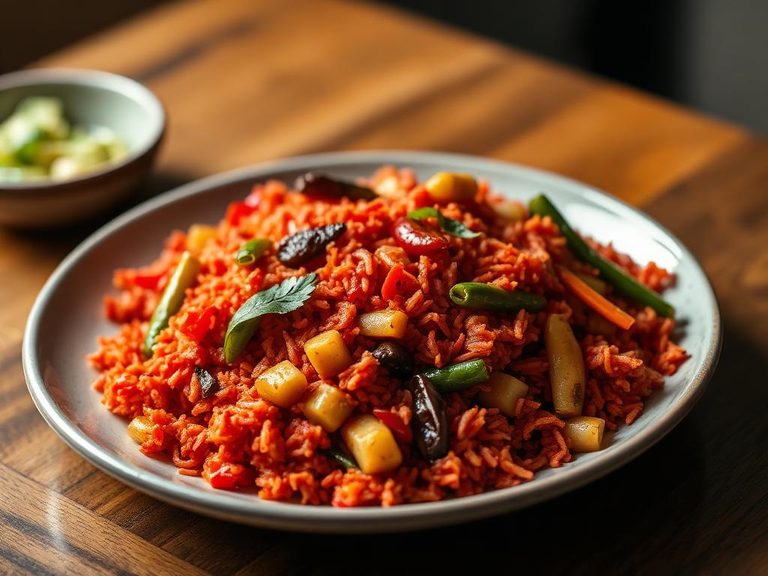
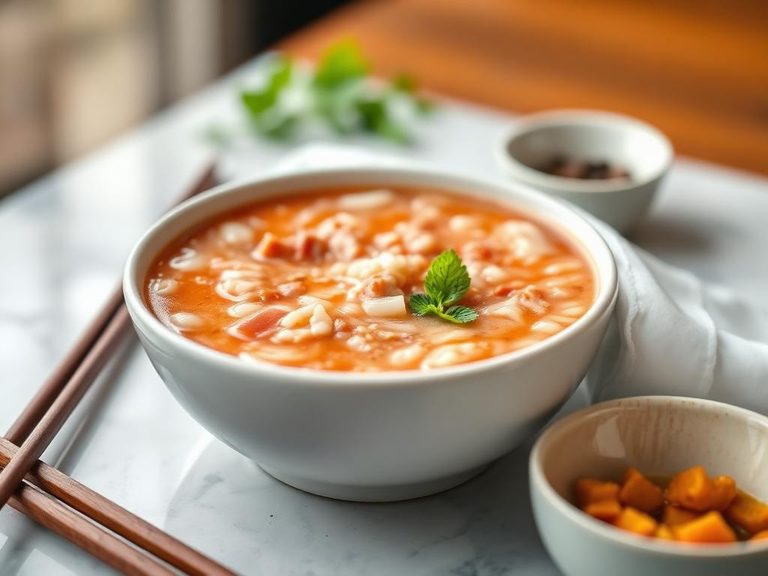
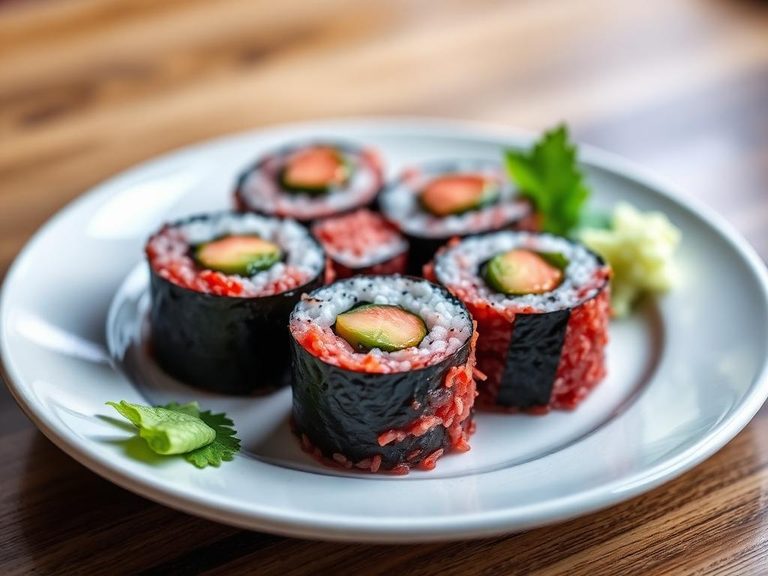
🌍 Where it's eaten
💡 Did you know?
The red color of red rice comes from anthocyanins, the same powerful antioxidants found in blueberries and red grapes.
Full nutrition (USDA data · scales with serving)
| Water | 10.5 g |
| Energy (Atwater General Factors) | 370 kcal |
| Energy (Atwater Specific Factors) | 360 kcal |
| Nitrogen | 1.4 g |
| Protein | 8.6 g |
| Total lipid (fat) | 3.4 g |
| Ash | 1.3 g |
| Carbohydrate, by difference | 76.2 g |
| Fiber, total dietary | 4.2 g |
| Starch | 70.8 g |
| Calcium, Ca | 9.2 mg |
| Iron, Fe | 1.2 mg |
| Magnesium, Mg | 126 mg |
| Phosphorus, P | 314 mg |
| Potassium, K | 245 mg |
| Sodium, Na | 0.44 mg |
| Zinc, Zn | 2.6 mg |
| Copper, Cu | 0.27 mg |
| Manganese, Mn | 2.6 mg |
| Thiamin | 0.34 mg |
| Niacin | 6.7 mg |
| Vitamin B-6 | 0.14 mg |
| Biotin | 4.8 ug |
Fat & fatty acid profile (per 100g)
Estimated from Rice, brown, medium-grain, cooked (Includes foods for USDA's Food Distribution Program) — USDA does not publish this profile for Rice.
| Fatty acids, total saturated | 0.17 g |
| SFA 12:0 | 0.00 g |
| SFA 14:0 | 0.00 g |
| SFA 16:0 | 0.14 g |
| SFA 18:0 | 0.01 g |
| Fatty acids, total monounsaturated | 0.30 g |
| MUFA 16:1 | 0.00 g |
| MUFA 18:1 | 0.30 g |
| Fatty acids, total polyunsaturated | 0.30 g |
| PUFA 18:2 | 0.28 g |
| PUFA 18:3 | 0.01 g |
| Cholesterol | 0.00 mg |
Amino acid profile (per 100g)
Estimated from Rice, brown, medium-grain, cooked (Includes foods for USDA's Food Distribution Program) — USDA does not publish this profile for Rice.
| Tryptophan | 0.03 g |
| Threonine | 0.09 g |
| Isoleucine | 0.10 g |
| Leucine | 0.19 g |
| Lysine | 0.09 g |
| Methionine | 0.05 g |
| Cystine | 0.03 g |
| Phenylalanine | 0.12 g |
| Tyrosine | 0.09 g |
| Valine | 0.14 g |
| Arginine | 0.17 g |
| Histidine | 0.06 g |
| Alanine | 0.14 g |
| Aspartic acid | 0.22 g |
| Glutamic acid | 0.47 g |
| Glycine | 0.11 g |
| Proline | 0.11 g |
| Serine | 0.12 g |
FAQ
Is red rice the same as brown rice?
No, red rice is a distinct variety with a red bran layer, while brown rice has a brown bran layer. Both are whole grains, but red rice has a nuttier flavor and higher antioxidant content.
How do I cook red rice?
Rinse the rice, then use a 1:2.5 water-to-rice ratio. Simmer covered for 30-40 minutes until tender but chewy. Let it rest for 10 minutes before fluffing with a fork.
Is red rice gluten-free?
Yes, red rice is naturally gluten-free, making it a safe option for those with celiac disease or gluten sensitivity.
Nutrient density (calculated · NRF9.3)
Nutrient Rich Foods index: beneficial nutrients (protein, fiber, vitamins, minerals) minus saturated fat, added sugar & sodium, per 100 kcal.
NRF9.3 index — Fulgoni, Keast & Drewnowski, 2009. Computed from USDA nutrients.
Weight-loss friendliness (composite index)
Energy density 3.70 kcal/g · 9% calories from protein · 4.2 g fiber · 0.0 g sugar per 100 g.
Composite of energy density (Rolls et al., 1999), protein & fiber satiety, minus sugar. A calculated heuristic — ranks satiety-per-calorie, not a clinical measure.
Dietary load (calculated from USDA values)
Potential renal acid load. Positive = acid-forming, negative = alkaline-forming.
Sodium-to-potassium ratio: 0.00 (lower is better — aim for ≤ 1)
Sodium:potassium per WHO potassium guidance. Computed from USDA nutrients.