

Red Rice Sushi
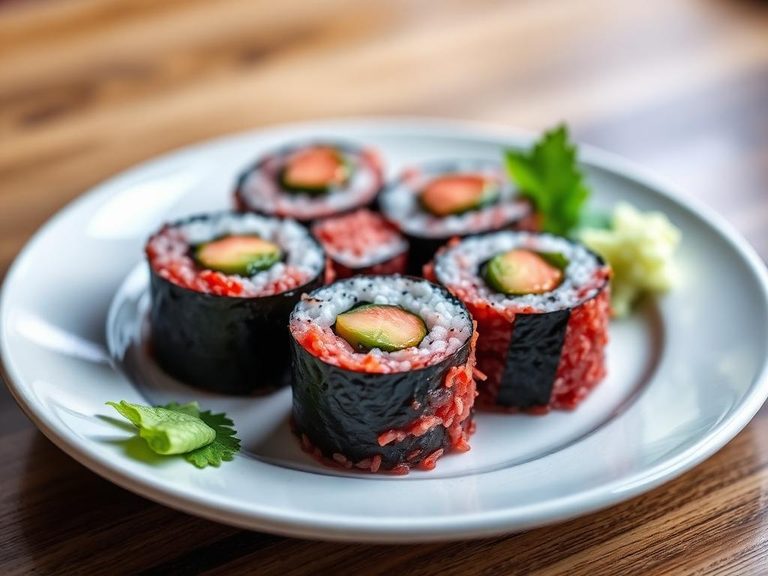
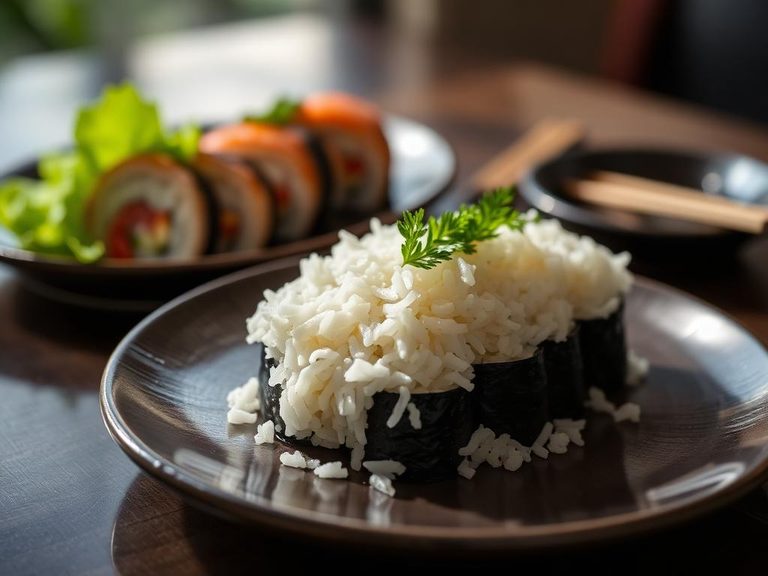
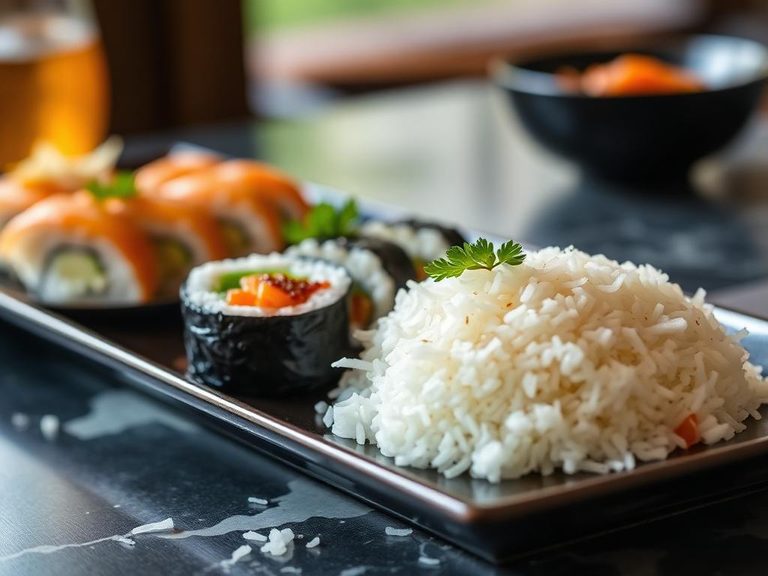
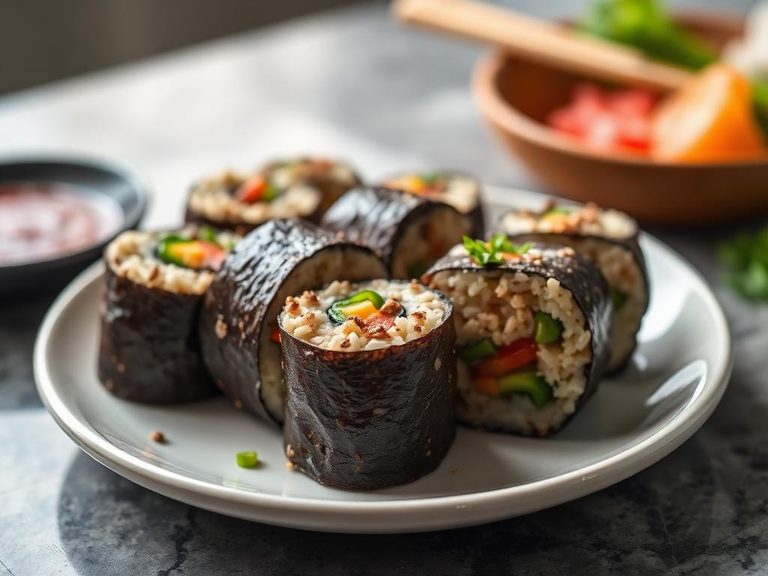
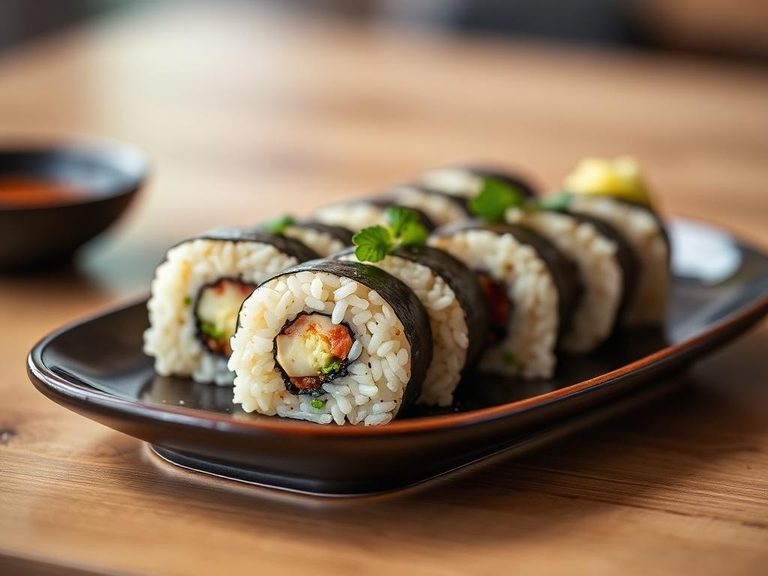
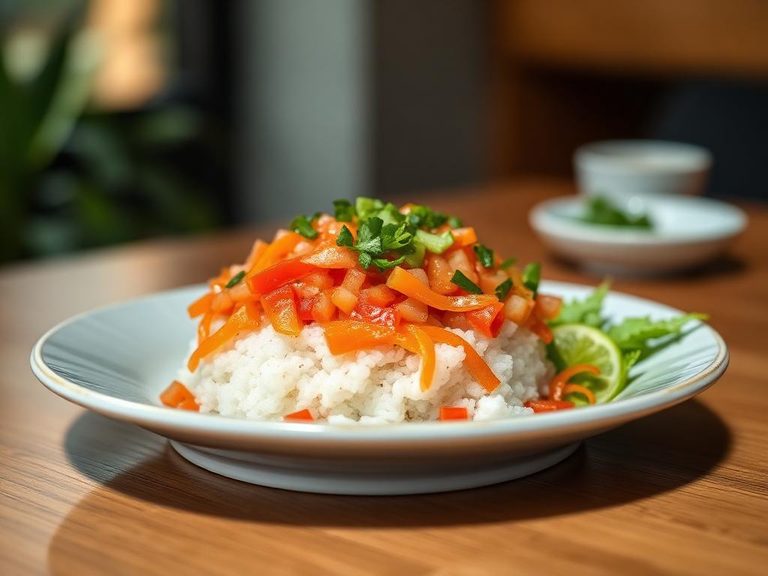
Red Rice Sushi is a modern twist on traditional Japanese sushi, featuring vibrant red rice (often colored with beetroot, red shiso, or other natural ingredients) as the base. It typically includes classic sushi fillings like fresh fish, avocado, cucumber, and seaweed, wrapped in a sheet of nori. This variation is popular in contemporary sushi restaurants and fusion cuisine, blending visual appeal with familiar flavors.
🍳 View the full Red Rice Sushi recipe →
🍽️ Nutrition at a glance
Red Rice Sushi is generally high in carbohydrates from the rice, with moderate protein from fish or tofu and healthy fats from ingredients like avocado or sesame seeds. A typical serving (about 6-8 pieces) provides key nutrients like omega-3 fatty acids, fiber, and vitamins, with a calorie range of approximately 300-400 calories depending on fillings and portion size.
Nutrition breakdown
| Calories | 210 kcal |
| Protein | 4.5 g |
| Carbs | 42 g |
| Fat | 2.5 g |
| Fiber | 3 g |
| Sugar | 3 g |
| Sodium | 320 mg |
| Iron | 1.8 mg |
| Magnesium | 45 mg |
| Phosphorus | 120 mg |
| Manganese | 1.5 mg |
| Selenium | 12 mcg |
| Thiamin (B1) | 0.15 mg |
| Niacin (B3) | 3.0 mg |
| Folate | 60 mcg |
Per 1 cup (180 g) · estimated, varies by recipe
💡 What's interesting
Culturally, Red Rice Sushi showcases how traditional dishes evolve through creative presentation and ingredient innovation, often using natural colorants to enhance visual appeal without compromising taste. Nutritionally, the red rice may offer added antioxidants or nutrients from its coloring agents, making it a visually striking and potentially more nutrient-dense option compared to plain white rice sushi.
🍽️ Related dishes
AI estimate may be inaccurate · Terms