

Sushi rice vinegar mixture
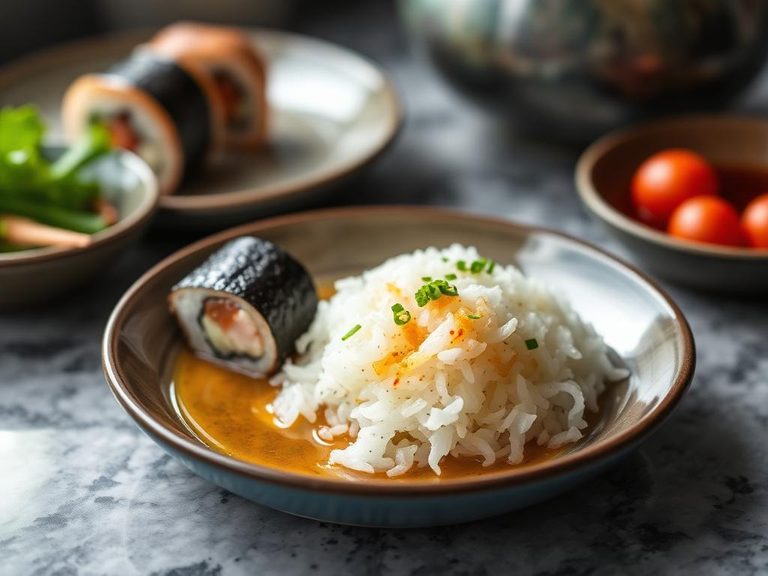
Sushi rice vinegar mixture, known as 'sushi-zu', is a seasoned liquid used to flavor cooked short-grain rice for sushi. Its typical ingredients are rice vinegar, sugar, and salt, sometimes with a piece of kombu (kelp) added for umami. It originates from Japan and is the essential seasoning that gives sushi rice its characteristic glossy appearance, sticky texture, and balanced sweet-sour flavor.
🍳 View the full Sushi rice vinegar mixture recipe →
🍽️ Nutrition at a glance
This mixture is primarily a source of simple carbohydrates from the added sugar and vinegar, with negligible fat and protein. A typical tablespoon-sized serving contains roughly 10-15 calories, but it is used in small quantities to season a larger batch of rice, making its nutritional contribution per serving of finished sushi minimal.
Nutrition breakdown
| Calories | 45 kcal |
| Protein | 0.5 g |
| Carbs | 11 g |
| Fat | 0 g |
| Fiber | 0 g |
| Sugar | 10 g |
| Sodium | 250 mg |
| Sodium | 250 mg |
| Potassium | 15 mg |
| Iron | 0.1 mg |
| Manganese | 0.2 mg |
| Vitamin B1 (Thiamine) | 0.01 mg |
| Vitamin B2 (Riboflavin) | 0.01 mg |
| Vitamin B3 (Niacin) | 0.1 mg |
| Folate | 2 mcg |
Per 1/4 cup (60 g) · estimated, varies by recipe
💡 What's interesting
Culturally, the precise balance of this vinegar mixture is considered a chef's signature and a closely guarded secret in traditional sushi restaurants. Nutritionally, the acetic acid in the vinegar may help slow the rate at which the rice's starches are digested, potentially leading to a more gradual rise in blood sugar compared to plain white rice.
🍽️ Related dishes

AI estimate may be inaccurate · Terms