

Pasta, gluten-free, rice flour and rice bran extract, cooked, DE BOLES
Whole food · Cereal Grains and Pasta
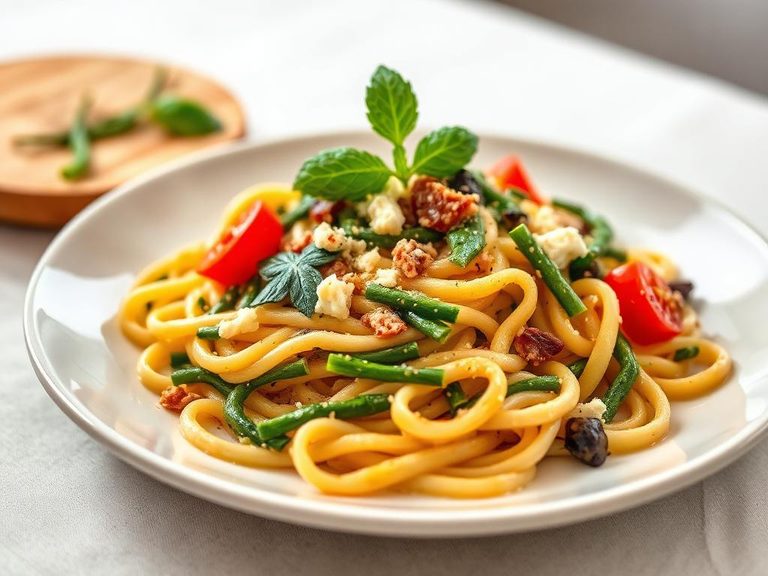
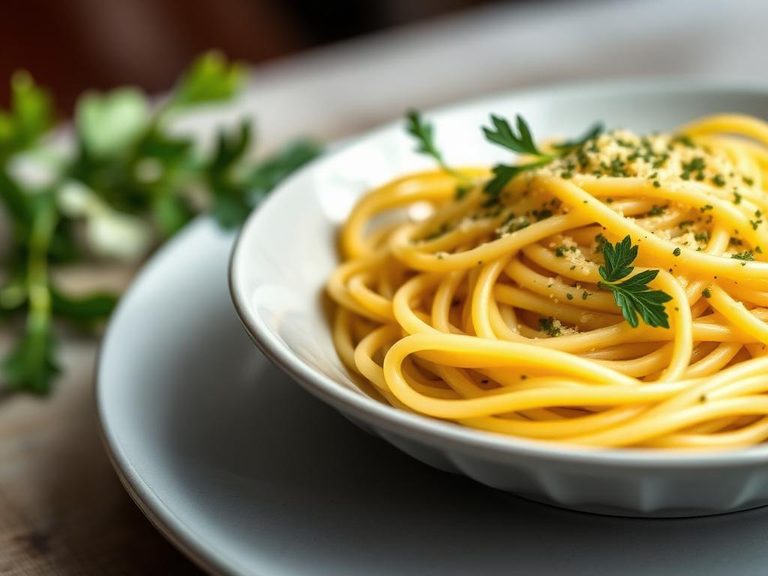
This is a gluten-free pasta made from rice flour and rice bran extract, offering a smooth, slightly chewy texture with a mild, neutral flavor that readily absorbs sauces. Nutritionally, it's a solid source of energy, providing 200 kcal and over 40g of carbohydrates per 100g cooked portion, with a modest protein content.
Calorie split: 9% protein · 84% carbs · 8% fat
↓ Full nutrition💚 Why it's loved
People love it for its ability to deliver the comforting experience of pasta without gluten, acting as a reliable canvas for everything from simple olive oil and garlic to rich, hearty ragùs. Its neutral taste makes it a family-friendly option that doesn't overpower other flavors in a dish.
⚠️ Watch-outs & how to enjoy it better
As a high-carbohydrate, low-protein and low-fat food, it can cause rapid blood-sugar spikes if eaten alone or in large portions. To counteract this, pair it with protein (like chicken, fish, or legumes) and healthy fats (like olive oil or avocado) to slow digestion, and practice portion control.
Key benefits
- Gluten-free alternative for celiac or gluten-sensitive diets
- Good source of quick-release energy from complex carbohydrates
- Low in fat and contains dietary fiber from rice bran
- Versatile base that pairs with a wide range of sauces and ingredients
🍽️ Popular dishes
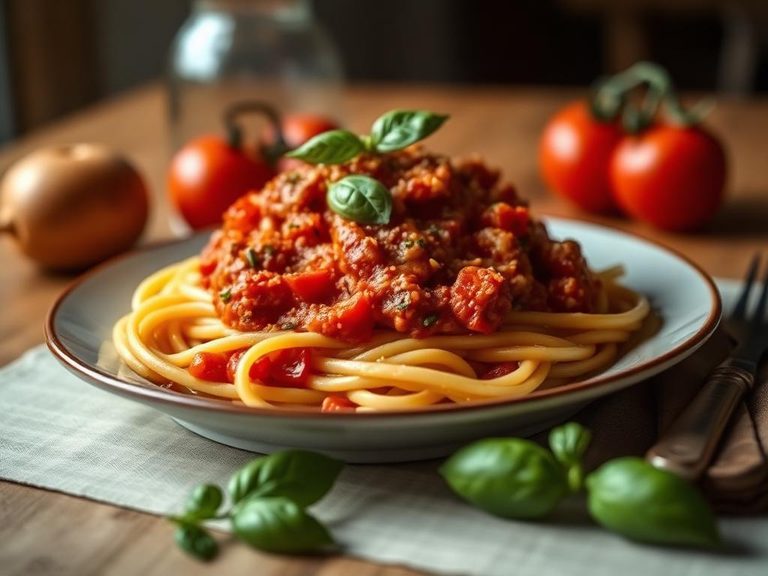
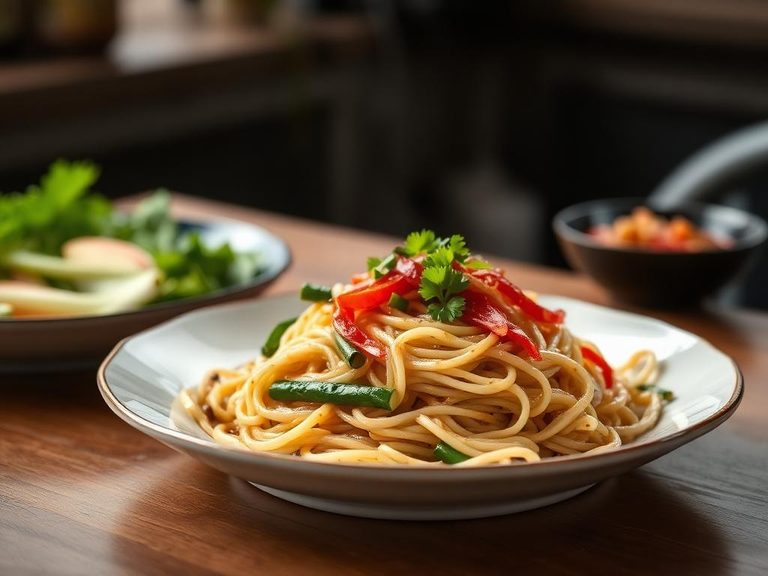
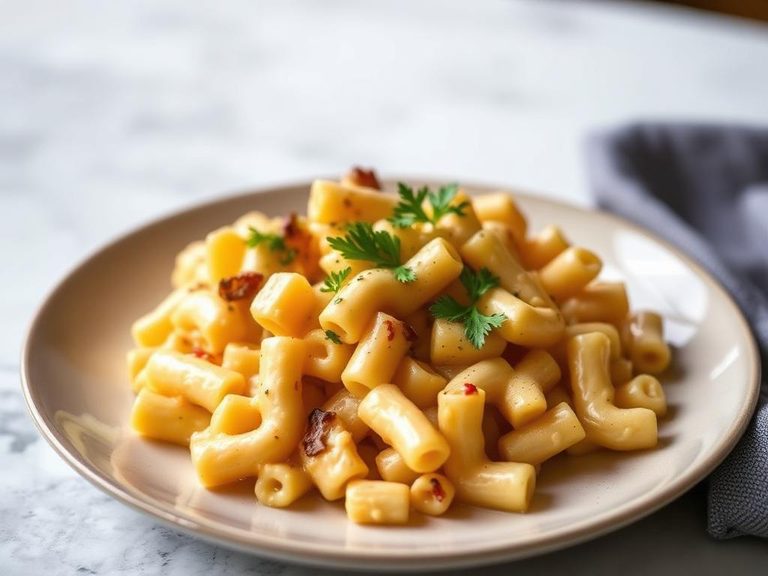
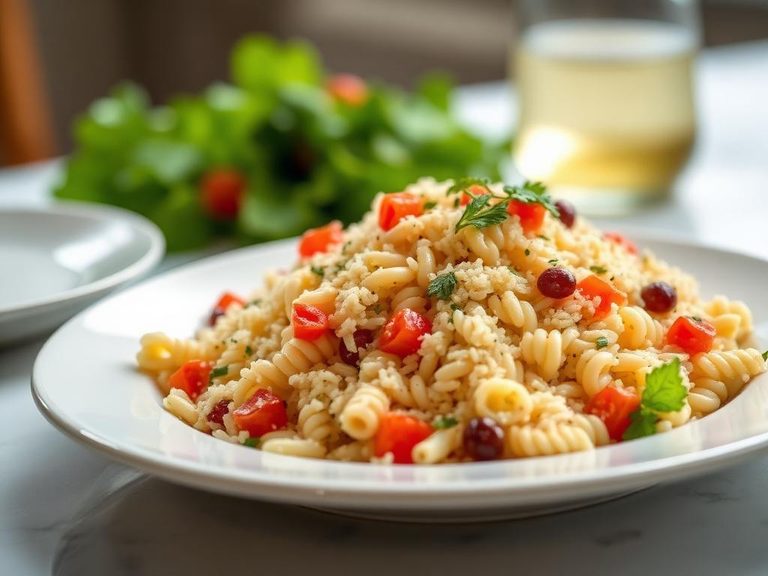
🌍 Where it's eaten
💡 Did you know?
The inclusion of rice bran extract not only boosts the fiber content but also gives the pasta a slightly nuttier undertone and a more interesting texture compared to plain rice flour pasta.
Full nutrition (USDA data · scales with serving)
| Water | 52.8 g |
| Energy | 200 kcal |
| Energy | 836 kj |
| Protein | 4.2 g |
| Total lipid (fat) | 1.7 g |
| Ash | 0.54 g |
| Carbohydrate, by difference | 40.8 g |
| Fiber, total dietary | 1.9 g |
| Total Sugars | 0.00 g |
| Sucrose | 0.00 g |
| Glucose | 0.00 g |
| Fructose | 0.00 g |
| Lactose | 0.00 g |
| Maltose | 0.00 g |
| Galactose | 0.00 g |
| Starch | 36.3 g |
| Calcium, Ca | 21.0 mg |
| Iron, Fe | 0.62 mg |
| Magnesium, Mg | 52.0 mg |
| Phosphorus, P | 132 mg |
| Potassium, K | 55.0 mg |
| Sodium, Na | 4.0 mg |
| Zinc, Zn | 1.1 mg |
| Copper, Cu | 0.13 mg |
| Manganese, Mn | 1.9 mg |
| Vitamin C, total ascorbic acid | 0.00 mg |
| Folic acid | 0.00 ug |
| Retinol | 0.00 ug |
| Lycopene | 0.00 ug |
| Alcohol, ethyl | 0.00 g |
| Caffeine | 0.00 mg |
| Theobromine | 0.00 mg |
Fat & fatty acid profile (per 100g)
| Cholesterol | 0.00 mg |
Amino acid profile (per 100g)
Estimated from Pasta, gluten-free, corn, dry — USDA does not publish this profile for Pasta.
| Tryptophan | 0.05 g |
| Threonine | 0.28 g |
| Isoleucine | 0.27 g |
| Leucine | 0.92 g |
| Lysine | 0.21 g |
| Methionine | 0.16 g |
| Cystine | 0.13 g |
| Phenylalanine | 0.37 g |
| Tyrosine | 0.30 g |
| Valine | 0.38 g |
| Arginine | 0.37 g |
| Histidine | 0.23 g |
| Alanine | 0.56 g |
| Aspartic acid | 0.52 g |
| Glutamic acid | 1.4 g |
| Glycine | 0.31 g |
| Proline | 0.65 g |
| Serine | 0.35 g |
FAQ
How does the texture differ from wheat pasta?
It tends to be slightly softer and can be more delicate, with a smooth, sometimes slightly gummy or chewy bite depending on the brand and cooking time.
Is it suitable for a low-carb diet?
No, with over 40g of carbohydrates per 100g, it is a high-carb food and not suitable for low-carb or ketogenic diets.
How should I store cooked leftovers?
Store in an airtight container in the refrigerator for up to 3-4 days. Reheat gently in a pan with a splash of water or sauce to prevent it from becoming too soft.
Nutrient density (calculated · NRF9.3)
Nutrient Rich Foods index: beneficial nutrients (protein, fiber, vitamins, minerals) minus saturated fat, added sugar & sodium, per 100 kcal.
NRF9.3 index — Fulgoni, Keast & Drewnowski, 2009. Computed from USDA nutrients.
Weight-loss friendliness (composite index)
Energy density 2.00 kcal/g · 8% calories from protein · 1.9 g fiber · 0.0 g sugar per 100 g.
Composite of energy density (Rolls et al., 1999), protein & fiber satiety, minus sugar. A calculated heuristic — ranks satiety-per-calorie, not a clinical measure.
Dietary load (calculated from USDA values)
Potential renal acid load. Positive = acid-forming, negative = alkaline-forming.
Sodium-to-potassium ratio: 0.07 (lower is better — aim for ≤ 1)
Sodium:potassium per WHO potassium guidance. Computed from USDA nutrients.