

Egg, white, dried
Whole food · Dairy and Egg Products

Photo: Wikipedia
Dried egg white is a shelf-stable, pure protein powder made by dehydrating egg whites. It has a neutral, slightly sulfurous taste and a fine, chalky texture that dissolves easily in liquids or batters. Nutritionally, it's a powerhouse, delivering nearly 80 grams of protein per 100 grams with virtually no fat or carbohydrates.
Calorie split: 91% protein · 7% carbs · 2% fat
↓ Full nutrition💚 Why it's loved
People love it as a clean, efficient protein source that doesn't alter the flavor of smoothies, baked goods, or protein shakes. Its versatility makes it a staple for athletes, bakers, and anyone looking to boost protein intake without added fats or sugars.
⚠️ Watch-outs & how to enjoy it better
The main downside is its potential to cause digestive discomfort or bloating in some individuals due to its concentrated protein load. It's also a common allergen (egg). To counteract this, start with small portions (e.g., 10-15g) and gradually increase intake, and always pair it with adequate water to aid digestion.
Key benefits
- Exceptionally high in complete protein for muscle repair and satiety.
- Virtually fat-free and very low in carbohydrates.
- Long shelf life without refrigeration.
- Versatile for boosting protein in both sweet and savory recipes.
- Rich in albumin, a protein known for its gelling and foaming properties.
🍽️ Popular dishes


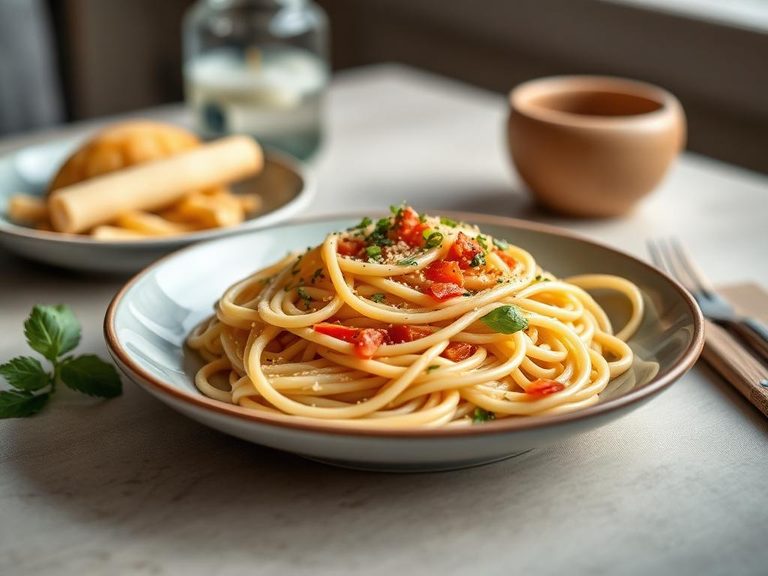
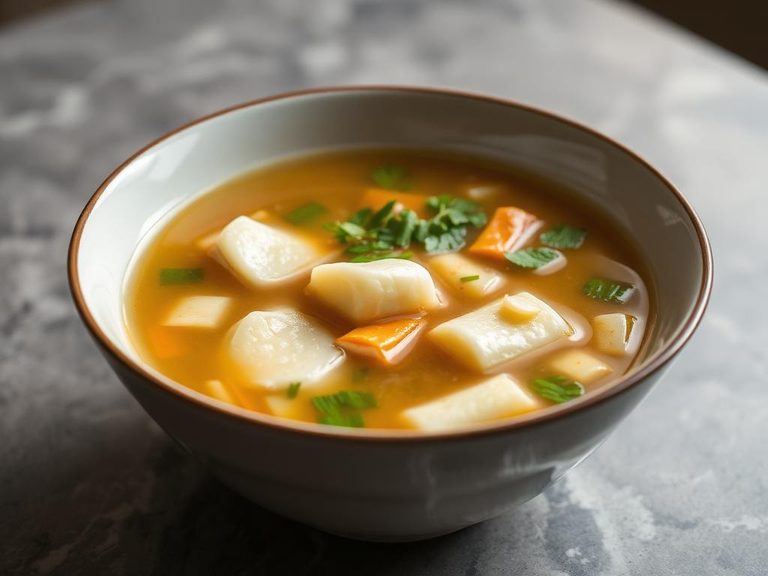
🌍 Where it's eaten
💡 Did you know?
Dried egg whites were a critical, lightweight protein source for soldiers during World War II and the early space program.
Full nutrition (USDA data · scales with serving)
| Water | 8.0 g |
| Energy (Atwater General Factors) | 350 kcal |
| Energy (Atwater Specific Factors) | 376 kcal |
| Energy | 376 kcal |
| Energy | 1570 kj |
| Nitrogen | 12.8 g |
| Protein | 79.9 g |
| Total lipid (fat) | 0.65 g |
| Ash | 5.5 g |
| Carbohydrate, by difference | 6.0 g |
| Calcium, Ca | 104 mg |
| Iron, Fe | 0.00 mg |
| Magnesium, Mg | 87.6 mg |
| Phosphorus, P | 107 mg |
| Potassium, K | 959 mg |
| Sodium, Na | 1250 mg |
| Zinc, Zn | 0.43 mg |
| Copper, Cu | 0.00 mg |
| Manganese, Mn | 0.00 mg |
| Iodine, I | 34.0 ug |
| Vitamin D (D2 + D3), International Units | 0.00 iu |
| Vitamin D (D2 + D3) | 0.00 ug |
| Vitamin D2 (ergocalciferol) | 0.00 ug |
| Vitamin D3 (cholecalciferol) | 0.00 ug |
| 25-hydroxycholecalciferol | 0.00 ug |
Fat & fatty acid profile (per 100g)
| Cholesterol | 17.0 mg |
Amino acid profile (per 100g)
Estimated from Egg, whole, raw, frozen, salted, pasteurized — USDA does not publish this profile for Egg.
| Tryptophan | 0.23 g |
| Threonine | 0.48 g |
| Isoleucine | 0.56 g |
| Leucine | 0.94 g |
| Lysine | 0.79 g |
| Methionine | 0.30 g |
| Cystine | 0.24 g |
| Phenylalanine | 0.58 g |
| Tyrosine | 0.46 g |
| Valine | 0.67 g |
| Arginine | 0.70 g |
| Histidine | 0.27 g |
| Alanine | 0.61 g |
| Aspartic acid | 1.1 g |
| Glutamic acid | 1.4 g |
| Glycine | 0.36 g |
| Proline | 0.42 g |
| Serine | 0.85 g |
FAQ
How does dried egg white compare to fresh egg whites?
Dried egg white is essentially concentrated fresh egg white with the water removed. About 1/3 cup of dried powder is equivalent to the whites of approximately 12 large eggs.
Can I use it to make meringue?
Yes, it's excellent for meringue. Rehydrate it according to package directions (usually 1 part powder to 2 parts water) and whip as you would fresh egg whites, though it may require a pinch of cream of tartar for stability.
Is it safe to consume raw?
Commercial dried egg whites are pasteurized during processing, making them safe to consume without further cooking. However, always check the label for confirmation.
Nutrient density (calculated · NRF9.3)
Nutrient Rich Foods index: beneficial nutrients (protein, fiber, vitamins, minerals) minus saturated fat, added sugar & sodium, per 100 kcal.
NRF9.3 index — Fulgoni, Keast & Drewnowski, 2009. Computed from USDA nutrients.
Weight-loss friendliness (composite index)
Energy density 3.76 kcal/g · 85% calories from protein · 0.0 g fiber · 0.0 g sugar per 100 g.
Composite of energy density (Rolls et al., 1999), protein & fiber satiety, minus sugar. A calculated heuristic — ranks satiety-per-calorie, not a clinical measure.
Dietary load (calculated from USDA values)
Potential renal acid load. Positive = acid-forming, negative = alkaline-forming.
Sodium-to-potassium ratio: 1.30 (lower is better — aim for ≤ 1)
Sodium:potassium per WHO potassium guidance. Computed from USDA nutrients.