

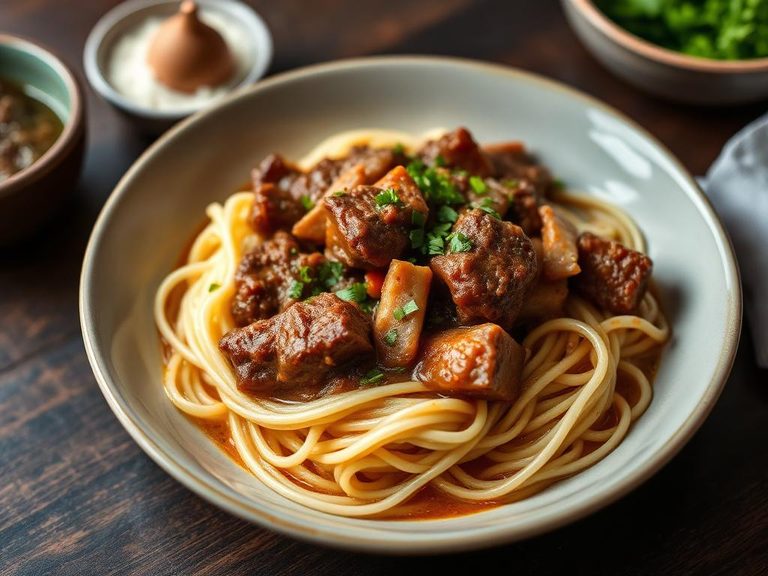
Homemade pasta or noodles
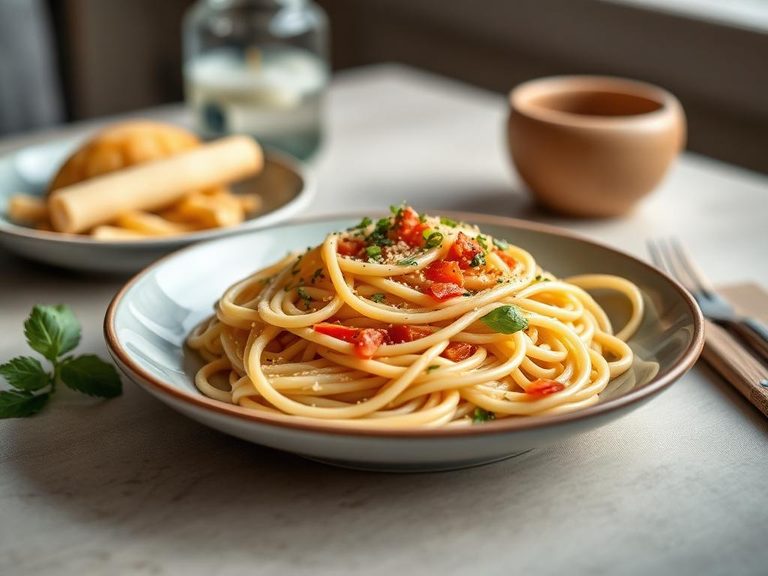
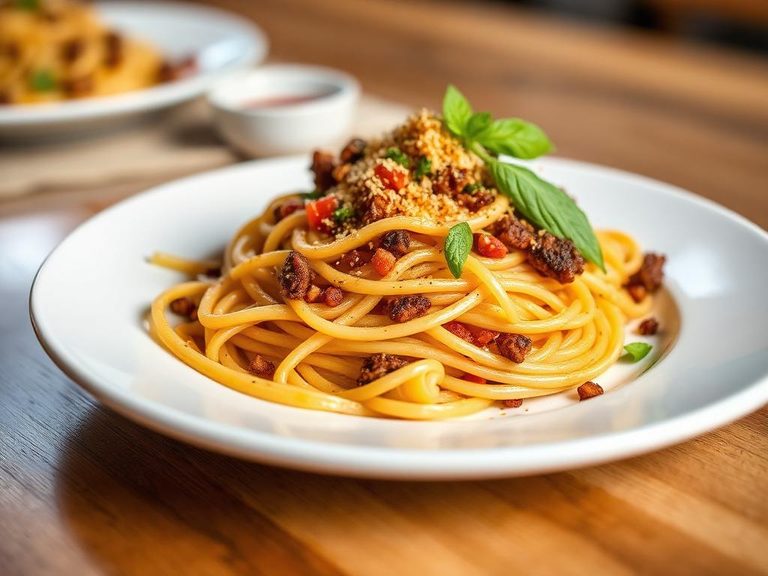
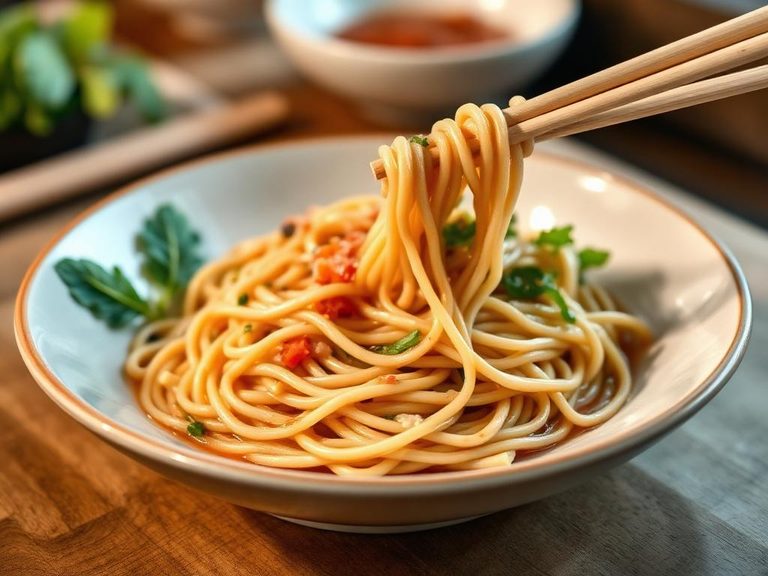
Homemade pasta or noodles are fresh, handcrafted dough-based staples made from simple ingredients like flour, water, and sometimes eggs, shaped into various forms like spaghetti, fettuccine, or Asian-style noodles. They are a foundational element in cuisines worldwide, from Italian pasta dishes to Chinese lo mein and Japanese ramen, with regional variations in thickness, texture, and preparation.
🍳 View the full Homemade pasta or noodles recipe →
🍽️ Nutrition at a glance
Primarily high in carbohydrates for energy, homemade pasta provides moderate protein (especially with egg-based versions) and minimal fat unless cooked with sauces or oils. A typical serving (about 1 cup cooked) offers around 200-300 calories, along with iron and B vitamins from enriched flour.
Nutrition breakdown
| Calories | 220 kcal |
| Protein | 8 g |
| Carbs | 43 g |
| Fat | 1.5 g |
| Fiber | 2.5 g |
| Sugar | 1 g |
| Sodium | 5 mg |
| Iron | 2.5 mg |
| Thiamin (B1) | 0.5 mg |
| Niacin (B3) | 4.5 mg |
| Folate | 150 mcg |
| Magnesium | 25 mg |
| Phosphorus | 100 mg |
| Selenium | 35 mcg |
| Manganese | 0.5 mg |
Per 1 cup cooked (140 g) · estimated, varies by recipe
💡 What's interesting
Culturally, homemade pasta represents a universal comfort food, with techniques passed down through generations—like Italian nonnas rolling dough by hand or Chinese chefs pulling noodles to precise lengths. Nutritionally, fresh versions often have a lower glycemic index than dried, processed alternatives, making them a more balanced choice for sustained energy.
🍽️ Related dishes
AI estimate may be inaccurate · Terms