

Chokecherries, raw, pitted (Northern Plains Indians)
Whole food · American Indian/Alaska Native Foods

Photo: Wikipedia
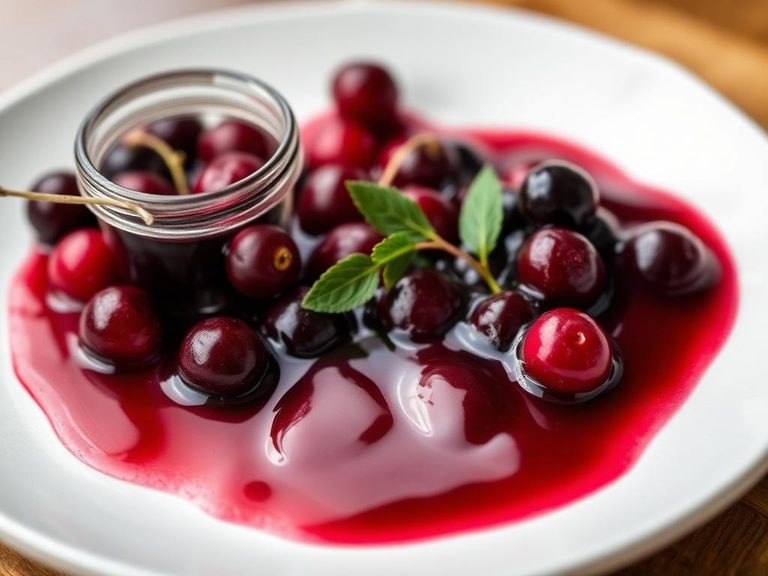
Raw, pitted chokecherries are small, dark, astringent drupes native to the Northern Plains, offering a complex, tannic flavor that balances tartness with a subtle, almond-like bitterness from their seeds. Their texture is firm and slightly mealy when raw, but they transform into a rich, jammy consistency when cooked or processed into preserves. Nutritionally, they are a standout for their exceptionally high fiber content (20g per 100g), which supports digestive health and satiety.
Calorie split: 8% protein · 83% carbs · 9% fat
↓ Full nutrition💚 Why it's loved
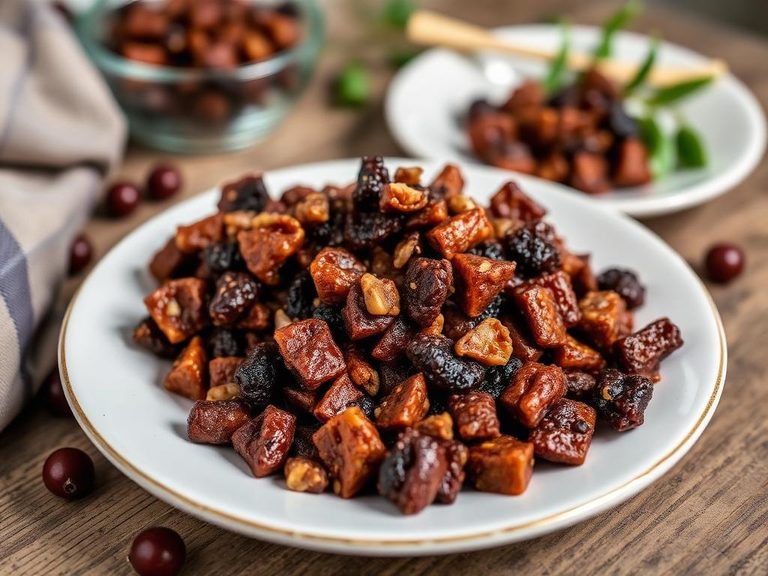
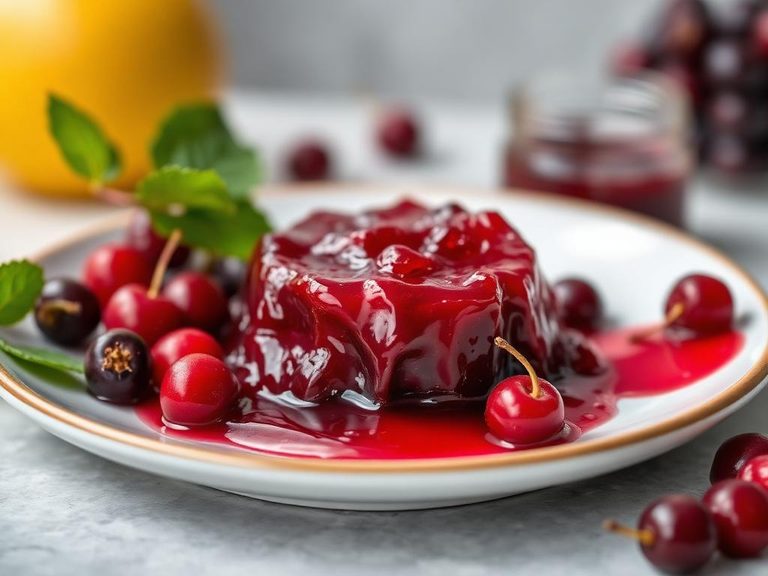
People love chokecherries for their bold, complex flavor that deepens beautifully when cooked into syrups, jellies, and pemmican, a traditional food of the Northern Plains tribes. They are cherished for their cultural significance and their ability to add a unique, tart-sweet depth to both sweet and savory dishes.
⚠️ Watch-outs & how to enjoy it better
The raw fruit's intense astringency and tannins can be off-putting and may cause mouth dryness or digestive discomfort for some. To counteract this, cook them into preserves or syrups, which mellows the tannins, or pair them with a fat or protein source like nuts or meat in pemmican to balance the flavor and improve digestibility.
Key benefits
- Exceptionally high in dietary fiber, promoting gut health and fullness.
- Rich in antioxidants, particularly anthocyanins, which give them their deep color.
- Good source of plant-based protein for a fruit (3g per 100g).
- Low in fat, making them a nutrient-dense, low-calorie option.
- Contains natural sugars with a high fiber-to-sugar ratio, aiding in blood sugar management.
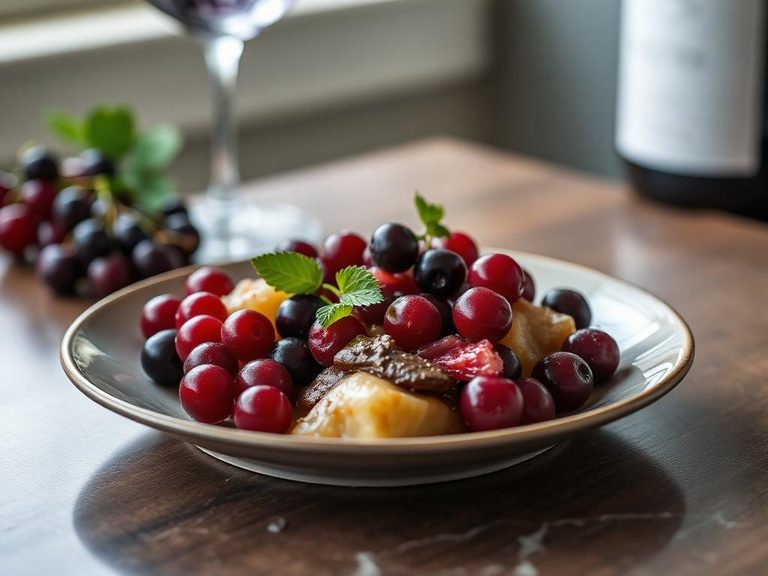
🍽️ Popular dishes
🌍 Where it's eaten
💡 Did you know?
The pits of chokecherries contain amygdalin, which can release cyanide when crushed or chewed; this is why they are always pitted before consumption, and traditional preparation methods like drying and pounding effectively neutralize the risk.
Full nutrition (USDA data · scales with serving)
| Water | 60.7 g |
| Energy | 162 kcal |
| Energy | 677 kj |
| Protein | 3.0 g |
| Total lipid (fat) | 1.7 g |
| Ash | 0.93 g |
| Carbohydrate, by difference | 33.6 g |
| Fiber, total dietary | 20.0 g |
| Total Sugars | 9.4 g |
| Sucrose | 0.07 g |
| Glucose | 5.0 g |
| Fructose | 4.3 g |
| Lactose | 0.00 g |
| Maltose | 0.00 g |
| Galactose | 0.00 g |
| Calcium, Ca | 60.0 mg |
| Iron, Fe | 0.69 mg |
| Magnesium, Mg | 27.0 mg |
| Phosphorus, P | 67.0 mg |
| Potassium, K | 379 mg |
| Sodium, Na | 5.0 mg |
| Zinc, Zn | 0.33 mg |
| Copper, Cu | 0.19 mg |
| Manganese, Mn | 0.42 mg |
| Vitamin C, total ascorbic acid | 5.5 mg |
| Thiamin | 0.03 mg |
| Riboflavin | 0.17 mg |
| Niacin | 0.63 mg |
| Pantothenic acid | 0.40 mg |
| Vitamin B-6 | 0.20 mg |
| Folate, total | 2.0 ug |
| Folate, food | 2.0 ug |
| Choline, total | 10.7 mg |
| Betaine | 0.40 mg |
| Vitamin A, RAE | 8.0 ug |
| Carotene, beta | 90.0 ug |
| Carotene, alpha | 2.0 ug |
| Cryptoxanthin, beta | 19.0 ug |
| Vitamin A, IU | 168 iu |
| Lycopene | 0.00 ug |
| Lutein + zeaxanthin | 347 ug |
| Vitamin E (alpha-tocopherol) | 0.35 mg |
| Tocopherol, beta | 0.03 mg |
| Tocopherol, gamma | 1.1 mg |
| Tocopherol, delta | 0.09 mg |
| Tocotrienol, alpha | 0.01 mg |
| Tocotrienol, beta | 0.00 mg |
| Tocotrienol, gamma | 0.00 mg |
| Tocotrienol, delta | 0.00 mg |
| Vitamin K (phylloquinone) | 21.1 ug |
| Vitamin K (Dihydrophylloquinone) | 0.00 ug |
| Vitamin K (Menaquinone-4) | 0.00 ug |
FAQ
Are chokecherries safe to eat raw?
Yes, but they must be pitted to avoid the cyanide-releasing compounds in the seeds. Their raw flavor is very tart and astringent, so most people prefer them cooked or processed into preserves.
How do chokecherries compare to other berries nutritionally?
Chokecherries are notably higher in fiber (20g per 100g) than most common berries like blueberries or strawberries, and they also provide more protein. Their sugar content is moderate, making them a balanced choice for fiber-rich diets.
What is the best way to preserve chokecherries?
They are commonly made into jams, jellies, syrups, or dried for pemmican. Cooking breaks down the astringent tannins, and preserving them in sugar or as a syrup extends their shelf life and enhances their flavor.
Nutrient density (calculated · NRF9.3)
Nutrient Rich Foods index: beneficial nutrients (protein, fiber, vitamins, minerals) minus saturated fat, added sugar & sodium, per 100 kcal.
NRF9.3 index — Fulgoni, Keast & Drewnowski, 2009. Computed from USDA nutrients.
Weight-loss friendliness (composite index)
Energy density 1.62 kcal/g · 8% calories from protein · 20.0 g fiber · 9.4 g sugar per 100 g.
Composite of energy density (Rolls et al., 1999), protein & fiber satiety, minus sugar. A calculated heuristic — ranks satiety-per-calorie, not a clinical measure.
Dietary load (calculated from USDA values)
Potential renal acid load. Positive = acid-forming, negative = alkaline-forming.
Sodium-to-potassium ratio: 0.01 (lower is better — aim for ≤ 1)
Sodium:potassium per WHO potassium guidance. Computed from USDA nutrients.