

Cereals, MALT-O-MEAL, chocolate, prepared with water, without salt
Whole food · Breakfast Cereals

Photo: Wikipedia
Malt-O-Meal chocolate is a quick-cooking hot cereal made from toasted wheat and cocoa, delivering a smooth, slightly gritty porridge with a mild, comforting chocolate flavor. Prepared with water, it's a remarkably low-calorie option (47 kcal/100g) that provides a warm, filling start to the day. Its texture is thinner than oatmeal but thicker than a hot drink, with a subtle sweetness from added sugar.
Calorie split: 13% protein · 85% carbs · 2% fat
↓ Full nutrition💚 Why it's loved
People love it for its nostalgic, comforting chocolate flavor and its incredibly fast cooking time, making it a staple for busy mornings. It's also a versatile base that can be customized with fruit, nuts, or a splash of milk.
⚠️ Watch-outs & how to enjoy it better
The low fiber and protein content can lead to a quick blood-sugar spike, especially when prepared with water. To counteract this, pair it with a source of protein (like a hard-boiled egg or Greek yogurt) or healthy fat (like nuts or seeds) to slow digestion and stabilize energy levels.
Key benefits
- Very low in calories (47 kcal per 100g) for a warm, filling meal.
- Source of carbohydrates for quick energy.
- Low in fat (0.1g per 100g).
- Contains a small amount of fiber (0.4g per 100g).
- Quick and easy to prepare with just water.
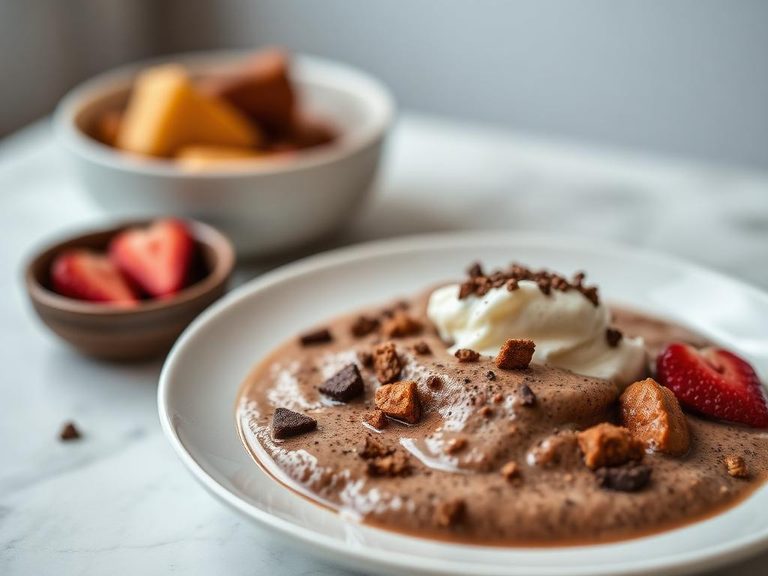
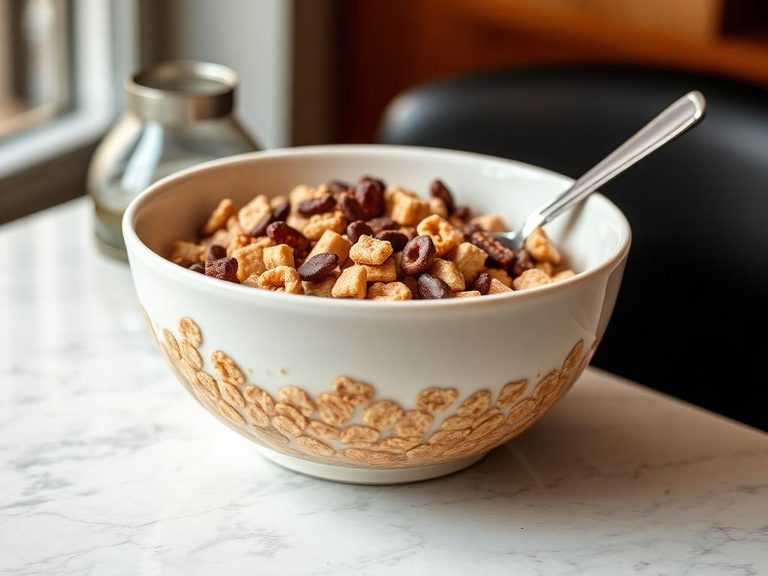
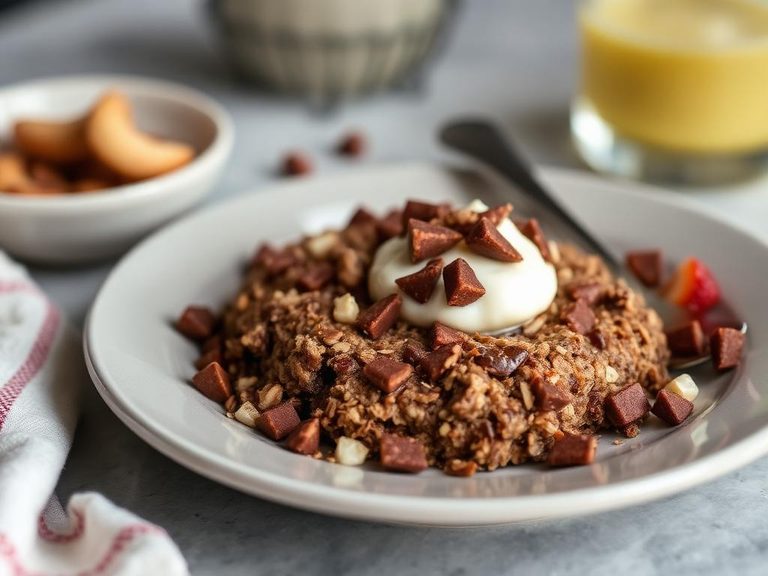
🍽️ Popular dishes


🌍 Where it's eaten
💡 Did you know?
Malt-O-Meal was first introduced in 1953 by the Campbell Cereal Company in Northfield, Minnesota, and its chocolate variety became a popular, affordable alternative to more expensive branded hot cereals.
Full nutrition (USDA data · scales with serving)
| Water | 89.2 g |
| Energy | 47.0 kcal |
| Energy | 199 kj |
| Protein | 1.4 g |
| Total lipid (fat) | 0.10 g |
| Ash | 0.26 g |
| Carbohydrate, by difference | 9.2 g |
| Fiber, total dietary | 0.40 g |
| Total Sugars | 2.2 g |
| Calcium, Ca | 49.0 mg |
| Iron, Fe | 5.6 mg |
| Magnesium, Mg | 4.0 mg |
| Phosphorus, P | 16.0 mg |
| Potassium, K | 32.0 mg |
| Sodium, Na | 1.0 mg |
| Zinc, Zn | 0.20 mg |
| Vitamin C, total ascorbic acid | 0.00 mg |
| Thiamin | 0.15 mg |
| Riboflavin | 0.15 mg |
| Niacin | 2.6 mg |
| Vitamin B-6 | 0.27 mg |
| Vitamin B-12 | 0.00 ug |
| Vitamin A, RAE | 0.00 ug |
| Vitamin A, IU | 0.00 iu |
| Vitamin E (alpha-tocopherol) | 0.27 mg |
| Vitamin D (D2 + D3), International Units | 0.00 iu |
| Vitamin D (D2 + D3) | 0.00 ug |
| Vitamin D3 (cholecalciferol) | 0.00 ug |
| Vitamin K (phylloquinone) | 0.00 ug |
| Caffeine | 0.00 mg |
Fat & fatty acid profile (per 100g)
| Fatty acids, total saturated | 0.03 g |
| Fatty acids, total monounsaturated | 0.01 g |
| Fatty acids, total polyunsaturated | 0.02 g |
| Cholesterol | 0.00 mg |
Amino acid profile (per 100g)
Estimated from Cereals ready-to-eat, POST, HONEY BUNCHES OF OATS, honey roasted — USDA does not publish this profile for Cereals.
| Tryptophan | 0.09 g |
| Threonine | 0.24 g |
| Isoleucine | 0.26 g |
| Leucine | 0.80 g |
| Lysine | 0.12 g |
| Methionine | 0.10 g |
| Cystine | 0.11 g |
| Phenylalanine | 0.39 g |
| Tyrosine | 0.21 g |
| Valine | 0.34 g |
| Arginine | 0.24 g |
| Histidine | 0.18 g |
| Alanine | 0.46 g |
| Aspartic acid | 0.48 g |
| Glutamic acid | 1.9 g |
| Glycine | 0.27 g |
| Proline | 0.49 g |
| Serine | 0.38 g |
FAQ
Is Malt-O-Meal chocolate cereal gluten-free?
No, it is made from wheat and is not suitable for those with celiac disease or gluten sensitivity.
Can I prepare it with milk instead of water?
Yes, using milk will increase the calorie, protein, and fat content, making it more filling and richer in flavor.
How does it compare nutritionally to oatmeal?
Malt-O-Meal chocolate is lower in calories and fat but also has less fiber and protein than plain oatmeal, making it a lighter option but less satiating.
Nutrient density (calculated · NRF9.3)
Nutrient Rich Foods index: beneficial nutrients (protein, fiber, vitamins, minerals) minus saturated fat, added sugar & sodium, per 100 kcal.
NRF9.3 index — Fulgoni, Keast & Drewnowski, 2009. Computed from USDA nutrients.
Weight-loss friendliness (composite index)
Energy density 0.47 kcal/g · 12% calories from protein · 0.4 g fiber · 2.2 g sugar per 100 g.
Composite of energy density (Rolls et al., 1999), protein & fiber satiety, minus sugar. A calculated heuristic — ranks satiety-per-calorie, not a clinical measure.
Dietary load (calculated from USDA values)
Potential renal acid load. Positive = acid-forming, negative = alkaline-forming.
Sodium-to-potassium ratio: 0.03 (lower is better — aim for ≤ 1)
Sodium:potassium per WHO potassium guidance. Computed from USDA nutrients.