

Salmon nuggets, breaded, frozen, heated
Whole food · Finfish and Shellfish Products

Photo: Wikipedia
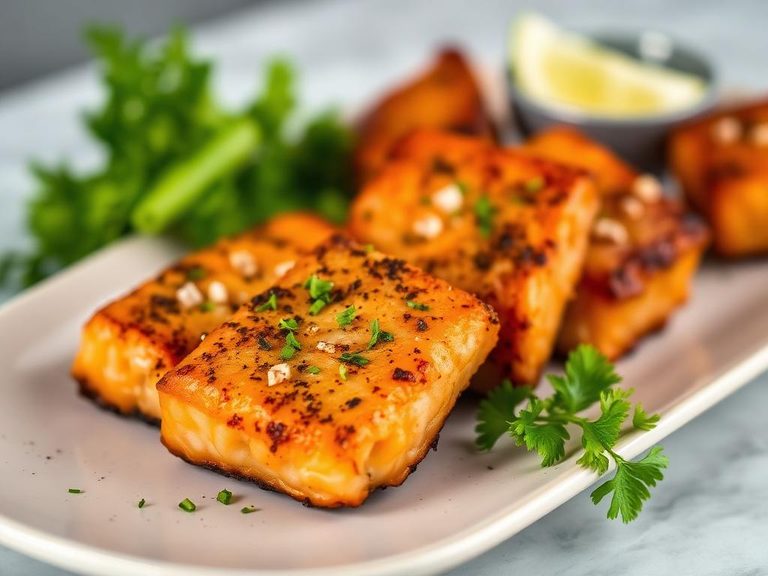
Golden, crispy-coated nuggets of salmon, typically made from minced or flaked fish bound and breaded for a satisfying crunch. The interior offers a tender, flaky, and mildly savory fish texture, contrasting with the crunchy exterior. Nutritionally, they are a concentrated source of protein and provide a notable amount of healthy fats, including omega-3s, per serving.
Calorie split: 24% protein · 26% carbs · 50% fat
↓ Full nutrition💚 Why it's loved
People love them for their universal appeal—the satisfying crunch giving way to tender, flavorful fish makes them a hit across all ages. They are incredibly versatile, serving as a quick snack, a protein-packed addition to salads, or the centerpiece of a casual family dinner.
⚠️ Watch-outs & how to enjoy it better
The breading can add refined carbohydrates and may be high in sodium, which is a consideration for those monitoring blood sugar or salt intake. To counteract this, pair them with a large portion of non-starchy vegetables (like steamed broccoli or a fresh salad) and choose a low-sodium dipping sauce like plain Greek yogurt with herbs.
Key benefits
- Excellent source of high-quality protein for muscle maintenance.
- Provides beneficial omega-3 fatty acids (EPA and DHA).
- Convenient, pre-portioned, and quick to prepare from frozen.
- Offers a kid-friendly or easy way to incorporate fish into meals.
- A good source of essential nutrients like selenium and vitamin D.
🍽️ Popular dishes
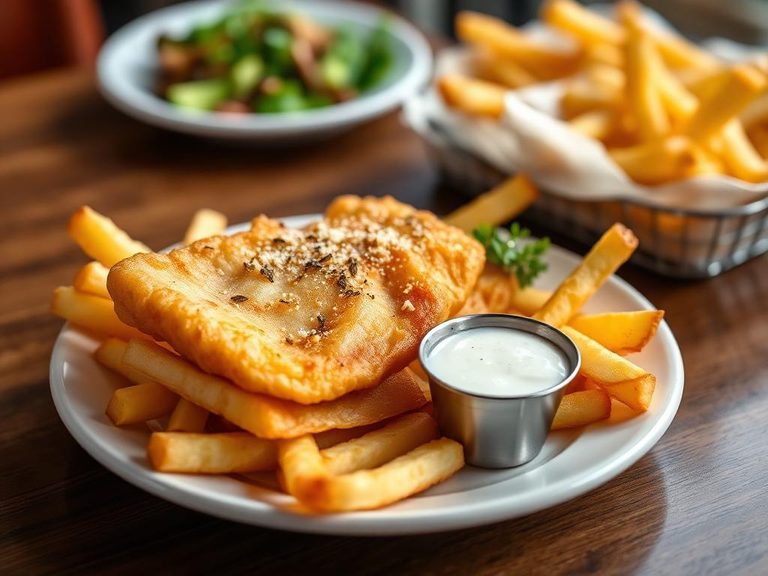
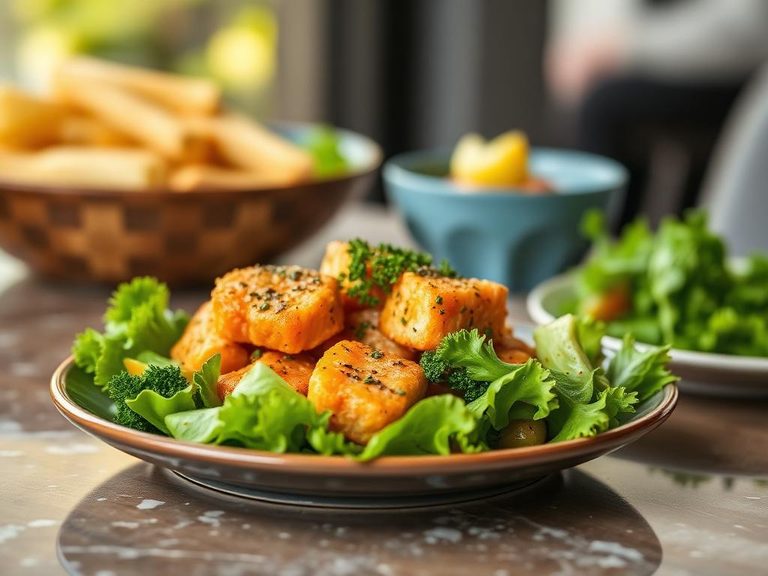

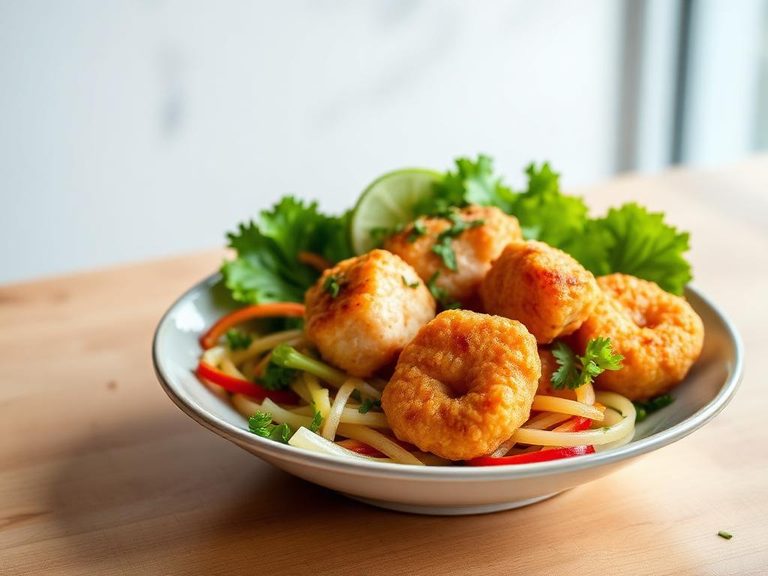
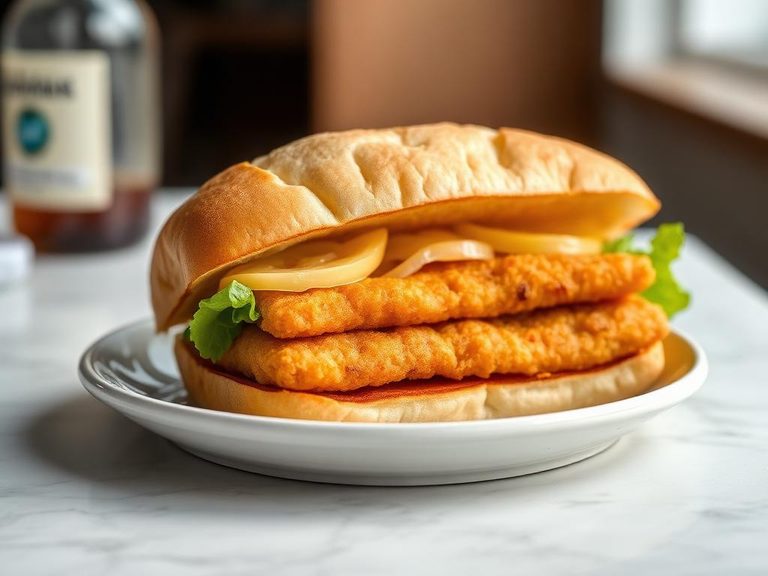
🌍 Where it's eaten
💡 Did you know?
The concept of breading and frying fish is ancient, but the modern, frozen salmon nugget as a convenience food gained massive popularity in the U.S. during the 1950s with the rise of home freezers and TV dinners.
Full nutrition (USDA data · scales with serving)
| Water | 60.4 g |
| Energy | 212 kcal |
| Energy | 887 kj |
| Protein | 12.7 g |
| Total lipid (fat) | 11.7 g |
| Ash | 1.3 g |
| Carbohydrate, by difference | 14.0 g |
| Fiber, total dietary | 0.00 g |
| Calcium, Ca | 8.0 mg |
| Iron, Fe | 1.2 mg |
| Magnesium, Mg | 20.0 mg |
| Phosphorus, P | 176 mg |
| Potassium, K | 165 mg |
| Sodium, Na | 173 mg |
| Zinc, Zn | 0.52 mg |
| Copper, Cu | 0.08 mg |
| Manganese, Mn | 0.12 mg |
| Vitamin C, total ascorbic acid | 0.00 mg |
| Thiamin | 0.21 mg |
| Riboflavin | 0.16 mg |
| Niacin | 4.5 mg |
| Pantothenic acid | 0.52 mg |
| Vitamin B-6 | 0.22 mg |
| Folate, total | 9.0 ug |
| Folic acid | 3.0 ug |
| Folate, food | 6.0 ug |
| Folate, DFE | 11.0 ug |
| Vitamin B-12 | 2.1 ug |
| Alcohol, ethyl | 0.00 g |
Fat & fatty acid profile (per 100g)
| Fatty acids, total saturated | 1.6 g |
| SFA 4:0 | 0.00 g |
| SFA 6:0 | 0.00 g |
| SFA 8:0 | 0.01 g |
| SFA 10:0 | 0.00 g |
| SFA 12:0 | 0.00 g |
| SFA 14:0 | 0.07 g |
| SFA 16:0 | 0.96 g |
| SFA 18:0 | 0.36 g |
| Fatty acids, total monounsaturated | 4.6 g |
| MUFA 16:1 | 0.07 g |
| MUFA 18:1 | 4.3 g |
| MUFA 20:1 | 0.21 g |
| MUFA 22:1 | 0.01 g |
| Fatty acids, total polyunsaturated | 3.0 g |
| PUFA 18:2 | 2.4 g |
| PUFA 18:3 | 0.13 g |
| PUFA 18:4 | 0.00 g |
| PUFA 20:4 | 0.01 g |
| PUFA 20:5 n-3 (EPA) | 0.06 g |
| PUFA 22:5 n-3 (DPA) | 0.00 g |
| PUFA 22:6 n-3 (DHA) | 0.44 g |
| Cholesterol | 26.0 mg |
FAQ
Are salmon nuggets healthy?
They can be a nutritious part of a balanced diet. They are a good source of protein and omega-3s. However, their healthiness depends on the preparation (breading, frying oil) and portion size. Baked or air-fried versions are generally healthier than deep-fried.
How do I get them crispy without deep frying?
For the best crispy texture, use an air fryer at 400°F (200°C) for 8-10 minutes, flipping halfway. Alternatively, bake on a preheated sheet pan at 425°F (220°C) for 12-15 minutes until golden and heated through.
What's the difference between salmon nuggets and fish sticks?
Fish sticks (or fish fingers) are typically made from a uniform, minced white fish like pollock or cod. Salmon nuggets are made from salmon, which has a distinct pink color, richer flavor, and higher fat content (including omega-3s).
Nutrient density (calculated · NRF9.3)
Nutrient Rich Foods index: beneficial nutrients (protein, fiber, vitamins, minerals) minus saturated fat, added sugar & sodium, per 100 kcal.
NRF9.3 index — Fulgoni, Keast & Drewnowski, 2009. Computed from USDA nutrients.
Weight-loss friendliness (composite index)
Energy density 2.12 kcal/g · 24% calories from protein · 0.0 g fiber · 0.0 g sugar per 100 g.
Composite of energy density (Rolls et al., 1999), protein & fiber satiety, minus sugar. A calculated heuristic — ranks satiety-per-calorie, not a clinical measure.
Dietary load (calculated from USDA values)
Potential renal acid load. Positive = acid-forming, negative = alkaline-forming.
Sodium-to-potassium ratio: 1.05 (lower is better — aim for ≤ 1)
Sodium:potassium per WHO potassium guidance. Computed from USDA nutrients.